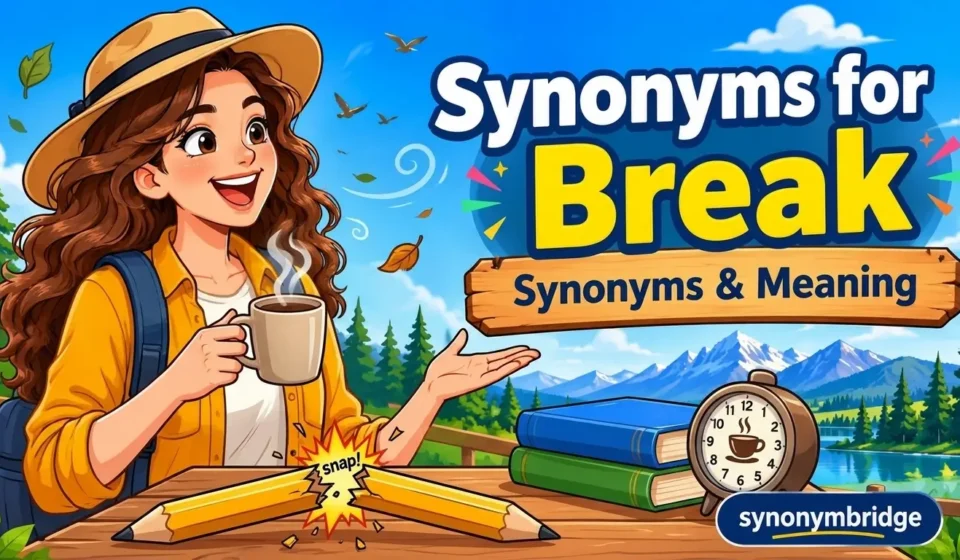
Synonyms for break include pause, rest, stop, interrupt, crack, split, damage, shatter, and separate. The best word depends on how you use it. Some words describe a short rest, while others mean ending something, causing damage, or moving away from a situation.
Imagine working on a long school project or sitting at your desk for hours. Your mind feels tired, and you need a little time away. You might say, “I need a break.” But English has many other words that can express the same idea in a better way.
For example, you can say, “Let’s take a short pause before we continue.” This small change can make your writing sound clearer and more natural.
Learning different words helps you share your ideas with more care. Students can use them in essays and schoolwork. Bloggers can make their articles more interesting. Content writers can avoid using the same words again and again. Daily English users can speak with more confidence.
“Small changes in words can make a big difference in meaning.”
The right word also helps readers understand your message. A short rest, a broken object, and the end of a relationship all need different words.
“Good writing begins with choosing the right words.”
Here are 50 useful alternatives to help you express different meanings of the word break. Each word includes a simple meaning and two everyday examples.
1. Pause
- Meaning: A pause is a short stop before an activity starts again.
- Examples: Let’s pause the video for now. She took a pause during her speech.
2. Rest
- Meaning: Rest means taking time away from work to feel fresh.
- Examples: I need some rest after lunch. He rested before starting his homework.
3. Stop
- Meaning: Stop means to end an action or activity for some time.
- Examples: Please stop talking during the lesson. We stopped the car near the shop.
4. Interrupt
- Meaning: Interrupt means to stop someone while they are doing something.
- Examples: Please do not interrupt my story. The phone interrupted our dinner last night.
5. Halt
- Meaning: Halt means to bring an action or movement to a stop.
- Examples: The driver halted near the gate. Rain halted the game for an hour.
6. Recess
- Meaning: Recess is a short break during school or another activity.
- Examples: The children played during recess today. We have recess after the second lesson.
7. Intermission
- Meaning: Intermission is a short rest between two parts of an event.
- Examples: We bought snacks during the intermission. The show has a short intermission tonight.
8. Interval
- Meaning: An interval is a short period between two events or activities.
- Examples: The players rested during the interval. We met again after a short interval.
9. Breather
- Meaning: A breather is a short rest after hard work or effort.
- Examples: Let’s take a breather before continuing. She needed a breather after running upstairs.
10. Respite
- Meaning: Respite means a short time away from stress or trouble.
- Examples: The weekend gave us some respite. Everyone needs respite from busy work.
11. Crack
- Meaning: A crack is a narrow line formed when something starts breaking.
- Examples: I found a crack in the glass. The wall developed a small crack yesterday.
12. Split
- Meaning: Split means to divide something into two or more parts.
- Examples: Please split the cake into pieces. We split the bill after dinner.
13. Shatter
- Meaning: Shatter means to break something into many small pieces.
- Examples: The falling glass shattered on the floor. His phone screen shattered after dropping it.
14. Smash
- Meaning: Smash means to break something with a strong hit.
- Examples: The ball smashed the kitchen window. Be careful not to smash the vase.
15. Fracture
- Meaning: Fracture means to break or crack something, especially a bone.
- Examples: He fractured his arm during football. The hard fall caused a small fracture.
16. Damage
- Meaning: Damage means to harm something so it no longer works well.
- Examples: Heavy rain damaged our garden fence. Please do not damage the new furniture.
17. Rupture
- Meaning: Rupture means to break or tear something apart suddenly.
- Examples: The old pipe ruptured last night. A sudden movement caused the seal to rupture.
18. Destroy
- Meaning: Destroy means to damage something so badly it cannot remain useful.
- Examples: The fire destroyed the wooden house. Strong winds destroyed the garden shed.
19. Shred
- Meaning: Shred means to tear something into many small pieces.
- Examples: Please shred these old paper files. The machine shredded the unwanted documents quickly.
20. Tear
- Meaning: Tear means to pull something apart or make a hole.
- Examples: I accidentally tore my favorite shirt. Do not tear the paper while opening it.
21. Ruin
- Meaning: Ruin means to spoil something or make it much worse.
- Examples: The rain ruined our outdoor party. One mistake ruined his carefully planned work.
22. Dismantle
- Meaning: Dismantle means to take something apart piece by piece.
- Examples: They dismantled the old wooden table. We dismantled the tent after camping.
23. Disassemble
- Meaning: Disassemble means to separate something into its smaller parts.
- Examples: He disassembled the broken computer carefully. We disassembled the chair before moving.
24. Separate
- Meaning: Separate means to move things apart instead of keeping them together.
- Examples: Please separate the white clothes first. The teacher separated the two noisy students.
25. Divide
- Meaning: Divide means to split something into smaller groups or parts.
- Examples: Divide the pizza into eight slices. We divided the work between three people.
26. Disrupt
- Meaning: Disrupt means to stop something from continuing in its normal way.
- Examples: Loud noise disrupted our class today. The storm disrupted travel across the city.
27. Suspend
- Meaning: Suspend means to stop an activity for a short or long time.
- Examples: The school suspended classes due to rain. They suspended the project until Monday.
28. Cease
- Meaning: Cease means to stop doing something completely or for some time.
- Examples: The rain finally ceased after midnight. Please cease making noise during the meeting.
29. Discontinue
- Meaning: Discontinue means to stop using or providing something regularly.
- Examples: The shop discontinued that product last year. We discontinued the service after June.
30. Abandon
- Meaning: Abandon means to leave something behind or stop trying.
- Examples: They abandoned the plan after discussion. He refused to abandon his dream.
31. Withdraw
- Meaning: Withdraw means to move away from a place or situation.
- Examples: She withdrew from the school competition. The team withdrew after losing two matches.
32. Escape
- Meaning: Escape means to get away from danger or an unpleasant situation.
- Examples: The cat escaped through the open window. We escaped the rain by entering a shop.
33. Flee
- Meaning: Flee means to run away quickly from danger or trouble.
- Examples: The villagers fled from the fire. The frightened birds fled from the noise.
34. Depart
- Meaning: Depart means to leave a place and begin going somewhere.
- Examples: Our train will depart at noon. They departed early to avoid traffic.
35. Release
- Meaning: Release means to set something free or let it go.
- Examples: Please release the bird outside. The company released its new product yesterday.
36. Liberate
- Meaning: Liberate means to free someone from control or an unfair situation.
- Examples: Education can liberate people from fear. The workers wanted to liberate themselves.
37. Escape from
- Meaning: Escape from means to get away from something difficult or harmful.
- Examples: She wanted to escape from stress. He escaped from the crowded room quietly.
38. Detach
- Meaning: Detach means to remove something that was joined to another thing.
- Examples: Detach the cable before cleaning it. The label detached from the bottle.
39. Disconnect
- Meaning: Disconnect means to stop a connection between two things.
- Examples: Disconnect the charger before leaving home. The storm disconnected our internet service.
40. Disengage
- Meaning: Disengage means to move away from an activity or connection.
- Examples: He disengaged from the heated argument. Try to disengage from work after dinner.
41. Recess
- Meaning: Recess can also mean a small break from regular duties or work.
- Examples: Parliament went into recess last week. The court announced a short recess today.
42. Downtime
- Meaning: Downtime is time when you stop working or using something.
- Examples: I enjoy some downtime after work. The computer needs downtime for updates.
43. Holiday
- Meaning: A holiday is time away from work or school.
- Examples: We are taking a holiday next month. She enjoyed a holiday with her family.
44. Vacation
- Meaning: Vacation means a planned period away from work or daily duties.
- Examples: They planned a vacation near the beach. I need a vacation after this project.
45. Coffee Break
- Meaning: A coffee break is a short rest during work to relax.
- Examples: We had a coffee break at noon. She invited me for a coffee break.
46. Time Out
- Meaning: A time out is a short pause used to rest or calm down.
- Examples: The coach called a time out quickly. I need a time out after studying.
47. Suspension
- Meaning: Suspension is a period when an activity is stopped temporarily.
- Examples: The suspension lasted for two days. Work continued after the temporary suspension ended.
48. Cessation
- Meaning: Cessation means the complete ending of an action or activity.
- Examples: The agreement led to cessation of fighting. Everyone welcomed the cessation of loud noise.
49. Breach
- Meaning: Breach means breaking a rule, promise, agreement, or duty.
- Examples: Sharing secrets was a breach of trust. The company faced a breach of contract.
50. Violation
- Meaning: Violation means breaking a rule, law, or agreement.
- Examples: Parking here is a violation of rules. The report showed a serious safety violation.
Different Ways to Use Break in English
The word break has several meanings in English. Its best replacement depends on the situation. A short rest can be called a pause or respite. A damaged object may have a crack or fracture.
A broken connection can be described as a disconnection. Choosing the right alternative makes your sentences clearer and more useful.
Synonyms for Break Down into Parts
When something is taken apart into smaller pieces, use dismantle, disassemble, divide, separate, or split. These words work well when talking about machines, furniture, tasks, and information.
For example, you can dismantle an old desk or divide a large project into smaller tasks. Choose the word that best describes the action.
Synonyms for Break Free
When someone gets away from control, fear, or a difficult situation, use escape, flee, liberate, withdraw, or release. These words can describe physical freedom and emotional freedom.
For example, a person may escape danger or break free from unhealthy habits. The right choice depends on the situation and the feeling you want to express.
Synonyms for Break Through
A breakthrough means making progress through a barrier or difficult problem. Useful alternatives include overcome, advance, succeed, progress, and surmount.
These words work well in school, business, and personal growth. For example, a student can overcome a difficult challenge, while a company can make progress after months of hard work.
Synonyms for Break Time
When you need a short rest during work or study, several natural alternatives are available. Use pause, recess, downtime, breather, or coffee break. These expressions sound friendly and clear in daily conversations.
For example, students may enjoy recess at school, while office workers may take a coffee break before returning to their tasks.
Frequently Asked Questions
1. What Is a Better Word for Break?
A better word for break depends on the meaning of your sentence. Use pause, rest, or recess when talking about taking time away from work. Choose crack, shatter, or fracture when something is damaged.
Words such as interrupt, halt, and suspend work when an activity stops. Think about the situation before choosing an alternative so your sentence sounds natural and clear.
2. What Is a Fancy Word for Taking a Break?
A fancy word for taking a break is respite. It describes a short period of rest or relief from work, stress, or trouble.
Other useful choices include intermission, interval, and recess. For example, you could say, “The team enjoyed a brief respite after a busy morning.” These words are useful in formal writing, professional messages, and situations where you want a more polished tone.
3. What Is a Synonym for “Break or Pause”?
The best synonyms for break or pause include stop, halt, interval, intermission, and recess. Each word has a slightly different use. A pause is usually a short stop during an activity, while an intermission happens between parts of a show or event. Halt sounds stronger and more direct.
For everyday conversations, pause and stop are simple choices that most English speakers understand.
4. What to Say Instead of Break?
Instead of saying “break,” you can use phrases like “take a rest,” “have some downtime,” “take a short pause,” or “step away for a while.” In a workplace, you might say, “Let’s take a short pause before the next meeting.” With friends, “Let’s relax for a few minutes” sounds natural.
These phrases help you avoid repetition and make everyday conversations more interesting.
Conclusion
Learning different synonyms for break can make your English stronger and easier to understand. Although break is common, it doesn’t fit every situation.
A short rest may need the word pause, while damage to an object may need crack, shatter, or fracture. Words such as escape, withdraw, and liberate can express the idea of getting away from something.
Using the right words also improves your writing. Students can make their essays clearer and avoid repeating simple words. Bloggers can create more useful articles and interesting headings.
Content writers can make their work sound natural and professional. Daily English users can express their thoughts with more confidence.
“A rich vocabulary gives every idea a clearer voice.”
Start by learning five new words from this list. Try using them in your emails, essays, schoolwork, and daily conversations. Pay attention to their meanings and choose the word that fits your message. You do not need to use difficult words all the time. Simple and correct words are often the best choice.
“Practice a new word today, and make it part of your language tomorrow.”
With regular practice, you will find it easier to choose the right synonym and communicate your ideas clearly.