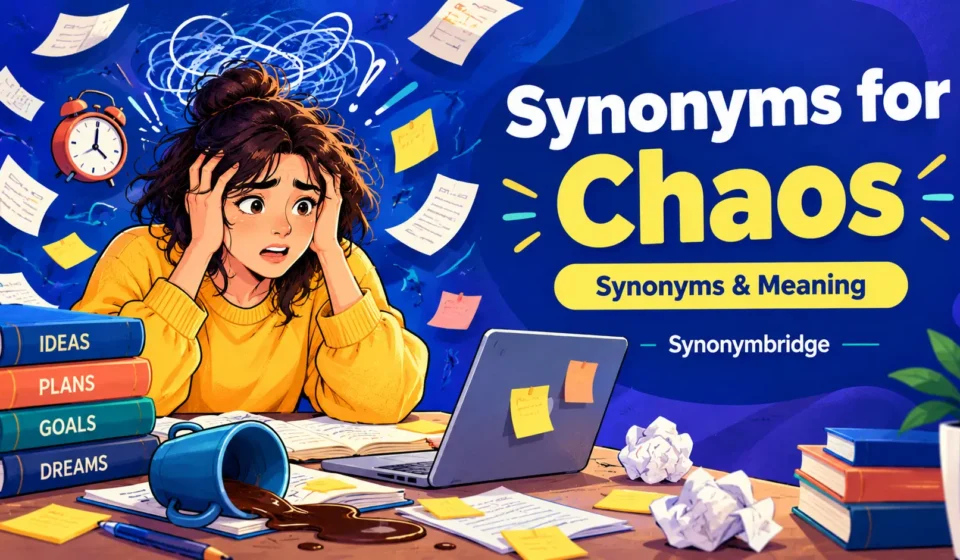
Synonyms for chaos include disorder, confusion, turmoil, havoc, mayhem, and pandemonium. These words describe times when things feel messy, wild, or out of control. Some fit daily life, while others work better in formal writing, stories, essays, and professional conversations.
Imagine a school hallway after the final bell. Students rush toward the doors, bags swing from side to side, and everyone talks at once. A teacher tries to guide the crowd, but nobody seems to hear. It is hard to know what to do first.
In daily life, moments like these can happen at home, school, work, or during a busy event. Choosing the right word helps you explain what is happening with greater detail.
For example, a room full of scattered papers and broken boxes may look like a mess, while a crowded street with honking cars may feel like turmoil.
Students can use these words to make essays more interesting. Bloggers can describe busy events in a clear way. Content writers can avoid repeating the same word. Daily English users can express their thoughts with greater confidence.
“Order is the shape upon which beauty depends.”
Learning different words also helps you match your tone to the situation. A casual chat may call for mess, while a formal report may need order.
“Clear words make difficult ideas easier to understand.”
These words describe confusion, disorder, noise, and situations that are hard to control. Choose one that best matches the scene or feeling you want to express.
1. Disorder
Meaning: Disorder happens when things are not neat, calm, or properly arranged.
Examples:
- The papers were scattered in complete disorder.
- Disorder spread through the busy classroom quickly.
2. Confusion
Meaning: Confusion happens when people cannot understand what is going on.
Examples:
- The sudden change caused confusion among students.
- Everyone looked around in confusion during the meeting.
3. Turmoil
Meaning: Turmoil describes a time filled with trouble, worry, or great change.
Examples:
- The family faced turmoil after moving homes.
- Political turmoil made life difficult for many people.
4. Havoc
Meaning: Havoc means great damage or trouble caused by an event.
Examples:
- The strong storm caused havoc across town.
- Spilled paint created havoc in the art room.
5. Mayhem
Meaning: Mayhem describes wild disorder that makes a place hard to control.
Examples:
- The playground turned into mayhem after lunch.
- The sudden alarm caused mayhem in the office.
6. Pandemonium
Meaning: Pandemonium means a place is filled with loud noise and confusion.
Examples:
- Pandemonium broke out when the team won.
- The crowded station was full of pandemonium.
7. Mess
Meaning: A mess is a state where things are dirty or poorly arranged.
Examples:
- The children left a mess in the kitchen.
- My desk became a mess before the exam.
8. Uproar
Meaning: An uproar is a loud reaction filled with anger, surprise, or excitement.
Examples:
- The new rule caused an uproar at school.
- The crowd made an uproar after the announcement.
9. Commotion
Meaning: Commotion means noisy activity that draws attention and interrupts normal life.
Examples:
- A loud commotion came from the next room.
- The lost dog caused a commotion outside.
10. Confounded Disorder
Meaning: Confounded disorder describes a confusing state where events seem difficult to understand.
Examples:
- Confounded disorder filled the room after lunch.
- The plan fell apart in confounded disorder.
11. Anarchy
Meaning: Anarchy describes a situation without clear rules, control, or proper authority.
Examples:
- The city feared anarchy after leaders left.
- Without rules, the meeting descended into anarchy.
12. Disarray
Meaning: Disarray means things are untidy, confused, or no longer in proper order.
Examples:
- Her papers lay in disarray on the floor.
- The sudden news left the team in disarray.
13. Turbulence
Meaning: Turbulence describes unrest, sudden change, or movement that is hard to control.
Examples:
- The company faced turbulence during the merger.
- The plane shook during severe air turbulence.
14. Upheaval
Meaning: Upheaval means a major change that upsets the usual way of life.
Examples:
- The move caused upheaval in our daily routine.
- New rules brought upheaval to the small school.
15. Clutter
Meaning: Clutter means too many things spread around in an untidy way.
Examples:
- Clutter covered the table after the party.
- I cleared the clutter from my bedroom.
16. Bedlam
Meaning: Bedlam means wild noise and confusion in a crowded or busy place.
Examples:
- Bedlam filled the hall after the final whistle.
- The shopping center became bedlam before the holiday.
17. Disruption
Meaning: Disruption happens when normal activities stop or do not work as planned.
Examples:
- Heavy rain caused disruption to school travel.
- The power cut brought disruption to our work.
18. Disturbance
Meaning: A disturbance is an event that interrupts peace, quiet, or normal activity.
Examples:
- The loud music caused a disturbance at night.
- A small disturbance delayed the class for minutes.
19. Jumble
Meaning: A jumble is a mixed group of things with no clear order.
Examples:
- The drawer held a jumble of old keys.
- His notes were a jumble of ideas.
20. Disorganization
Meaning: Disorganization means things lack a clear plan, order, or proper arrangement.
Examples:
- Disorganization slowed our team during the project.
- The office struggled with disorganization all week.
21. Frenzy
Meaning: A frenzy is a burst of wild activity or strong excitement.
Examples:
- Fans rushed forward in a shopping frenzy.
- The rumor started a frenzy at school.
22. Pandemonium
Meaning: Pandemonium is extreme noise and confusion when many people act at once.
Examples:
- Pandemonium followed the surprise concert announcement.
- The children created pandemonium during the game.
23. Chaos
Meaning: Chaos is a state where confusion and disorder make things hard to manage.
Examples:
- The delayed buses caused chaos across town.
- Chaos filled the kitchen before the guests arrived.
24. Mayhem and Destruction
Meaning: Mayhem and destruction describe wild disorder that causes serious damage or trouble.
Examples:
- The storm left mayhem and destruction behind.
- The crash brought mayhem and destruction to the road.
25. Agitation
Meaning: Agitation is a state of worry, upset feelings, or restless activity.
Examples:
- His sudden decision caused agitation among workers.
- The noisy crowd showed signs of agitation.
26. Wildness
Meaning: Wildness describes behavior or activity that is not calm or controlled.
Examples:
- The wildness of the crowd surprised everyone.
- Children filled the garden with joyful wildness.
27. Disorderliness
Meaning: Disorderliness means behaving or arranging things without care, rules, or order.
Examples:
- The teacher addressed disorderliness during the lesson.
- Disorderliness made the busy office less productive.
28. Disarray and Confusion
Meaning: Disarray and confusion describe a state where order is lost and nothing feels clear.
Examples:
- Disarray and confusion followed the sudden change.
- The event ended in disarray and confusion.
29. Clamor
Meaning: Clamor is a loud mixture of voices or sounds from many people.
Examples:
- The clamor outside interrupted my online class.
- A clamor of voices filled the large hall.
30. Tumult
Meaning: Tumult means loud confusion or unrest caused by strong feelings or events.
Examples:
- Tumult rose when the referee changed the call.
- The speech caused tumult throughout the crowded hall.
“A calm mind can find a path through disorder.”
31. Distress
Meaning: Distress is great worry or pain caused by a difficult situation.
Examples:
- The sudden loss caused distress for the family.
- She felt distress when the plan failed.
32. Upheaval and Unrest
Meaning: Upheaval and unrest describe major change and trouble that disturb peace.
Examples:
- Upheaval and unrest spread through the region.
- The new policy caused upheaval and unrest at work.
33. Confusion and Disorder
Meaning: Confusion and disorder occur when people feel unsure and things lose their proper order.
Examples:
- Confusion and disorder delayed the morning event.
- The unclear message caused confusion and disorder.
34. Turmoil and Strife
Meaning: Turmoil and strife describe a troubled state filled with conflict and worry.
Examples:
- Turmoil and strife divided the local community.
- The long dispute brought turmoil and strife.
35. Disarray and Havoc
Meaning: Disarray and havoc describe disorder that disrupts plans and may cause damage.
Examples:
- The flood left disarray and havoc behind.
- Poor planning brought disarray and havoc to work.
36. Discord
Meaning: Discord means a lack of agreement that creates tension between people or groups.
Examples:
- Discord grew between the two project teams.
- The debate revealed discord among family members.
37. Unrest
Meaning: Unrest means people feel upset or unhappy, often leading to protests or conflict.
Examples:
- Unrest spread after workers lost their jobs.
- The town saw unrest following the new law.
38. Turbulence and Trouble
Meaning: Turbulence and trouble describe unstable times filled with problems and sudden changes.
Examples:
- Turbulence and trouble affected the growing business.
- The country faced turbulence and trouble for years.
39. Ruin
Meaning: Ruin describes a state of serious damage, loss, or complete failure.
Examples:
- The fire left the old house in ruin.
- Poor choices brought ruin to the small business.
40. Breakdown
Meaning: A breakdown happens when a system or plan stops working as it should.
Examples:
- A breakdown in talks caused more confusion.
- The computer breakdown delayed the entire project.
41. Pandemonium and Panic
Meaning: Pandemonium and panic describe noisy confusion mixed with strong fear and rushed action.
Examples:
- Pandemonium and panic spread during the fire drill.
- The sudden warning caused pandemonium and panic.
42. Mayhem and Confusion
Meaning: Mayhem and confusion describe wild activity when people struggle to understand events.
Examples:
- Mayhem and confusion followed the false alarm.
- The rushed move created mayhem and confusion.
43. Complication
Meaning: A complication is a problem that makes a situation harder to manage.
Examples:
- One small complication delayed the whole trip.
- The missing file added a complication to work.
44. Entanglement
Meaning: Entanglement means a difficult mix of problems that are hard to separate.
Examples:
- The deal became an entanglement of legal issues.
- Their argument created an entanglement of old problems.
45. Imbroglio
Meaning: An imbroglio is a confusing and difficult situation involving many problems or people.
Examples:
- The meeting became an imbroglio of mixed claims.
- A simple error led to a legal imbroglio.
46. Maelstrom
Meaning: A maelstrom describes a powerful mix of events that feels wild and hard to escape.
Examples:
- The team entered a maelstrom of last minute changes.
- The city faced a maelstrom of public anger.
47. Whirlwind
Meaning: A whirlwind is a rush of activity that leaves little time to rest.
Examples:
- Moving house became a whirlwind of busy tasks.
- Her first week at work was a whirlwind.
48. Free for all
Meaning: A free for all is a situation where everyone acts freely without clear rules.
Examples:
- The debate turned into a free for all quickly.
- The sale became a free for all at noon.
49. Rat Race
Meaning: A rat race is a busy struggle where people compete and feel stressed.
Examples:
- He wanted to escape the daily rat race.
- The city rat race left her feeling tired.
50. Pandemonium and Turmoil
Meaning: Pandemonium and turmoil describe a noisy, troubled state filled with confusion and unrest.
Examples:
- Pandemonium and turmoil followed the sudden announcement.
- The crisis brought pandemonium and turmoil to town.
Synonyms for Chaos That Start With C
Several synonyms for chaos start with C, including confusion, commotion, clutter, clamor, and complication. Confusion fits situations that are hard to understand, while clutter describes untidy spaces.
Clamor works well for loud crowds, and complication suits problems that make a task harder. Choose the word that best describes the type of disorder you want to explain.
Synonyms for Chaos That Start With S
Words beginning with S can describe different kinds of disorder. Strife refers to serious conflict, while storm can describe a period of trouble or strong emotions. Shambles is another useful word for a place or situation in poor order. For example, you might say, “The office was in shambles after the move.” These choices can make descriptions clearer and more vivid.
Synonyms for Chaos and Mayhem
Chaos and mayhem both describe disorder, but they do not always fit the same situation. Chaos is a broad term for confusion and a lack of order. Mayhem often suggests wild activity or serious trouble.
Havoc is useful when a situation causes damage or disruption. In a story, mayhem can describe a wild crowd, while chaos can explain why a plan no longer works.
Formal Synonyms for Chaos
In professional writing, choose words that explain the problem clearly. Disruption works for interrupted services, instability describes a lack of stability, and disorganization suits poor planning.
Unrest can describe social or political tension. For example, a report might say, “The system experienced major disruption during the update.” These terms sound more precise than casual words such as mess or bedlam.
Synonyms and Antonyms for Chaos
Useful synonyms for chaos include disorder, turmoil, confusion, havoc, and mayhem. Each describes a situation where normal order has been lost. Antonyms express the opposite idea.
Words such as order, peace, calm, harmony, and stability describe situations that feel settled or controlled. For example, a busy room may be in chaos, but a quiet, well organized room shows order. Choose the word that matches your meaning.
Frequently Asked Questions
What Is a Fancy Word for Chaos?
A fancy word for chaos is pandemonium, which describes a place filled with wild noise and confusion. Another strong choice is maelstrom, especially when many powerful events happen at once.
Imbroglio is also useful for a complicated situation involving several problems. For formal writing, however, disorder or instability may be clearer. Pick a word that suits your audience and the situation you want to describe.
What Is a Word for Extreme Chaos?
Pandemonium is a useful word for extreme chaos, especially when a crowd becomes loud and difficult to control. Bedlam also describes wild noise and disorder. If the situation causes serious damage, havoc may be more accurate.
For example, a sudden storm might cause havoc across a town. In a story, pandemonium can create a strong image of people rushing, shouting, and struggling to regain control.
How to Professionally Say Chaos?
In professional writing, you can replace chaos with disruption, disorganization, instability, or operational disorder. The best choice depends on the issue. Use disruption when work stops, disorganization when a process lacks structure, and instability when conditions keep changing.
For example, instead of saying, “The office was in chaos,” write, “Poor planning caused significant disruption to daily operations.” This sounds clear, calm, and professional.
What’s a Positive Word for Chaos?
A positive alternative to chaos is creative energy when disorder brings fresh ideas or exciting activity. Bustle can describe a lively, busy place without suggesting that everything is going wrong.
Excitement may fit a crowd celebrating a special event. These words are not exact synonyms in every situation, so consider the meaning you want to express. Use creative energy for lively teamwork and bustle for a busy market or street.
Conclusion
Learning synonyms for chaos helps you describe difficult situations with greater accuracy. Instead of using the same word again and again, you can choose confusion, turmoil, disorder, havoc, or pandemonium to match the meaning you want to express.
Students can use these words to improve essays and school assignments. Bloggers can make their stories more engaging, while content writers can create clearer descriptions for different readers.
In daily conversations, the right word helps people understand whether you mean a messy room, a noisy crowd, a serious problem, or a period of change.
However, remember that not every synonym has exactly the same meaning. Clutter usually describes untidy things, while unrest often refers to tension among people. Likewise, disruption is especially useful when normal work or activity is interrupted.
“The right word brings clarity to even the most confusing moment.”
Start by learning five words from this list. Then practice using them in emails, essays, blog posts, and everyday conversations. Notice how each word changes the meaning of your sentence.
“Every new word gives you another way to express your thoughts.”
With regular practice, you can build a stronger vocabulary, write with confidence, and explain complex situations in simple English.