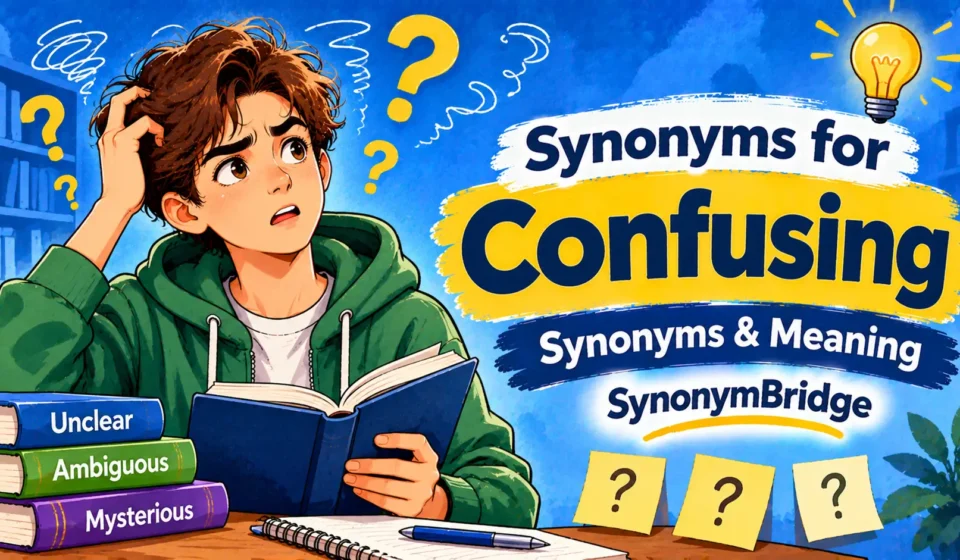
Words like puzzling, unclear, perplexing, and baffling are useful synonyms for confusing. They describe things that are hard to understand or explain. You can use these words in essays, conversations, and professional writing to express your thoughts more clearly and avoid repeating the same word.
Imagine reading a message that makes no sense. You read it once, then twice, but still cannot understand what the writer means. You might call the message confusing. However, using the same word again and again can make your writing sound dull.
For example, a student may find a math problem puzzling, while a worker may face an unclear set of instructions. Different words can explain these moments in better ways.
Students can use these words to improve essays and schoolwork. Bloggers can make their content more interesting.
Content writers can choose words that match their readers. Daily English users can express their thoughts with greater confidence.
“The right word makes a simple message stronger.”
Learning new words also helps you understand how people share ideas. It gives you more ways to explain a difficult topic.
“Clear words help people understand each other.”
45 Synonyms for Confusing
1. Puzzling
- Meaning: Puzzling describes something that is hard to understand or explain.
- Examples: His answer was quite puzzling. The puzzle had a puzzling design.
2. Unclear
- Meaning: Unclear means something is not easy to understand or follow.
- Examples: Your instructions are still unclear. The message was unclear to everyone.
3. Perplexing
- Meaning: Perplexing describes something that makes people feel unsure or confused.
- Examples: Her strange behavior was perplexing. We faced a perplexing question today.
4. Baffling
- Meaning: Baffling means something is very difficult to understand or explain.
- Examples: The sudden change was baffling. His strange reply left us baffled.
5. Bewildering
- Meaning: Bewildering describes something that makes people feel completely lost or confused.
- Examples: The new rules were bewildering. I found the whole process bewildering.
6. Complicated
- Meaning: Complicated means something has many parts and is hard to understand.
- Examples: This lesson seems quite complicated. The process became more complicated yesterday.
7. Mysterious
- Meaning: Mysterious describes something that is difficult to explain or discover.
- Examples: She received a mysterious letter. The strange noise sounded mysterious.
8. Ambiguous
- Meaning: Ambiguous means something has more than one possible meaning or explanation.
- Examples: His statement sounded rather ambiguous. The question had an ambiguous meaning.
9. Vague
- Meaning: Vague describes something that lacks clear details or useful information.
- Examples: She gave me a vague answer. His plans were still vague.
10. Confounding
- Meaning: Confounding describes something that surprises people and makes understanding difficult.
- Examples: The results were truly confounding. Her decision left everyone confounded.
11. Intricate
- Meaning: Intricate describes something with many small details that are hard to follow.
- Examples: The design looks very intricate. We studied an intricate diagram today.
12. Obscure
- Meaning: Obscure means something is not clear, familiar, or easy to understand.
- Examples: The book used obscure terms. His explanation was too obscure.
13. Incomprehensible
- Meaning: Incomprehensible describes something that is almost impossible to understand.
- Examples: The speech sounded incomprehensible to me. His notes were nearly incomprehensible.
14. Cryptic
- Meaning: Cryptic describes words or messages that hide their meaning.
- Examples: She sent a cryptic message. His cryptic reply made us wonder.
15. Bewildered
- Meaning: Bewildered describes someone who feels lost because something is hard to understand.
- Examples: The students looked completely bewildered. I felt bewildered by his answer.
16. Knotty
- Meaning: Knotty describes a difficult problem that needs careful thought to solve.
- Examples: We discussed a knotty problem. This question is surprisingly knotty.
17. Perplexed
- Meaning: Perplexed describes someone who cannot understand what is happening.
- Examples: She looked perplexed after class. His reply left me perplexed.
18. Unintelligible
- Meaning: Unintelligible means something cannot be understood because it lacks clear meaning.
- Examples: The recording sounded unintelligible today. His handwriting was almost unintelligible.
19. Confounding
- Meaning: Confounding describes something that is difficult to explain or make sense of.
- Examples: The final score was confounding. Their choice seemed confounding to us.
20. Complicated
- Meaning: Complicated describes something that is not simple and needs extra thought.
- Examples: The instructions became complicated quickly. This topic sounds complicated to beginners.
21. Mind boggling
- Meaning: Mind boggling describes something so surprising that it is hard to understand.
- Examples: The numbers were mind boggling. Her memory is truly mind boggling.
22. Unintelligible
- Meaning: Unintelligible describes speech or writing that people cannot understand clearly.
- Examples: The audio was unintelligible throughout. His rushed speech became unintelligible.
23. Uncertain
- Meaning: Uncertain describes something that is not clear, settled, or fully known.
- Examples: The next step remains uncertain. We received uncertain information yesterday.
24. Indistinct
- Meaning: Indistinct means something is difficult to see, hear, or understand clearly.
- Examples: I heard an indistinct voice. The words looked indistinct on paper.
25. Elusive
- Meaning: Elusive describes something that is difficult to find, understand, or explain.
- Examples: The answer remained elusive today. She searched for the elusive meaning.
26. Confounding
- Meaning: Confounding describes information that makes a situation harder to understand.
- Examples: His explanation was confounding. The results created a confounding problem.
27. Nontransparent
- Meaning: Nontransparent describes information or actions that are not open or easy to understand.
- Examples: The company shared nontransparent policies. Their process seemed nontransparent to employees.
28. Daunting
- Meaning: Daunting describes something that feels difficult and makes people unsure.
- Examples: The task looked daunting at first. This large project feels daunting.
29. Challenging
- Meaning: Challenging describes something that needs effort and careful thinking to understand.
- Examples: The lesson was challenging today. We solved a challenging question together.
30. Disorienting
- Meaning: Disorienting describes something that makes people feel lost or unsure.
- Examples: The sudden change felt disorienting. The strange room was disorienting.
31. Involved
- Meaning: Involved describes something that has many details or steps to understand.
- Examples: The plan was more involved. We discussed an involved legal matter.
32. Esoteric
- Meaning: Esoteric describes information that only a few people can understand.
- Examples: The lecture covered esoteric ideas. His book contains esoteric knowledge.
33. Imponderable
- Meaning: Imponderable describes something difficult to understand, measure, or answer.
- Examples: Life presents imponderable questions. The mystery remained imponderable for years.
34. Indecipherable
- Meaning: Indecipherable describes writing or information that is impossible to read or understand.
- Examples: The old note was indecipherable. His handwriting looked indecipherable to me.
35. Unfathomable
- Meaning: Unfathomable describes something too difficult to understand or imagine fully.
- Examples: The loss felt unfathomable. Her decision seemed unfathomable to everyone.
36. Incoherent
- Meaning: Incoherent describes speech or writing that does not make sense.
- Examples: His explanation became incoherent quickly. The report contained incoherent statements.
37. Disjointed
- Meaning: Disjointed describes ideas or events that do not connect properly.
- Examples: Her speech sounded disjointed today. The story felt disjointed to readers.
38. Confusingly Complex
- Meaning: Confusingly complex describes something with too many difficult parts to follow.
- Examples: The rules were confusingly complex. This chart looks confusingly complex.
39. Labyrinthine
- Meaning: Labyrinthine describes something extremely complicated, with many twists or details.
- Examples: The legal process was labyrinthine. We explored a labyrinthine set of rules.
40. Perplexing
- Meaning: Perplexing describes a situation that makes people question what is happening.
- Examples: The strange result was perplexing. Her sudden silence seemed perplexing.
41. Unsettling
- Meaning: Unsettling describes something strange that makes people feel unsure or uncomfortable.
- Examples: The unclear warning was unsettling. His unusual behavior felt unsettling.
42. Problematic
- Meaning: Problematic describes something that creates difficulty or makes understanding harder.
- Examples: The new rule seemed problematic. We found a problematic part.
43. Puzzled
- Meaning: Puzzled describes someone who does not understand something clearly.
- Examples: He looked puzzled by the question. I felt puzzled after reading it.
44. Obfuscated
- Meaning: Obfuscated describes information made harder to understand through unclear or hidden wording.
- Examples: The report used obfuscated language. His answer obfuscated the main issue.
45. Mystifying
- Meaning: Mystifying describes something that is very strange and hard to explain.
- Examples: The sudden event was mystifying. Her unusual choice seemed mystifying.
Synonyms for Confusing Person
A confusing person may give unclear answers or behave in unexpected ways. Words like perplexing, mysterious, puzzling, and unpredictable can describe such a person.
For example, a mysterious person may keep their thoughts private, while a perplexing person may leave others unsure about their actions. Choose a word that matches the person’s behavior and the situation.
Synonyms for Confusing Adjective
Several adjectives can replace confusing in everyday writing. Puzzling, perplexing, baffling, ambiguous, and bewildering are useful choices. Puzzling works for small problems, while baffling suggests something very difficult to explain.
Ambiguous is best when a sentence or message has more than one meaning. These words help make your descriptions more exact.
Synonyms for Confusing Two Things
When two things look or sound alike, words such as similar, indistinguishable, misleading, and ambiguous may help explain the problem. For example, two similar names can cause mistakes, while indistinguishable objects are difficult to tell apart.
Choose the word based on whether the problem comes from appearance, meaning, sound, or a lack of clear differences.
Synonyms for Confusing Situation
A confusing situation can also be called a complicated, perplexing, uncertain, or bewildering situation. These expressions describe moments when people do not know what to do next.
A complicated situation has many details, while an uncertain situation has an unclear result. The right choice helps readers understand the exact problem.
Synonyms for Confusing Words
Some words create confusion because they have similar meanings, unclear sounds, or different uses. You can describe them as ambiguous, misleading, obscure, or unfamiliar. Ambiguous words have more than one meaning, while misleading words can give readers the wrong idea.
These descriptions are useful when explaining difficult vocabulary to English learners.
Frequently Asked Questions
1. How do you say confusing professionally?
In professional writing, you can replace confusing with unclear, ambiguous, complex, perplexing, or difficult to interpret. For example, instead of saying, “The instructions are confusing,” write, “The instructions lack clarity.”
This sounds more respectful and professional. Choose a word that explains the exact problem without making your message sound rude or overly critical.
2. What is a fancy word for confusion?
Perplexity is a fancy and useful word for confusion. It describes a feeling of being unsure because something is difficult to understand. Another strong choice is bewilderment, which expresses a deeper feeling of confusion.
For example, “Her sudden decision caused great perplexity.” These words work well in formal essays, creative writing, and thoughtful discussions.
3. How do you say confusion professionally?
You can use uncertainty, lack of clarity, misunderstanding, or ambiguity instead of confusion in professional communication. For example, “There is some uncertainty about the project deadline” sounds clear and polite.
You can also say, “We need clarification before moving forward.” These expressions work well in business emails, reports, meetings, and workplace discussions.
4. What is a professional word for confusing?
Ambiguous is a professional word for confusing, especially when information has more than one possible meaning. Other useful choices include unclear, complex, perplexing, and difficult to interpret.
For example, “The contract contains ambiguous terms” sounds more precise than “The contract is confusing.” Always select a word that fits the subject and the message you want to share.
Conclusion
Learning synonyms for confusing can make your English stronger and more interesting. Instead of using the same word in every sentence, you can choose from words like puzzling, unclear, perplexing, baffling, and ambiguous. Each word has its own meaning and works in a different situation.
These words are helpful in many parts of life. Students can use them to write better essays and explain difficult lessons. Bloggers can make their articles more engaging and easier to read.
Content writers can choose accurate words that match their topics. Daily English users can also speak with more confidence.
“Good writing begins with the right choice of words.”
Start by learning a few new words each day. Try using them in emails, school assignments, blog posts, and daily conversations. You can also write your own sentences to understand how each word works.
Remember that a fancy word is not always the best choice. Clear and simple language often communicates an idea more effectively.
“Practice turns new words into useful skills.”
With regular practice, you will build a stronger vocabulary and express your thoughts with greater ease. Keep exploring new words, understand their meanings, and use them in the right context. Your writing and communication skills will improve over time.