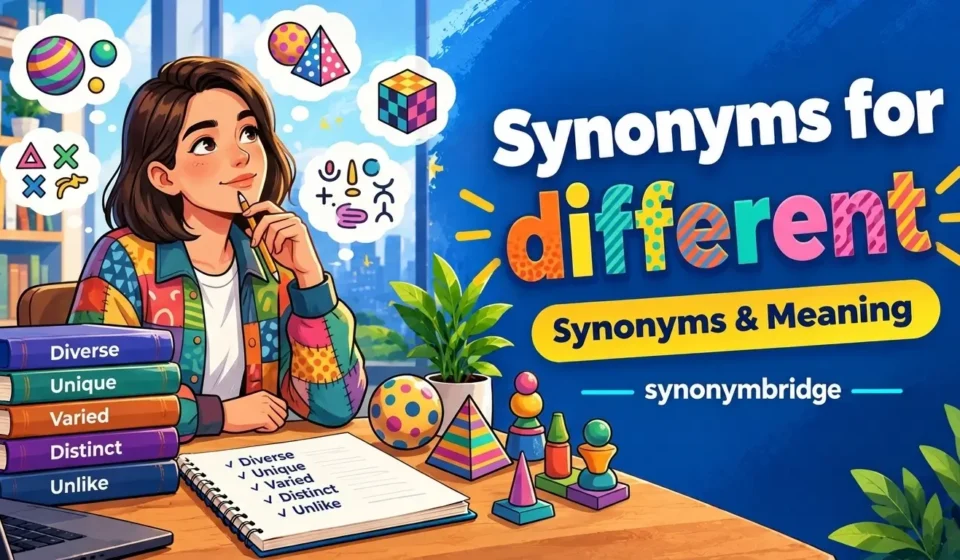
Synonyms for different include distinct, unique, unusual, varied, separate, and diverse. These words help describe people, things, ideas, and experiences that are not the same. The best choice depends on what you want to say, whether you are writing an essay, talking with friends, or describing something new.
Envision walking into a classroom where every student has a different idea for a school project. One student wants to build a robot, another wants to paint a picture, and someone else wants to plant a garden. Their ideas are not the same, and that makes the project more interesting.
You can use words like unique, distinct, and unusual to describe these ideas. Each word adds a slightly different meaning to your sentence.
Learning new words helps you share your thoughts with greater care. Students can use them to make essays clearer.
Bloggers can make their posts more interesting. Content writers can avoid using the same words too often. Daily English users can express their feelings and ideas with confidence.
For example, instead of saying, “We have different ideas,” you could say, “We have diverse ideas.” Both sentences work, but the second sounds more polished in some settings.
“Variety is the spice of life.”
The key is to choose a word that fits your message. You do not need fancy words to communicate well. You just need the right words for the right moment.
“Every voice has its own story to tell.”
50 Synonyms for Different
1. Distinct
- Meaning: Distinct means clearly unlike something else or easy to notice.
- Examples: Her voice sounds distinct from mine. Each room has a distinct style.
2. Unique
- Meaning: Unique means being the only one of its kind.
- Examples: She has a unique way of painting. Every child has a unique talent.
3. Unusual
- Meaning: Unusual means something is not common or expected.
- Examples: We saw an unusual bird today. His unusual idea surprised the whole class.
4. Diverse
- Meaning: Diverse means including many different types of people or things.
- Examples: Our team has diverse skills. The city offers diverse food choices.
5. Varied
- Meaning: Varied means having several kinds or forms.
- Examples: The menu has varied food options. We enjoy varied activities each weekend.
6. Unlike
- Meaning: Unlike means not being similar to someone or something.
- Examples: Unlike Tom, Mia enjoys running. This year feels unlike last year.
7. Separate
- Meaning: Separate means kept apart or not joined together.
- Examples: We have separate rooms at home. Keep the clean clothes separate.
8. Uncommon
- Meaning: Uncommon means something does not happen or appear very often.
- Examples: That flower is uncommon here. She has an uncommon name.
9. Individual
- Meaning: Individual means belonging to one person or thing alone.
- Examples: Each student has individual goals. Please pack your individual lunch.
10. Special
- Meaning: Special means not ordinary and often important to someone.
- Examples: Today is a special day. She gave me a special gift.
11. Original
- Meaning: Original means new, fresh, or not copied from others.
- Examples: He shared an original idea. Her original design won first prize.
12. Novel
- Meaning: Novel means new or different from what people usually know.
- Examples: The team tried a novel approach. Her novel idea saved time.
13. Alternative
- Meaning: Alternative means another choice that can replace the first one.
- Examples: We need an alternative plan. This route is an alternative option.
14. Contrasting
- Meaning: Contrasting means showing clear differences between two or more things.
- Examples: The room has contrasting colors. Their contrasting views started a debate.
15. Dissimilar
- Meaning: Dissimilar means not alike in look, form, or nature.
- Examples: The twins have dissimilar tastes. These two shapes are dissimilar.
16. Unrelated
- Meaning: Unrelated means having no clear link or connection.
- Examples: Those events are unrelated to each other. We discussed two unrelated topics.
17. Independent
- Meaning: Independent means free from control or support by another.
- Examples: She runs an independent business. The two teams work independently.
18. Divergent
- Meaning: Divergent means moving in different directions or holding different views.
- Examples: Their opinions became divergent over time. We followed divergent paths after school.
19. Disparate
- Meaning: Disparate means very different in type, nature, or quality.
- Examples: The group brought disparate skills together. They compared disparate ideas in class.
20. Distinguishable
- Meaning: Distinguishable means easy to recognize as different from something else.
- Examples: The two voices are distinguishable. Each twin has a distinguishable smile.
21. Exceptional
- Meaning: Exceptional means far from ordinary and better or different than usual.
- Examples: She showed exceptional talent today. His work has exceptional detail.
22. Extraordinary
- Meaning: Extraordinary means very unusual or much better than normal.
- Examples: We had an extraordinary experience. Her extraordinary courage inspired everyone.
23. Remarkable
- Meaning: Remarkable means unusual enough to deserve attention or praise.
- Examples: He made remarkable progress this year. The view was truly remarkable.
24. Rare
- Meaning: Rare means not found or seen very often.
- Examples: This bird is rare locally. She found a rare old coin.
25. Peculiar
- Meaning: Peculiar means strange or different from what people expect.
- Examples: There was a peculiar smell outside. His peculiar habit made us laugh.
26. Odd
- Meaning: Odd means unusual or not what people normally expect.
- Examples: That is an odd question. We heard an odd noise upstairs.
27. Strange
- Meaning: Strange means unfamiliar or unlike what seems normal.
- Examples: I heard a strange sound. The place felt strange at night.
28. Unfamiliar
- Meaning: Unfamiliar means not known or recognized from past experience.
- Examples: This street is unfamiliar to me. She tried an unfamiliar dish.
29. Fresh
- Meaning: Fresh means new or different from what came before.
- Examples: We need a fresh approach. He offered a fresh idea today.
30. Innovative
- Meaning: Innovative means using new ideas or methods to do things.
- Examples: Their innovative design saves energy. She found an innovative way to teach.
31. Creative
- Meaning: Creative means using imagination to make or think of new things.
- Examples: He has a creative mind. Her creative plan helped the team.
32. Imaginative
- Meaning: Imaginative means full of new ideas and lively thoughts.
- Examples: The child wrote an imaginative story. His imaginative drawings filled the page.
33. Unconventional
- Meaning: Unconventional means not following the usual rules or ways.
- Examples: She chose an unconventional career. Their unconventional plan worked well.
34. Unorthodox
- Meaning: Unorthodox means different from common beliefs or accepted methods.
- Examples: He uses an unorthodox teaching style. Their unorthodox plan drew attention.
35. Modified
- Meaning: Modified means changed slightly to make something fit a need.
- Examples: We used a modified recipe. The coach suggested a modified routine.
36. Altered
- Meaning: Altered means changed from the original form or state.
- Examples: The tailor altered my jacket. They followed an altered schedule today.
37. Changed
- Meaning: Changed means made or became unlike what was there before.
- Examples: Her opinion changed after the talk. The weather changed overnight.
38. Varied
- Meaning: Varied describes things that differ in style, form, or content.
- Examples: The class includes varied subjects. We tried varied games at camp.
39. Mixed
- Meaning: Mixed means made up of different kinds or parts.
- Examples: We have a mixed group. She felt mixed emotions after leaving.
40. Multifarious
- Meaning: Multifarious means having many different kinds, parts, or forms.
- Examples: The job requires multifarious skills. The museum displays multifarious works of art.
41. Heterogeneous
- Meaning: Heterogeneous means made up of parts that are not alike.
- Examples: The class is heterogeneous in age. We studied a heterogeneous group of plants.
42. Discrete
- Meaning: Discrete means separate and clearly different from other parts.
- Examples: The report has discrete sections. Each task is a discrete step.
43. Contrary
- Meaning: Contrary means opposite to what someone expects, says, or believes.
- Examples: His actions were contrary to his words. She gave a contrary answer.
44. Opposing
- Meaning: Opposing means being against another idea, view, or side.
- Examples: They shared opposing views in class. The teams had opposing goals.
45. Incompatible
- Meaning: Incompatible means unable to work or exist well together.
- Examples: These devices are incompatible with each other. Their plans were incompatible from the start.
46. Discerning
- Meaning: Discerning means showing good judgment when noticing small differences.
- Examples: A discerning reader spots weak arguments. She is a discerning art buyer.
47. Personalized
- Meaning: Personalized means changed to suit one person’s needs or taste.
- Examples: He received a personalized notebook. The app offers personalized lessons.
48. Tailored
- Meaning: Tailored means specially made or adjusted for a certain person or need.
- Examples: She chose a tailored study plan. The service offers tailored advice.
49. Nonidentical
- Meaning: Nonidentical means not exactly the same in every way.
- Examples: The twins are nonidentical siblings. These copies are nonidentical in color.
50. Differing
- Meaning: Differing means not being the same in opinion, nature, or form.
- Examples: They have differing views on school. The reports contain differing results.
Synonyms for Different Types
The best word depends on the type of difference you want to describe. Use diverse for groups with many kinds of people, distinct for clear differences, and unique for something special. Choose unusual when something is not common.
These words help explain differences in people, objects, ideas, styles, and experiences without making your writing sound repetitive.
Synonyms for Different Starting With O
Several useful words starting with O can describe something different. Original works well for fresh ideas, designs, and creative work.
Odd describes something strange or unexpected, while outstanding means much better or more noticeable than usual. Other is a simple choice when referring to an alternative. Select the word that matches your meaning and the tone of your sentence.
Synonyms for Different Ways
You can describe different ways of doing something with words such as alternative, varied, distinct, and unconventional. An alternative method gives you another choice, while a varied approach uses several methods.
An unconventional way does not follow the usual pattern. For example, a teacher may use games instead of lectures to make a lesson more engaging and easier to understand.
Synonyms for Different From Others
Words like unique, distinctive, unusual, and exceptional help describe someone or something that stands apart. Use unique to highlight special qualities, and distinctive when a feature makes something easy to recognize.
Exceptional suggests an unusually high level of skill or quality. Choose respectful words when describing people, since being different does not mean being better or worse than others.
Synonyms and Antonyms for Different
Common synonyms for different include distinct, diverse, unique, varied, and dissimilar. Each word highlights a slightly different kind of difference. Antonyms include same, similar, alike, identical, and equal, depending on the sentence.
For example, “The two bags are different” contrasts with “The two bags are alike.” Understanding both groups helps you compare objects, explain opinions, and write clearer sentences.
“The right word can make a simple idea clear.”
Frequently Asked Questions
What Is a Better Word Than “Different”?
A better word depends on what you want to describe. Distinct works when two things are clearly unlike each other. Unique highlights something special, while diverse describes a group with many kinds of people or things.
Use unusual for something unexpected and varied for a mix of types. In formal writing, choose the word that expresses your exact meaning instead of replacing “different” every time.
What Is a Better Word for Differently?
You can use uniquely, distinctly, unusually, or otherwise, depending on the sentence. “She thinks differently” could become “She thinks in a unique way.” “The two items are treated differently” might become “The two items are treated separately.”
Remember that “differently” describes how an action happens, so an adjective such as “different” may not fit in its place. Check the sentence before choosing a replacement.
What Is Another Word for “Very Different”?
Words such as vastly different, completely unlike, dissimilar, and contrasting can express strong differences. “Vastly different” works well when the gap between two things is large. “Completely unlike” is clear and conversational, while “contrasting” is useful when comparing features or ideas.
For example, you might say, “Their teaching styles are vastly different.” Pick a phrase that fits the strength of the difference you want to show.
What Is a Female Lover Called?
A female lover may be called a girlfriend, partner, or lover, depending on the relationship. “Girlfriend” commonly describes a woman in a romantic relationship, while “partner” can sound more neutral and may suggest a committed relationship.
“Lover” commonly highlights romantic or sexual feelings. The best term depends on the people involved and the situation. Use respectful language and avoid assuming someone’s relationship status or preferred label.
Conclusion
Learning synonyms for different helps you express ideas in a clear and interesting way. Instead of using the same word in every sentence, you can choose words like distinct, unique, diverse, or unusual to make your meaning more exact.
These words are useful in many parts of life. Students can use them in essays and school assignments. Bloggers can make their articles easier to read. Content writers can create fresh sentences that keep readers interested.
Daily English users can also use these words to explain their thoughts, share opinions, and talk about their experiences.
Start by learning three new words each day. Write a simple sentence with each word, then try using them in emails, conversations, and other writing tasks. You can also read books or articles and notice how writers employ similar words in different situations.
Remember that not every synonym fits every sentence. Unique may describe a special idea, while dissimilar may work better when comparing two things. Knowing these small differences will help you choose words with confidence.
“Small steps lead to big improvements.”
Keep practicing, stay curious, and enjoy learning new words. The more you practice, the easier it becomes to speak and write naturally.
“Good writing begins with clear thoughts and careful words.”