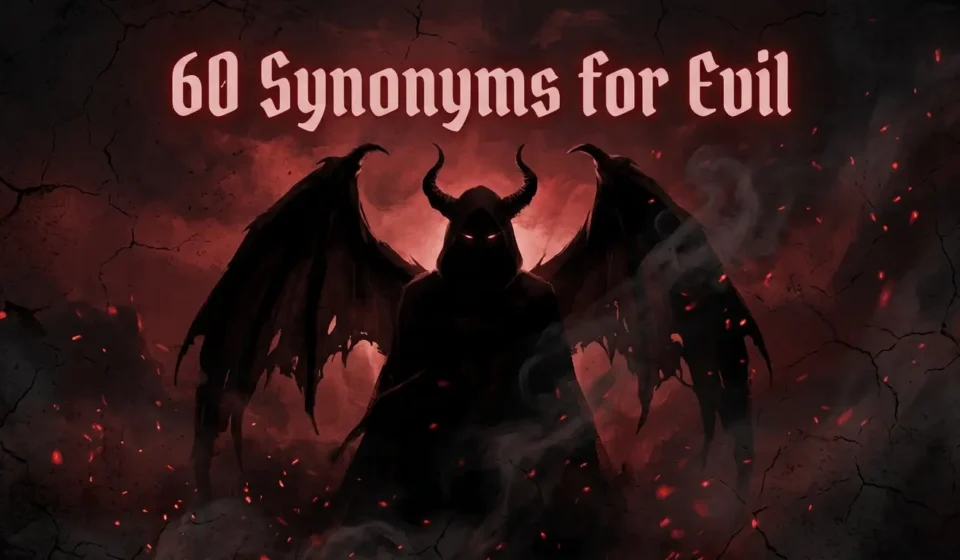
A synonym for evil is a word that describes something very bad, cruel, or morally wrong, like “wicked,” “sinister,” or “malevolent.” These words help you describe bad people, dark actions, or harmful intentions without repeating the word “evil” again and again.
Picture a villain in a movie. He smiles right before he does something terrible. That single smile tells you everything about him and it is why writers need more than one word for “evil.” One word gets boring fast, and it cannot capture every shade of darkness a story or a sentence needs.
The students, these words make essays and stories sound sharper and less repetitive. For bloggers, fresh vocabulary keeps readers interested and improves how a post reads out loud. For content writers, strong synonyms boost SEO by matching different search phrases people actually type.
Daily English users, knowing a few extra words for “evil” makes conversations, texts, and arguments feel more natural.
“Evil is easy, and has infinite forms.”
That line captures why one single word is never enough. A character can be sinister without being violent, or wicked without being loud about it. Learning these small differences helps you pick the exact right word every time.
“There is no evil in the atom; only in men’s souls.”
That thought reminds us that “evil” is really about choices, not objects which is exactly why so many synonyms exist to describe different kinds of bad choices.
MAIN CONTENT 60 SYNONYMS FOR EVIL
1. Wicked
- Meaning: Someone wicked enjoys hurting others or breaking moral rules on purpose.
- Examples: The wicked witch cursed the whole village. His wicked plan surprised everyone in town.
2. Sinister
- Meaning: Something sinister feels dangerous or dishonest, even if it looks calm outside.
- Examples: A sinister smile crossed his face slowly. The old house had a sinister feeling.
3. Malevolent
- Meaning: A malevolent person wants bad things to happen to other people.
- Examples: The malevolent king punished anyone who disagreed. Her malevolent glare made everyone nervous instantly.
4. Malicious
- Meaning: Malicious actions are done on purpose to hurt or upset someone.
- Examples: She spread malicious rumors about her coworker. His malicious comment ruined the whole meeting.
5. Vile
- Meaning: Vile means extremely unpleasant, disgusting, or morally wrong in behavior.
- Examples: He said something vile during the argument. Their vile treatment of workers shocked everyone.
6. Depraved
- Meaning: A depraved person has lost all sense of right and wrong.
- Examples: The depraved criminal showed zero remorse afterward. His depraved habits worried his entire family.
7. Corrupt
- Meaning: Corrupt describes someone who lies, cheats, or steals for personal gain.
- Examples: The corrupt official took bribes daily. Corrupt leaders often ignore the people’s needs.
8. Nefarious
- Meaning: Nefarious describes plans or actions that are wicked and often secret.
- Examples: They uncovered his nefarious business dealings quickly. Her nefarious scheme almost worked perfectly.
9. Villainous
- Meaning: Villainous means acting like a villain, cruel and clearly against good people.
- Examples: The villainous mastermind laughed at their failed rescue. His villainous laugh echoed through the castle.
10. Heinous
- Meaning: Heinous describes crimes or acts that are shockingly cruel or wrong.
- Examples: The court called it a heinous crime. Such heinous behavior deserves serious consequences immediately.
11. Diabolical
- Meaning: Diabolical means devilishly clever, cruel, and hard to imagine happening.
- Examples: His diabolical plan fooled the entire town. That was a truly diabolical trick, honestly.
12. Demonic
- Meaning: Demonic describes something that seems evil like an actual demon.
- Examples: The movie showed a demonic possession scene. His demonic grin scared the small children.
13. Monstrous
- Meaning: Monstrous means shockingly cruel, huge, or wrong in a scary way.
- Examples: The tyrant committed monstrous acts against his people. Such monstrous cruelty is hard to imagine.
14. Cruel
- Meaning: Cruel means causing pain to others and feeling no guilt about it.
- Examples: He was cruel to every single animal. Her cruel words hurt him deeply.
15. Ruthless
- Meaning: Ruthless describes someone who shows no mercy while reaching their goal.
- Examples: The ruthless boss fired staff without warning. He built his empire through ruthless business decisions.
16. Wretched
- Meaning: Wretched can describe someone morally low or a truly miserable situation.
- Examples: The wretched man betrayed his own family. It was a wretched, shameful thing to do.
17. Base
- Meaning: Base describes behavior that is morally low, selfish, or shameful.
- Examples: His base motives became obvious eventually. That was a base and cowardly act.
18. Foul
- Meaning: Foul describes something morally disgusting, unfair, or clearly wrong.
- Examples: They suspected foul play in the case. He used foul language during the fight.
19. Iniquitous
- Meaning: Iniquitous describes something deeply unjust, sinful, or morally wrong.
- Examples: The judge condemned the iniquitous business practices. Such iniquitous laws hurt poor families badly.
20. Immoral
- Meaning: Immoral means going against basic rules of right and wrong.
- Examples: Cheating on the test was clearly immoral. His immoral choices cost him many friends.
21. Unscrupulous
- Meaning: Unscrupulous people will lie or cheat without feeling any guilt.
- Examples: The unscrupulous salesman tricked people older customers again. Unscrupulous landlords often ignore basic tenant rights.
22. Treacherous
- Meaning: Treacherous describes someone who betrays trust in a dangerous, disloyal way.
- Examples: His treacherous friend sold their secret plans. That was a truly treacherous betrayal, honestly.
23. Malignant
- Meaning: Malignant describes something harmful that spreads and grows worse over time.
- Examples: His malignant influence spread through the whole office. Malignant gossip destroyed their long friendship.
24. Atrocious
- Meaning: Atrocious means extremely cruel, shocking, and hard to forgive or excuse.
- Examples: The soldiers committed atrocious acts during the war. Such atrocious behavior shocked the whole nation.
25. Abominable
- Meaning: Abominable means causing disgust or hatred because it feels so wrong.
- Examples: Everyone called the crime abominable and unforgivable. His abominable manners embarrassed the entire family.
26. Despicable
- Meaning: Despicable describes actions so bad that they deserve strong contempt.
- Examples: Lying to his sick grandmother was despicable. That despicable trick fooled every single customer.
27. Odious
- Meaning: Odious describes something extremely unpleasant or hateful to be around.
- Examples: His odious behavior at work upset colleagues daily. Everyone avoided the odious, arrogant new manager.
28. Loathsome
- Meaning: Loathsome means so unpleasant that people feel disgust just watching.
- Examples: The loathsome villain betrayed his own team. His loathsome habits disgusted almost everyone nearby.
29. Insidious
- Meaning: Insidious describes harm that spreads slowly and quietly without being noticed.
- Examples: The insidious rumor spread through school unnoticed. His insidious plan took months to reveal.
30. Pernicious
- Meaning: Pernicious describes something harmful in a slow, dangerous, and lasting way.
- Examples: Pernicious habits are hard to break later. The pernicious lie damaged their reputation permanently.
31. Baleful
- Meaning: Baleful describes a threatening look or presence that predicts something bad.
- Examples: He gave her a baleful stare across the room. The sky had a baleful, stormy color.
32. Fiendish
- Meaning: Fiendish describes plans or people that are cruel and cleverly wicked.
- Examples: The fiendish puzzle trapped everyone for hours. His fiendish laugh filled the dark room.
33. Satanic
- Meaning: Satanic describes something linked to extreme evil, often religious in tone.
- Examples: The movie featured a satanic ritual scene. People called his cruelty almost satanic afterward.
34. Hellish
- Meaning: Hellish describes an experience or place that feels unbearably bad or cruel.
- Examples: The prisoners endured hellish conditions for years. That exam week felt absolutely hellish, honestly.
35. Dark
- Meaning: Dark describes thoughts, humor, or actions connected to evil or sadness.
- Examples: The story took a very dark turn. He has a strangely dark sense of humor.
36. Twisted
- Meaning: Twisted describes a mind or plan that is disturbingly cruel or strange.
- Examples: The killer had a truly twisted mind. His twisted logic confused everyone in court.
37. Rotten
- Meaning: Rotten describes a person’s character as morally spoiled or corrupt.
- Examples: He is a rotten, dishonest business partner. That was a rotten thing to do.
38. Bad
- Meaning: Bad simply describes something morally wrong or harmful in general.
- Examples: He made a lot of bad choices. Bad people rarely admit their own mistakes.
39. Harmful
- Meaning: Harmful describes actions or things that cause damage or injury to others.
- Examples: Smoking is harmful to your entire body. His harmful advice cost her the job.
40. Injurious
- Meaning: Injurious describes something that causes real harm, damage, or lasting injury.
- Examples: The injurious comment damaged her professional reputation forever. His injurious habits affected his whole health.
41. Noxious
- Meaning: Noxious describes something poisonous, harmful, or deeply unpleasant to experience.
- Examples: The factory released a noxious cloud daily. His noxious attitude poisoned the whole team.
42. Toxic
- Meaning: Toxic describes people or situations that harm others emotionally or physically.
- Examples: She finally left the toxic relationship behind. His toxic comments hurt the whole team.
43. Poisonous
- Meaning: Poisonous describes words or influence that quietly damage people or relationships.
- Examples: His poisonous words destroyed their friendship completely. Poisonous rumors spread fast through the office.
44. Venomous
- Meaning: Venomous describes speech or attitude that is cruel, bitter, and hurtful.
- Examples: She gave a venomous reply during the debate. His venomous tone shocked the entire room.
45. Brutal
- Meaning: brutal describes behavior that is extremely violent, fierce, or uncontrolled.
- Examples: The brutal attack left the village terrified. His brutal criticism embarrassed her in public.
46. Brutal
- Meaning: Brutal describes actions that are violent, harsh, and show no gentleness.
- Examples: The brutal dictator ruled through fear alone. That was a brutal and unfair decision.
47. Barbaric
- Meaning: Barbaric describes cruelty that seems rudimentary, uncivilized, or shockingly harsh.
- Examples: Historians called the punishment barbaric and unnecessary. Such barbaric treatment has no place today.
48. Murderous
- Meaning: Murderous describes intentions or looks that suggest someone wants to kill.
- Examples: He shot her a murderous glare instantly. The murderous gang terrorized the small town.
49. Bloodthirsty
- Meaning: Bloodthirsty describes someone who wants or enjoys violence and killing.
- Examples: The bloodthirsty warlord attacked every nearby village. Fans called the boxer a bloodthirsty competitor.
50. Callous
- Meaning: Callous describes someone who feels no sympathy for other people’s pain.
- Examples: His callous response upset the grieving family. She stayed callous through the entire tragedy.
51. Heartless
- Meaning: Heartless describes someone who acts cruelly and shows absolutely no compassion.
- Examples: The heartless landlord evicted them during winter. That was a heartless thing to say.
52. Merciless
- Meaning: Merciless describes actions or people showing no pity toward anyone else.
- Examples: The merciless critic destroyed her first novel. His merciless teasing hurt his little brother.
53. Vicious
- Meaning: Vicious describes attacks, words, or behavior that are cruel and aggressive.
- Examples: The vicious dog attacked without any warning. Her vicious comments online upset many readers.
54. Spiteful
- Meaning: Spiteful describes actions meant to hurt someone out of anger or jealousy.
- Examples: He made a spiteful comment about her promotion. Her spiteful behavior surprised all her friends.
55. Malign
- Meaning: Malign describes an evil influence, or the act of speaking badly about someone.
- Examples: He tried to malign his former business partner. A malign influence changed his whole personality.
56. Black hearted
- Meaning: Black hearted describes someone who is deeply cruel and lacks any kindness.
- Examples: The black hearted villain betrayed his loyal followers. Everyone feared the black hearted pirate captain.
57. Ill natured
- Meaning: Ill natured describes someone with a naturally unkind, grumpy, or hostile personality.
- Examples: The ill natured neighbor complained about everything constantly. His ill natured remarks upset the whole class.
58. Degenerate
- Meaning: Degenerate describes someone whose morals have become weak, corrupt, or shameful.
- Examples: The degenerate ruler ignored his suffering people. His degenerate lifestyle worried his close friends.
59. Debased
- Meaning: Debased describes something whose value or morals have been lowered or corrupted.
- Examples: Power slowly debased his once honest character. The debased currency lost most of its value.
60. Unholy
- Meaning: Unholy describes something shocking, wrong, or almost sinful in nature.
- Examples: They formed an unholy alliance against the town. He made an unholy mess of everything.
Synonyms for Evil Person
A person who is described as evil usually shows cruelty on purpose, again and again, without guilt. Common words for this include wicked, villainous, malevolent, and black hearted. Writers use these terms for movie villains, historical tyrants, or anyone whose actions repeatedly hurt others.
Choosing the right word depends on tone: sinister feels quiet and hidden, while ruthless feels bold and direct. These words work well in stories, character descriptions, and everyday conversations about someone’s true nature.
Synonyms for Evil Spirit
An evil spirit is often described with words like demonic, satanic, fiendish, or hellish. These terms appear often in horror stories, folklore, and religious writing, where something unseen causes fear or harm. Demonic suggests possession or supernatural danger, while hellish describes conditions that feel unbearable.
Bloggers writing about myths, ghost stories, or spooky topics can rotate these words to avoid repeating “evil spirit” too many times in one article.
Synonyms for Evil Intentions
When someone plans to hurt others, we call their intentions malicious, nefarious, insidious, or sinister. Nefarious fits secret, large scale schemes, while malicious works better for smaller, personal actions like gossip or sabotage. Insidious intentions are dangerous because they are hidden and slow to notice.
These synonyms help writers show motive clearly, which is especially useful in mystery stories, workplace drama, or news writing about scams and fraud.
Synonyms for Evilly
To describe how someone acts evilly, try wickedly, maliciously, viciously, or cruelly. These adverbs describe the manner of an action, not just the action itself. For example, someone can smile wickedly, laugh maliciously, or attack viciously.
Using varied adverbs keeps descriptive writing lively and avoids repeating “evilly” throughout a story, essay, or character description, especially in fiction and creative writing assignments.
Synonyms and Antonyms for Evil
Synonyms for evil include wicked, vile, corrupt, and malevolent, all describing cruelty or moral wrongdoing. Antonyms, or opposite words, include good, kind, virtuous, and benevolent, which describe fairness and compassion. Knowing both sides helps writers create contrast between characters or ideas, such as a benevolent king versus a malevolent rival.
This pairing is especially useful in essays, stories, and vocabulary lessons about morality and character traits.
FAQ Section: People Also Ask
What is the strongest word for bad?
Among the strongest words for “bad” are heinous, atrocious, and abominable, which describe something shockingly wrong rather than mildly unpleasant. These words carry serious weight and are usually reserved for crimes, cruelty, or behavior that truly shocks people.
Unlike softer words like “bad” or “naughty,” these terms leave no doubt about how seriously wrong something is, making them useful for news writing, essays, and formal descriptions.
What is a word for pure evil?
Writers often use malevolent, diabolical, or demonic to describe pure evil, since these words suggest deep, deliberate cruelty with no good intention hidden inside. “Pure evil” implies total wickedness, so words tied to darkness, demons, or cunning cruelty fit best. These terms appear frequently in fantasy novels, horror movies, and villain descriptions, where a character’s evil nature needs to feel complete and unmistakable to readers.
Is there a stronger word than “evil”?
Yes, words like depraved, monstrous, and heinous can feel even stronger than “evil” because they add extra weight through shock or moral disgust. “Evil” is broad, but these alternatives narrow the meaning toward specific crimes, cruelty, or corruption.
Choosing a stronger word helps writers emphasize just how serious an action or person truly is, especially in persuasive writing, journalism, or dramatic storytelling.
What is slang for evil?
Casual or slang ways to describe someone evil include shady, twisted, messed up, or calling someone “pure evil” as an exaggeration. These informal terms are common in everyday conversation, social media, and casual storytelling, where formal words like “malevolent” would feel too stiff.
Slang keeps the tone light or humorous, even while describing someone’s genuinely bad or suspicious behavior.
Conclusion
Learning synonyms for evil does more than expand your vocabulary it sharpens how clearly you can write and speak. A single word repeated too often makes writing feel flat, but swapping in sinister, wicked, or malevolent at the right moment adds color and precision to any sentence.
Students can use these words to write stronger essays. Bloggers can use them to keep readers engaged. Content writers can match more search phrases naturally, and everyday speakers can describe people, movies, or news stories with more accuracy and confidence.
Try using one new synonym today in an email, a text message, or a short story. Small changes like this build vocabulary faster than memorizing long lists ever could, and they make your writing feel more natural over time.
“Words are, of course, the most powerful drug used by people.”
That power works both ways the right word can capture darkness just as vividly as it captures light, which is exactly why precise vocabulary matters so much in good writing.
“To call evil good and good evil is the saddest confusion.”
Keeping that clarity in mind, and choosing your words carefully, will always make your writing stronger, sharper, and easier for readers to trust.