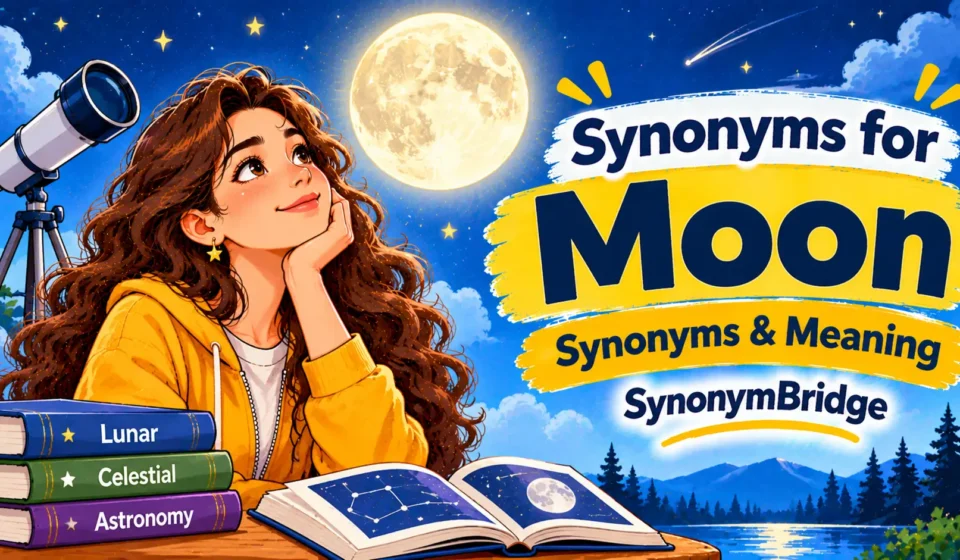
Synonyms for moon include Luna, Selene, moonbeam, night orb, lunar orb, celestial body, and night light. These words describe the moon in different ways. Some sound poetic and beautiful, while others work well in stories, poems, essays, and everyday writing.
Imagine sitting outside on a quiet night. The stars shine above, and a bright, round moon lights up the sky. You want to describe this lovely sight, but the same word keeps coming to mind. Finding new words can make your writing more colorful and fun.
For example, a writer might describe a full moon as a glowing silver orb instead of using the same word again.
Students can use these words to make poems and school essays better. Bloggers can create more interesting content. Content writers can add beauty to stories and descriptions. Daily English users can express their thoughts in fresh ways.
Learning different moon related words also helps you understand poetry, nature, and language. Each word has its own feeling and use.
“The moon turns an ordinary night into a beautiful sight.”
A simple word can create a strong picture in someone’s mind. The right choice can make your sentences feel warm, calm, and full of wonder.
“Every moonlit night has a story worth telling.”
Here are 50 beautiful and useful alternatives, including poetic names, literary expressions, and related celestial terms.
1. Luna
- Meaning: Luna is a poetic name for the moon, often used in creative writing.
- Examples: Luna looked bright above the trees. Her story began under Luna’s soft glow.
2. Selene
- Meaning: Selene is the name of the moon goddess in ancient Greek stories.
- Examples: Selene watched over the quiet night. The poet wrote about Selene’s beauty.
3. Moonbeam
- Meaning: A moonbeam is a soft ray of light shining from the moon.
- Examples: A moonbeam entered through my window. The cat slept in a moonbeam.
4. Moonlight
- Meaning: Moonlight is the gentle light that the moon gives at night.
- Examples: Moonlight covered the garden in silver. We walked together under the moonlight.
5. Lunar Orb
- Meaning: A lunar orb is a round, bright object seen in the night sky.
- Examples: The lunar orb appeared above the hills. A lunar orb brightened our evening walk.
6. Night Orb
- Meaning: A night orb is a poetic way to describe the moon.
- Examples: The night orb glowed above us. I watched the night orb rise.
7. Celestial Body
- Meaning: A celestial body is a natural object found in outer space.
- Examples: The moon is a celestial body. We studied this celestial body in class.
8. Earth’s Satellite
- Meaning: Earth’s satellite is the natural space object that travels around our planet.
- Examples: Earth’s satellite looks bright tonight. Scientists study Earth’s satellite carefully.
9. Natural Satellite
- Meaning: A natural satellite is an object that moves around a planet.
- Examples: Our natural satellite affects ocean tides. The natural satellite looks beautiful tonight.
10. Night Light
- Meaning: Night light is a gentle poetic expression for the moon’s glow.
- Examples: The night light shone above us. Children admired the night light outside.
11. Silver Orb
- Meaning: A silver orb describes the moon as a round, shining object.
- Examples: A silver orb rose slowly. The silver orb lit the lake.
12. Heavenly Body
- Meaning: A heavenly body is a natural object that shines or moves in space.
- Examples: The heavenly body appeared after sunset. We watched the heavenly body together.
13. Night Lantern
- Meaning: A night lantern is a poetic name for the moon’s soft glow.
- Examples: The night lantern brightened the village. I admired the night lantern outside.
14. Sky Jewel
- Meaning: A sky jewel compares the moon to a beautiful shining stone.
- Examples: The sky jewel looked amazing tonight. A sky jewel appeared above mountains.
15. Silver Disc
- Meaning: A silver disc describes the moon’s round and bright appearance.
- Examples: The silver disc hung above us. I saw a silver disc tonight.
16. Night Queen
- Meaning: Night queen is a poetic name that presents the moon as royalty.
- Examples: The night queen ruled the sky. The night queen shone above flowers.
17. Moon Goddess
- Meaning: A moon goddess is a female deity connected with the moon.
- Examples: The moon goddess appeared in legends. Artists painted the moon goddess beautifully.
18. Night Star
- Meaning: Night star is a poetic expression for the moon, though it is not technically a star.
- Examples: The night star looked bright tonight. Children pointed toward the night star.
19. Moon Sphere
- Meaning: A moon sphere describes the moon as a round object in space.
- Examples: The moon sphere looked pale tonight. We studied the moon sphere together.
20. Lunar Disc
- Meaning: A lunar disc describes the moon’s round shape as seen from Earth.
- Examples: The lunar disc appeared behind clouds. A lunar disc shone above town.
21. Shining Orb
- Meaning: A shining orb is a round object that gives off or reflects light.
- Examples: The shining orb rose slowly. We watched the shining orb together.
22. Silver Moon
- Meaning: Silver moon is a poetic expression for the moon’s pale, silvery appearance.
- Examples: The silver moon looked peaceful tonight. A silver moon appeared over water.
23. Night Beacon
- Meaning: A night beacon describes the moon as a bright guide in darkness.
- Examples: The night beacon lit our path. Sailors watched the night beacon carefully.
24. Moon Disc
- Meaning: A moon disc describes the moon’s circular shape in the night sky.
- Examples: The moon disc looked perfectly round. I photographed the moon disc tonight.
25. Lunar Sphere
- Meaning: A lunar sphere is a scientific sounding expression describing the moon’s round shape.
- Examples: The lunar sphere travels around Earth. Students studied the lunar sphere today.
26. Night Globe
- Meaning: Night globe is a creative expression describing the moon as a round object.
- Examples: The night globe shone brightly above. A night globe appeared through clouds.
27. Moon Lantern
- Meaning: A moon lantern describes the moon as a natural lamp in darkness.
- Examples: The moon lantern lit the road. We admired the moon lantern together.
28. White Orb
- Meaning: A white orb describes the moon as a bright, round object.
- Examples: A white orb appeared above the trees. The white orb looked beautiful tonight.
29. Shashi
- Meaning: Shashi is a Sanskrit derived poetic name for the moon, used in Indian languages.
- Examples: Shashi appeared in the evening sky. The poet praised Shashi’s gentle beauty.
30. Chandra
- Meaning: Chandra is a traditional Indian name for the moon, also linked to mythology.
- Examples: Chandra looked bright after sunset. The story described Chandra’s beauty.
31. Indu
- Meaning: Indu is a beautiful Sanskrit name for the moon, often found in poetry.
- Examples: Indu shone above the quiet lake. Her poem celebrated Indu’s beauty.
32. Soma
- Meaning: Soma is an ancient Sanskrit name associated with the moon and mythology.
- Examples: Soma appeared in the old story. The poet used Soma in verse.
33. Nishakar
- Meaning: Nishakar is a Sanskrit derived poetic name meaning the maker of night.
- Examples: Nishakar brightened the dark sky. The poet praised Nishakar’s glow.
34. Shashank
- Meaning: Shashank is a Sanskrit derived name for the moon, meaning marked by a hare.
- Examples: Shashank appeared above the hills. The poem mentioned Shashank’s gentle light.
35. Moon Glow
- Meaning: Moon glow describes the soft brightness that spreads across the night.
- Examples: Moon glow filled the open field. We enjoyed the moon glow outside.
36. Lunar Light
- Meaning: Lunar light is the sunlight reflected from the moon toward Earth.
- Examples: Lunar light reached our garden. The lake reflected lunar light beautifully.
37. Silver Lantern
- Meaning: A silver lantern is a poetic comparison for the moon’s glowing appearance.
- Examples: The silver lantern shone above houses. We watched the silver lantern rise.
38. Night Companion
- Meaning: Night companion is a poetic expression for the moon seen during darkness.
- Examples: The night companion followed our journey. I watched my night companion rise.
39. Cosmic Orb
- Meaning: A cosmic orb is a round object found in the vast universe.
- Examples: The cosmic orb looked bright tonight. We learned about the cosmic orb.
40. Sky Lantern
- Meaning: A sky lantern is a creative name that compares the moon to a lamp.
- Examples: The sky lantern appeared above fields. A sky lantern brightened the night.
41. Moon Queen
- Meaning: Moon queen is a poetic expression that gives the moon a royal character.
- Examples: The moon queen ruled the sky. The moon queen inspired her poem.
42. Night Jewel
- Meaning: A night jewel compares the moon to a precious stone in darkness.
- Examples: The night jewel shone above trees. We admired the night jewel together.
43. Pale Orb
- Meaning: A pale orb describes the moon as a soft, light colored round object.
- Examples: The pale orb appeared behind clouds. A pale orb brightened the sky.
44. Lunar Companion
- Meaning: Lunar companion is a poetic expression for the moon that travels around Earth.
- Examples: Our lunar companion affects ocean tides. The lunar companion looked beautiful tonight.
45. Silver Sphere
- Meaning: A silver sphere describes the moon as a round, silvery object.
- Examples: The silver sphere rose above hills. We photographed the silver sphere together.
46. Night Crown
- Meaning: Night crown is a poetic expression that presents the moon as night royalty.
- Examples: The night crown shone above us. Stars surrounded the night crown beautifully.
47. Moon Halo
- Meaning: A moon halo is a ring of light sometimes seen around the moon.
- Examples: A moon halo appeared last night. We photographed the moon halo together.
48. Crescent Moon
- Meaning: A crescent moon is the moon’s thin, curved shape during certain phases.
- Examples: A crescent moon appeared at dusk. The crescent moon looked lovely tonight.
49. Full Moon
- Meaning: A full moon appears round and bright when its lit side faces Earth.
- Examples: The full moon lit our garden. We watched the full moon rise.
50. Moonlit Orb
- Meaning: Moonlit orb is a poetic expression for the bright moon in the night sky.
- Examples: The moonlit orb appeared above water. We admired the moonlit orb together.
Beautiful Synonyms for Moon
Beautiful words can make descriptions of the moon feel more magical. Try expressions such as Luna, Selene, silver orb, sky jewel, night queen, and moonbeam. These words work well in poems, romantic messages, and nature writing.
Choose Luna or Selene for a mythical touch. Use silver orb or sky jewel when describing the moon’s appearance. Each expression adds a different feeling to your sentence.
Synonyms for Moon in Hindi
Hindi has several traditional and poetic names for the moon. Common choices include चाँद (Chaand), चंद्रमा (Chandrama), शशि (Shashi), इंदु (Indu), and सोम (Som). Chaand is common in daily speech, while Shashi and Indu sound more poetic.
You can use these words in poems, songs, stories, and creative descriptions. Their meanings and cultural uses may differ slightly depending on the context.
Synonyms for Moon in Kannada
Kannada uses several words to describe the moon in everyday speech and literature. Common terms include ಚಂದ್ರ (Chandra), ಚಂದಿರ (Chandira), ಶಶಿ (Shashi), and ಸೋಮ (Soma).
Chandra is a widely understood word, while Chandira has a familiar and poetic feel. These names can make Kannada poems, stories, and songs more expressive. Choose the word that best matches your sentence and intended meaning.
Synonyms for Moon in Sanskrit
Sanskrit has many beautiful names for the moon, especially in classical poetry. Some well known words include चन्द्रः (Chandra), शशाङ्कः (Shashanka), इन्दुः (Indu), सोमः (Soma), and निशाकरः (Nishakara).
These names often connect the moon with nature, mythology, and nighttime beauty. Sanskrit poets use such expressions to create rich images of the sky. They are also found in traditional names and literary works.
FAQ
1. What is a beautiful word for the moon?
Selene is one of the most beautiful poetic names for the moon. It comes from Greek mythology, where Selene represents the moon goddess. Other lovely choices include Luna, silver orb, sky jewel, and night queen.
These words work well in poems, romantic writing, and creative stories. Choose a word that matches the feeling you want to create.
2. What word is associated with the moon?
Many words are associated with the moon, including night, stars, tides, darkness, silver, glow, and lunar. These words describe its appearance, effects, and place in nature.
For example, lunar relates directly to the moon, while tides describe one of its natural effects on Earth. Writers often use these related words when describing nighttime scenes, space, and nature.
3. What is a fancy name for the moon?
Luna is a popular fancy name for the moon. It sounds elegant and appears in poetry, stories, and creative writing. Selene, Shashank, Indu, and Nishakar are other interesting choices. Some names come from ancient myths, while others have roots in Sanskrit.
These expressions can give your writing a more artistic feel and help you avoid repeating the same word.
4. What is an old word for moon?
Mona is an Old English word historically associated with the moon. Another familiar historical form is mōna, which appears in Old English records and connects to the modern word moon. Such older forms help us understand how English has changed over time.
You may also find traditional names such as Luna and Selene in older literature and mythology.
Conclusion
Learning synonyms for moon gives you more ways to describe the night sky. Instead of using the same word again and again, you can choose expressions such as Luna, silver orb, moonbeam, Selene, and lunar light. Each word brings a different image and feeling to your writing.
These words can help students write better essays and poems. Bloggers can use them to make their articles more engaging.
Content writers can create fresh descriptions, while daily English users can express their thoughts with greater confidence.
The best way to learn these words is through practice. Try using a new moon related word in your next email, school essay, poem, or daily conversation. Read each word aloud and notice how it changes the meaning and mood of your sentence.
You do not need to memorize all 50 words at once. Start with five favorites and use them in your own sentences. Then slowly add more to your vocabulary.
“Beautiful words help simple thoughts shine brighter.”
Keep exploring new expressions, enjoy the beauty of language, and let your writing shine like the moon.
“A richer vocabulary opens the door to brighter ideas.”