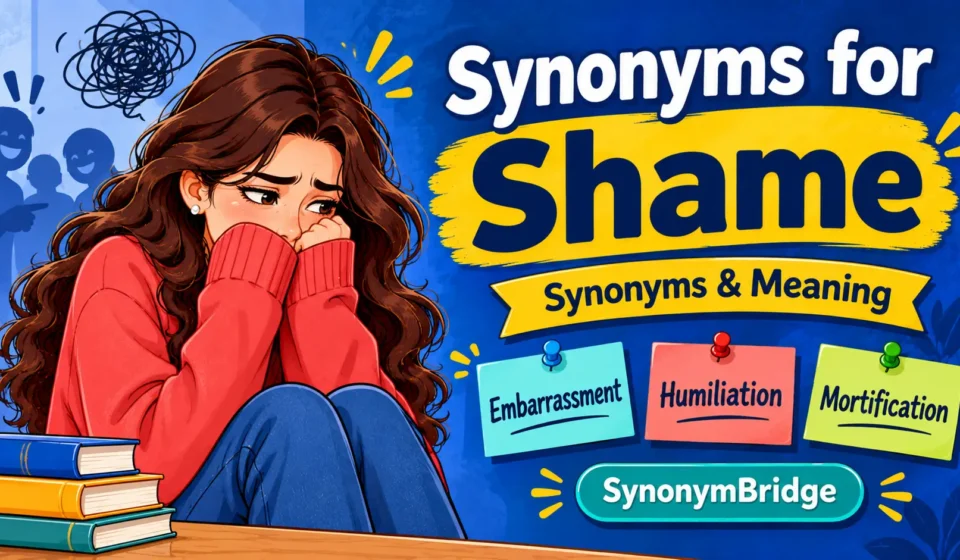
Synonyms for shame include disgrace, guilt, embarrassment, humiliation, dishonor, and regret. These words help describe painful feelings, wrong actions, and moments when someone feels bad about their behavior. Each word has a slightly different meaning, so choosing the right one makes your writing clearer and more natural.
Imagine making a mistake in front of your whole class. Everyone notices, and you wish you could hide. You may feel bad about what happened and worry about what others think. Moments like these are part of everyday life.
For example, a student may feel embarrassed after giving the wrong answer during a lesson. The right words can help explain that feeling without using the same word again and again.
Learning different words for shame can make your English stronger. Students can use them to write better essays and stories.
Bloggers can make their content more interesting. Content writers can express feelings with greater care. Daily English users can speak with more confidence.
“Words can help us understand feelings that are hard to explain.”
A good choice of words also helps readers understand the reason behind an emotion. Some words show sadness, while others express guilt or loss of respect.
“A small mistake can teach a lesson for life.”
Here are 40 useful words related to shame. Each word has a simple meaning and two examples to help you understand its use.
1. Disgrace
- Meaning: Disgrace means losing respect because of bad actions or behavior.
- Examples: His actions brought disgrace to his family. The public scandal became a national disgrace.
2. Embarrassment
- Meaning: Embarrassment is the uncomfortable feeling caused by an awkward moment.
- Examples: Her mistake caused great embarrassment. He laughed to hide his embarrassment.
3. Humiliation
- Meaning: Humiliation is the painful feeling of being made small before others.
- Examples: She faced humiliation during the meeting. Nobody deserves public humiliation at work.
4. Guilt
- Meaning: Guilt is the bad feeling you have after doing wrong.
- Examples: He felt guilt after telling lies. Her guilt made it hard to sleep.
5. Dishonor
- Meaning: Dishonor means losing respect because of shameful or dishonest actions.
- Examples: His cheating brought dishonor to his team. The soldier refused to accept dishonor.
6. Regret
- Meaning: Regret is sadness about something wrong that you did.
- Examples: She felt regret after hurting him. He expressed regret for his rude words.
7. Mortification
- Meaning: Mortification is deep embarrassment caused by an upsetting or awkward event.
- Examples: He felt mortification after falling outside. Her mistake caused complete mortification.
8. Chagrin
- Meaning: Chagrin is the upset feeling caused by failure or embarrassment.
- Examples: To his chagrin, nobody noticed him. She smiled despite her private chagrin.
9. Humbleness
- Meaning: Humbleness means having a modest attitude without thinking you are better.
- Examples: His humbleness impressed the whole team. She showed humbleness after winning.
10. Discomfort
- Meaning: Discomfort is an uneasy feeling during an awkward or difficult situation.
- Examples: His question caused some discomfort. She showed discomfort during the conversation.
11. Self Consciousness
- Meaning: Self consciousness means worrying too much about how others see you.
- Examples: Her self consciousness stopped her from speaking. He felt self conscious about his clothes.
12. Remorse
- Meaning: Remorse is deep sadness and regret after hurting someone.
- Examples: He showed remorse for his actions. Her remorse led her to apologize.
13. Repentance
- Meaning: Repentance means feeling sorry and wanting to change your wrong actions.
- Examples: His repentance helped rebuild their trust. She showed repentance through kind actions.
14. Degradation
- Meaning: Degradation is the loss of respect, worth, or good standing.
- Examples: The cruel treatment caused his degradation. Nobody should face such degradation.
15. Infamy
- Meaning: Infamy means having a bad name because of terrible actions.
- Examples: The crime brought him lasting infamy. His name became linked with infamy.
16. Stigma
- Meaning: Stigma is a mark of shame linked to a person or group.
- Examples: Mental illness should carry no stigma. She worked hard to remove the stigma.
17. Discredit
- Meaning: Discredit means losing trust or respect because of bad behavior.
- Examples: His lies brought discredit to the company. The report put his claims into discredit.
18. Dishonesty
- Meaning: Dishonesty means not telling the truth or acting in a fair way.
- Examples: Her dishonesty damaged their friendship. The teacher warned him against dishonesty.
19. Awkwardness
- Meaning: Awkwardness is the uneasy feeling during a strange social moment.
- Examples: Silence filled the room with awkwardness. He laughed to break the awkwardness.
20. Discomfiture
- Meaning: Discomfiture is a feeling of worry, confusion, or embarrassment.
- Examples: His question caused her discomfiture. She hid her discomfiture with a smile.
21. Abashment
- Meaning: Abashment is the feeling of shame that makes someone shy.
- Examples: His praise caused her abashment. She lowered her eyes in abashment.
22. Self Blame
- Meaning: Self blame means holding yourself responsible for something bad that happened.
- Examples: Self blame made her feel worse. He stopped his self blame after learning the truth.
23. Self Reproach
- Meaning: Self reproach means blaming yourself for doing something wrong.
- Examples: She felt self reproach after the argument. His self reproach lasted for several days.
24. Disapproval
- Meaning: Disapproval means showing that you do not like someone’s actions.
- Examples: Her parents showed disapproval of his choice. He noticed their disapproval immediately.
25. Condemnation
- Meaning: Condemnation means strong criticism of someone or something wrong.
- Examples: The public showed condemnation of the crime. His actions faced strong condemnation.
26. Scorn
- Meaning: Scorn is a strong feeling of disrespect toward someone.
- Examples: She answered his rude words with scorn. His actions earned public scorn.
27. Contempt
- Meaning: Contempt means thinking someone is not worthy of respect.
- Examples: He looked at the liar with contempt. Her words showed deep contempt.
28. Disrespect
- Meaning: Disrespect means treating someone without proper care or honor.
- Examples: His behavior showed disrespect toward others. She refused to accept such disrespect.
29. Reproach
- Meaning: Reproach is blame or criticism for doing something wrong.
- Examples: His mother spoke with gentle reproach. She felt reproach after breaking her promise.
30. Self Disgust
- Meaning: Self disgust is a strong feeling of dislike toward yourself.
- Examples: He struggled with self disgust after lying. Her mistake filled her with self disgust.
31. Mortification of Pride
- Meaning: Mortification of pride means feeling deeply hurt after losing respect.
- Examples: His defeat caused mortification of pride. She faced mortification of pride after losing.
32. Humiliation of Pride
- Meaning: Humiliation of pride means feeling hurt when others damage your confidence.
- Examples: His public failure caused humiliation of pride. She struggled after humiliation of pride.
33. Discrediting
- Meaning: Discrediting means making someone lose trust through harmful words or actions.
- Examples: The false story caused his discrediting. She rejected the discrediting claims against her.
34. Penitence
- Meaning: Penitence means feeling sorry for wrong actions and wanting forgiveness.
- Examples: He showed penitence after his mistake. Her penitence helped restore their friendship.
35. Contrition
- Meaning: Contrition means deep sorrow for doing something wrong or hurtful.
- Examples: His apology showed true contrition. She spoke with contrition about her mistake.
36. Self Rejection
- Meaning: Self rejection means refusing to accept yourself because of painful feelings.
- Examples: Self rejection made him avoid his friends. She worked to overcome self rejection.
37. Loss of Face
- Meaning: Loss of face means losing respect in front of other people.
- Examples: The mistake caused him to lose face. She feared losing face before her team.
38. Dishonorableness
- Meaning: Dishonorableness means having a character that lacks honesty or respect.
- Examples: His dishonorableness surprised everyone around him. The story revealed his dishonorableness clearly.
39. Shamefacedness
- Meaning: Shamefacedness means looking or feeling embarrassed after doing something wrong.
- Examples: His shamefacedness showed after the argument. She entered the room with shamefacedness.
40. Abasement
- Meaning: Abasement means a loss of dignity caused by shame or mistreatment.
- Examples: He refused to accept public abasement. Her treatment filled her with abasement.
More Ways to Express Shame
Different situations call for different words. Some expressions describe personal feelings, while others focus on actions, behavior, and social reactions.
Synonyms for Shame and Guilt
Shame and guilt are close in meaning, but they are not the same. Guilt often comes from feeling bad about something you did. Shame can make you feel bad about yourself. Useful related words include remorse, regret, contrition, and self blame.
These words work well in essays, personal stories, and emotional writing when you want to explain someone’s feelings clearly.
Synonyms for Shame and Embarrassment
Embarrassment usually comes from an awkward moment, while shame can feel deeper and last longer. Words such as humiliation, mortification, chagrin, awkwardness, and abashment can describe these feelings.
Use embarrassment for small social mistakes and humiliation for more painful public experiences. These alternatives help make stories and everyday conversations sound more natural and expressive.
Synonyms for Shame Verb
The verb shame means to make someone feel bad about their actions or behavior. Depending on the sentence, you can use words such as humiliate, embarrass, disgrace, dishonor, and mortify.
For example, a person may humiliate someone through cruel words. A public mistake may embarrass a student. Choose a verb that matches the level of emotional pain.
“The right words can turn a difficult feeling into a clear message.”
Synonyms for Such a Shame
The phrase such a shame expresses sadness or disappointment about an unfortunate event. You can replace it with expressions such as what a pity, what a disappointment, how unfortunate, and what a loss.
For example, you might say, “What a pity that the event was canceled.” These alternatives work well in friendly conversations, messages, and informal writing.
FAQ
1. What is a better word for shame?
A better word for shame depends on the feeling or situation you want to describe. Disgrace works when someone loses respect because of bad actions. Embarrassment fits an awkward social moment.
Humiliation describes a deeply painful public experience. Remorse is useful when someone feels sorry for hurting another person. Choose the word that best matches the reason behind the feeling.
2. What is another word for guilt and shame?
Words such as remorse, regret, contrition, penitence, and self reproach can express both guilt and shame. They describe feelings that may follow a mistake or harmful action. Remorse and contrition suggest deep sorrow, while regret can describe sadness about a choice. Self reproach focuses on blaming yourself.
The best choice depends on how strongly someone feels and whether the focus is on an action or personal feelings.
3. What is a synonym for the word disgrace?
Dishonor is one of the closest synonyms for disgrace. Both words describe a loss of respect caused by bad actions or behavior. Other useful alternatives include infamy, discredit, humiliation, and stigma.
For example, a public scandal may bring disgrace to a person or organization. You can use dishonor in formal writing and infamy when describing someone known for terrible actions.
4. What are some synonyms for “feeling shame”?
Some useful words for feeling shame include embarrassment, guilt, remorse, mortification, chagrin, and self consciousness. Each word describes a slightly different emotional experience. Embarrassment often comes from an awkward moment, while remorse follows a wrong action.
Mortification describes very deep embarrassment. Self consciousness is useful when someone worries about how others see them. These words help explain emotions in stories and conversations.
Conclusion
Learning synonyms for shame can make your English clearer, more natural, and interesting. Instead of using the same word in every sentence, you can choose words that explain the exact feeling or situation.
Embarrassment, guilt, disgrace, remorse, and humiliation each have a different meaning. Knowing these differences helps you share your thoughts with greater care.
Students can use these words in essays, schoolwork, and creative writing. Bloggers and content writers can make their articles more engaging by choosing words that fit their topics. English learners can also use them to build confidence in daily conversations.
Start by learning a few words each day. Try using them in emails, essays, messages, and simple conversations. Pay attention to their meanings before adding them to your sentences. You do not need to use difficult words to sound smart. You only need to choose the right word for the right moment.
“Every new word gives your thoughts a stronger voice.”
Keep practicing, read often, and explore new expressions. Over time, your vocabulary will grow, and your writing will become easier to understand.
“Good communication begins with choosing words that express what you truly mean.”