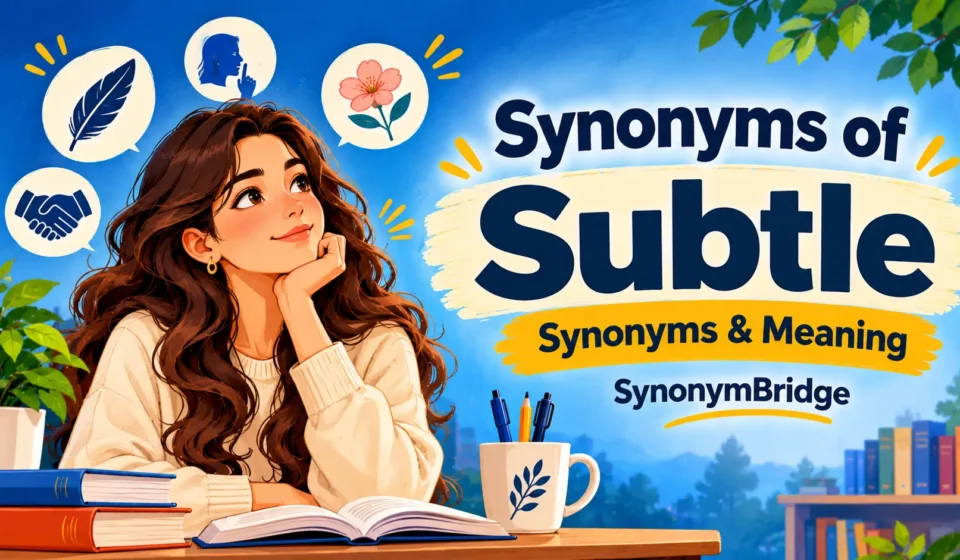
Synonyms for subtle include understated, delicate, faint, slight, gentle, discreet, and nuanced. These words describe things that are not easy to notice but still have meaning. The best choice depends on whether you describe a small change, a hidden message, or a quiet quality.
Imagine reading a story where a character feels sad but never says it. Instead, a small change in their voice tells you how they feel. You notice something special without seeing it clearly. These small details can make writing more interesting and real.
For example, a writer may add a slight change in tone to show that a character feels worried. The right word helps readers understand that detail.
Learning different words for subtle can make your English stronger. Students can use them to write better essays.
Bloggers can make their content clearer and more engaging. Content writers can avoid using the same words again and again. Daily English users can express their thoughts with greater care.
The right word can also help you describe feelings, actions, colors, sounds, and small changes.
“Small details often carry the biggest meaning.”
A good vocabulary helps you notice these details and explain them in simple ways.
“The right words make quiet ideas easier to understand.”
50 Synonyms for Subtle
1. Understated
- Meaning: Understated describes something simple that does not attract too much attention.
- Examples: Her dress has an understated style. The room looks elegant and understated.
2. Delicate
- Meaning: Delicate describes something gentle, light, or easy to miss.
- Examples: She noticed a delicate change in tone. The painting uses delicate shades of blue.
3. Faint
- Meaning: Faint means weak, light, or difficult to notice clearly.
- Examples: I heard a faint sound outside. A faint smile appeared on his face.
4. Slight
- Meaning: Slight describes a small amount or a very little change.
- Examples: There was a slight change today. She gave me a slight smile.
5. Gentle
- Meaning: Gentle describes something soft, calm, and not too strong.
- Examples: He spoke in a gentle voice. A gentle breeze moved the curtains.
6. Discreet
- Meaning: Discreet describes someone who acts carefully without attracting unwanted attention.
- Examples: She gave him a discreet warning. We need a discreet way to respond.
7. Nuanced
- Meaning: Nuanced describes something with small details or shades of meaning.
- Examples: Her answer showed a nuanced view. The writer presents a nuanced argument.
8. Imperceptible
- Meaning: Imperceptible describes something so small that people hardly notice it.
- Examples: The color showed an imperceptible change. His expression had an imperceptible shift.
9. Inconspicuous
- Meaning: Inconspicuous describes something that does not stand out or attract attention.
- Examples: He wore an inconspicuous jacket today. The small sign remained inconspicuous outside.
10. Unobtrusive
- Meaning: Unobtrusive describes something that does not disturb or interrupt others.
- Examples: The design looks clean and unobtrusive. She chose an unobtrusive way to help.
11. Restrained
- Meaning: Restrained describes something controlled and free from strong or loud expression.
- Examples: His speech had a restrained tone. She gave a restrained response yesterday.
12. Muted
- Meaning: Muted describes colors, sounds, or feelings that seem soft and quiet.
- Examples: The walls have muted colors. His muted reaction surprised everyone in class.
13. Soft
- Meaning: Soft describes something gentle that does not seem strong or harsh.
- Examples: She noticed a soft change. The music played at a soft volume.
14. Quiet
- Meaning: Quiet describes something that happens without noise or much attention.
- Examples: He made a quiet suggestion. A quiet shift changed their friendship.
15. Mild
- Meaning: Mild describes something gentle that does not have a strong effect.
- Examples: She showed mild interest in art. The sauce has a mild flavor.
16. Modest
- Meaning: Modest describes something simple that avoids showing off or seeking praise.
- Examples: He made a modest request. Her outfit had a modest design.
17. Fine
- Meaning: Fine describes small details that need careful attention to understand.
- Examples: The artist added fine details. I noticed a fine difference between them.
18. Shaded
- Meaning: Shaded describes something with slight differences in color, tone, or meaning.
- Examples: The painting has shaded colors. Her words carried a shaded meaning.
19. Gradual
- Meaning: Gradual describes something that changes slowly over a period of time.
- Examples: We noticed gradual progress this month. The gradual shift surprised the whole team.
20. Minimal
- Meaning: Minimal describes something very small, simple, or limited in amount.
- Examples: The design uses minimal decoration. He made minimal changes to the report.
21. Underplayed
- Meaning: Underplayed describes something shown in a simple way without strong emotion.
- Examples: Her reaction felt underplayed today. The actor gave an underplayed performance.
22. Veiled
- Meaning: Veiled describes something hidden or expressed without saying it directly.
- Examples: His reply contained a veiled warning. She made a veiled comment about work.
23. Implicit
- Meaning: Implicit describes an idea that people understand without hearing it directly.
- Examples: Her message carried an implicit promise. There was an implicit rule in class.
24. Indirect
- Meaning: Indirect describes something expressed without saying the main point openly.
- Examples: He gave an indirect answer. Her indirect message made me think.
25. Oblique
- Meaning: Oblique describes something expressed in a way that is not direct.
- Examples: She made an oblique reference yesterday. His oblique reply confused the group.
26. Elusive
- Meaning: Elusive describes something difficult to find, notice, or understand clearly.
- Examples: The answer remained elusive for weeks. I noticed an elusive change in mood.
27. Hidden
- Meaning: Hidden describes something that stays out of sight or public view.
- Examples: The message had a hidden meaning. He noticed a hidden detail there.
28. Subdued
- Meaning: Subdued describes something quiet, controlled, or less bright than usual.
- Examples: She wore a subdued shade. His voice sounded subdued during dinner.
29. Refined
- Meaning: Refined describes something carefully improved, polished, and free from superfluous details.
- Examples: The design has a refined look. Her writing shows a refined style.
30. Sophisticated
- Meaning: Sophisticated describes something thoughtful, detailed, and carefully developed.
- Examples: The artwork has a sophisticated design. His response showed sophisticated thinking.
31. Unassuming
- Meaning: Unassuming describes someone or something that does not seek attention.
- Examples: She has an unassuming personality. The small shop looks unassuming outside.
32. Reserved
- Meaning: Reserved describes someone who does not openly show feelings or thoughts.
- Examples: He remained reserved during the meeting. Her reserved nature seemed quite unusual.
33. Tactful
- Meaning: Tactful describes words or actions that avoid hurting other people’s feelings.
- Examples: She gave a tactful reply. His tactful advice helped the team.
34. Careful
- Meaning: Careful describes something done with attention to small details.
- Examples: He made a careful observation. Her careful wording avoided confusion.
35. Nuanced in tone
- Meaning: Nuanced in tone describes speech with small differences in feeling or expression.
- Examples: Her review was nuanced in tone. The letter felt nuanced in tone.
36. Fine spun
- Meaning: Fine spun describes something created with great care and delicate detail.
- Examples: The story has fine spun details. Her argument used fine spun ideas.
37. Slightly Noticeable
- Meaning: Slightly noticeable describes something people can see with close attention.
- Examples: The mark was slightly noticeable. His smile looked slightly noticeable today.
38. Ingrained
- Meaning: Ingrained describes a quality or habit that exists deeply within someone.
- Examples: Her kindness is ingrained in her. The belief became ingrained over time.
39. Deliberate
- Meaning: Deliberate describes an action done carefully with a clear purpose.
- Examples: He made a deliberate change. Her deliberate pause caught my attention.
40. Measured
- Meaning: Measured describes words or actions that show careful control.
- Examples: She gave a measured response. His measured tone kept everyone calm.
41. Tempered
- Meaning: Tempered describes something softened or controlled to avoid strong effects.
- Examples: His anger was tempered with patience. The speech had tempered criticism throughout.
42. Light
- Meaning: Light describes something small, gentle, or not very strong.
- Examples: She added a light touch. A light change improved the design.
43. Low Key
- Meaning: Low key describes something calm, simple, and free from extra attention.
- Examples: They planned a low key celebration. He prefers a low key lifestyle.
44. Unspoken
- Meaning: Unspoken describes feelings or ideas that people understand without discussing them.
- Examples: An unspoken agreement guided their actions. Their friendship had an unspoken bond.
45. Indistinct
- Meaning: Indistinct describes something unclear or difficult to recognize with certainty.
- Examples: I heard an indistinct voice nearby. The shape looked indistinct in darkness.
46. Subtle looking
- Meaning: Subtle looking describes something with a simple appearance that avoids strong features.
- Examples: She chose a subtle looking necklace. The website has a subtle looking design.
47. Whispered
- Meaning: Whispered describes something expressed quietly or in a very soft way.
- Examples: He gave a whispered warning. Her whispered words caught my attention.
48. Understatedly
- Meaning: Understatedly describes an action or expression that avoids strong display or emotion.
- Examples: She dressed understatedly for the event. He understatedly shared his success.
49. Fine Grained
- Meaning: Fine grained describes something with many small and carefully separated details.
- Examples: The report offers fine grained information. We need a fine grained analysis.
50. Suggestive
- Meaning: Suggestive describes something that hints at an idea without stating it directly.
- Examples: Her smile was suggestive of happiness. The image carried a suggestive message.
Synonyms for Subtle and Faint
Words such as delicate, slight, muted, soft, and barely noticeable can describe faint details. They work well when discussing weak sounds, light colors, or small signs.
Choose faint when something is hard to notice, and delicate when it feels gentle. These options help make descriptions more clear.
Synonyms for Subtle and Understated
Useful alternatives include restrained, discreet, modest, subdued, and low key. These words describe styles, actions, or feelings that avoid too much attention.
Understated works well for fashion and design, while discreet suits private actions. Pick a word that matches the tone and situation.
Synonyms for Subtle Difference
Words such as slight variation, fine distinction, minor change, small shift, and nuance describe differences that may seem small. They work well in essays, reports, reviews, and comparisons.
Use slight variation when comparing two things, and nuance when explaining a deeper difference in meaning.
Synonyms for Subtle Cues
You can describe small signs with words such as hints, signals, clues, gestures, and indications.
These words help explain body language, emotions, and hidden messages. A slight smile can serve as a cue, while a change in someone’s voice may signal a new feeling.
Synonyms for Subtle Meaning
Useful alternatives include implied meaning, hidden message, underlying idea, indirect meaning, and deeper sense. These expressions help explain what someone suggests without saying it openly.
They work especially well in literature, poetry, communication, and everyday conversations.
Frequently Asked Questions
1. What Is Another Word for Subtlety?
Another word for subtlety is nuance, delicacy, refinement, or understatement. The best choice depends on the situation. Nuance describes a small difference in meaning or feeling. Delicacy refers to something gentle or sensitive. Refinement suggests elegance and careful detail.
Understatement describes an idea expressed without too much emphasis. These words can help you explain small details more clearly in writing and speech.
2. What Is a Professional Way to Say “Lowkey”?
Professional alternatives to lowkey include understated, discreet, reserved, modest, and understated in style. For example, instead of saying, “The design is lowkey,” you can write, “The design has an understated appearance.”
In workplace communication, discreet works well for private matters, while reserved describes a calm personality. These choices make emails, reports, and business conversations sound more polished.
3. What Can I Use Instead of Subtle?
You can use slight, delicate, understated, faint, nuanced, or discreet instead of subtle. Each word has a slightly different meaning. Slight works for small changes, while delicate describes gentle details.
Nuanced suits complex ideas, and discreet fits private actions. Consider your sentence before choosing a replacement. The right word will make your message clearer and help you avoid repeating the same expression.
4. What Is a Better Word for “Subtly”?
Better alternatives for subtly include quietly, gently, indirectly, discreetly, and gradually. The right option depends on the action you describe. Use quietly when something happens without noise, gently for a soft action, and indirectly when someone avoids speaking openly. Gradually works for slow changes over time.
These alternatives can make your sentences sound more natural and help readers understand your exact meaning.
Conclusion
Learning synonyms for subtle can improve the way you write, speak, and share ideas. A single word may not always explain the small details you want to express. Words such as understated, delicate, nuanced, faint, and discreet give you more ways to describe feelings, actions, colors, and changes.
These words also make your writing more interesting. Bloggers can use them to create fresh content. Students can make their essays clearer.
Content writers can avoid repeated expressions and explain ideas with greater care. English learners can also feel more confident during everyday conversations.
Start by learning a few words from this list. Try using them in emails, school essays, blog posts, and daily conversations.
Pay attention to the meaning of each word before adding it to a sentence. Not every synonym fits every situation.
“A strong vocabulary gives every thought a clearer voice.”
Keep practicing, explore new words, and notice how people use them in real life. Small improvements in your vocabulary can make a big difference in your communication.
“Good writing begins with choosing the right word.”