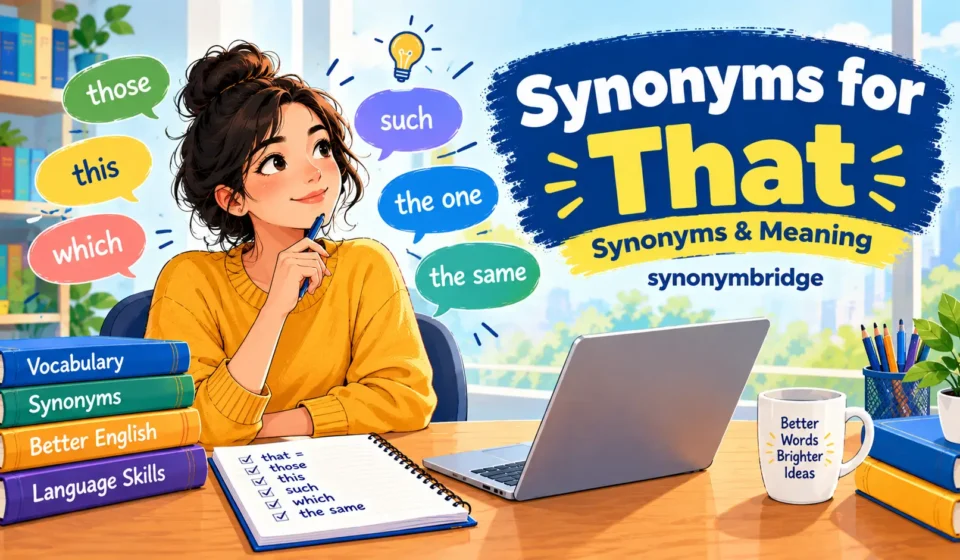
Good synonyms for that include this, it, which, such, the one, and the same. You can also use so, because, however, and nevertheless to change how the word works. Pick the best choice based on whether that points to a thing, gives a reason, or shows a reaction.
Maya read her essay out loud and stopped. The word “that” showed up six times in one paragraph. It sounded flat, like a song stuck on one note.
“Use the right word, not its second cousin.” Mark Twain
A simple fix is to swap one word. Instead of “I know that you tried,” write “I know you tried” or “I saw how hard you tried.” Small changes make sentences smoother and stronger.
Why does this matter? Here is the quick version:
- Students: sharper essays and better marks.
- Bloggers: fresher posts that readers finish.
- Content writers: less repetition, more voice.
- Daily English users: clearer chats at work and home.
“Good prose is like a windowpane.” George Orwell
In this guide, you will find 50 easy swaps, each with a short meaning and two real examples. You will also learn which ones fit casual chats and formal emails.
1. This
- Meaning: Use this to point to something that is close to you.
- Examples: This book on my desk is my favorite. Can you hold this for me, please?
2. It
- Meaning: Use it to replace a thing or idea you already named.
- Examples: The movie was long, but it was fun. I lost my pen, but I found it.
3. That One
- Meaning: Use it to point to one thing among many choices.
- Examples: I want that one, not the red one. Is that one on the shelf yours?
4. The One
- Meaning: This phrase picks out a certain person or thing clearly.
- Examples: She is the one who called me. This is the one I told you about.
5. Such
- Meaning: This word points to a kind of thing already mentioned.
- Examples: Such kindness is very rare these days. I have never seen such a big cake.
6. Those
- Meaning: Use it to point to things that are far away.
- Examples: Those mountains look so beautiful at sunset. I love those shoes in the window.
7. Which
- Meaning: This word adds extra details about a thing you just named.
- Examples: I bought a bag, which was very cheap. He fixed the car, which saved us money.
8. Who
- Meaning: Use it to tell more about a person in a sentence.
- Examples: The girl who sings is my sister. I know a man who bakes bread.
9. Whom
- Meaning: This is a formal word for a person who receives action.
- Examples: She is the teacher whom I admire most. To whom should I send this letter?
10. Whose
- Meaning: Use it to show who owns something in a sentence.
- Examples: I met a boy whose dog can dance. Whose bag is lying on the sofa?
11. What
- Meaning: This word stands for a thing without naming it first.
- Examples: I know what you did last summer. Tell me what you need from the store.
12. The Same
- Meaning: Use it when you talk about a thing already named.
- Examples: I ordered the same meal as you. We wore the same shirt to school.
13. The Above
- Meaning: This phrase points to details written earlier on the page.
- Examples: Please read the above before you reply. The above steps will fix the problem fast.
14. The Aforementioned
- Meaning: This formal phrase points back to something named a bit earlier.
- Examples: The aforementioned rules apply to every student here. Please sign the aforementioned form before Friday ends.
15. The Former
- Meaning: Use it to name the first of two things listed.
- Examples: I like tea and coffee, but the former wins. Of the two, the former seems better.
16. The Latter
- Meaning: Use it to name the second of two things listed.
- Examples: I tried pizza and pasta, and liked the latter. Between the two plans, the latter is cheaper.
17. These
- Meaning: Use it to point to many things that are near you.
- Examples: These apples are fresh and very sweet. I need these papers signed by noon.
18. So
- Meaning: This small word shows a result that follows from something.
- Examples: It was raining, so we stayed home. I was tired, so I slept early.
19. Thus
- Meaning: This formal word shows that a result comes from something.
- Examples: He studied hard; thus, he passed the test. The road was closed; thus, we turned back.
20. Therefore
- Meaning: Use it to show that one thing leads to another.
- Examples: She trained daily; therefore, she won the race. We were late; therefore, we missed the bus.
21. Hence
- Meaning: This word means “for this reason” and sounds quite formal.
- Examples: Prices rose; hence, people bought less milk. He was sick; hence, he stayed home.
22. Because
- Meaning: Use it to give the reason why something happened today.
- Examples: I smiled because the news was so good. We left early because the road was long.
23. Since
- Meaning: This word gives a reason that is already known to everyone.
- Examples: Since you are here, let’s begin now. Since it’s cold, I wore a warm coat.
24. As
- Meaning: Use it to give a simple reason in a casual way.
- Examples: As it was late, we went home. As she was tired, she took a nap.
25. Given That
- Meaning: This phrase gives a fact that explains your next idea.
- Examples: Given that it’s Monday, the shop is closed. Given that you’re new, you did great work.
26. So That
- Meaning: Use it to show the goal of an action you take.
- Examples: I wrote it down so that I remember. She spoke slowly so that everyone could follow.
27. In Order That
- Meaning: This formal phrase shows the purpose behind something you do.
- Examples: He saved money in order that he could travel. She studied hard in order that she might pass.
28. Provided That
- Meaning: Use it to show a rule or condition for something.
- Examples: You can go, provided that you finish homework. We’ll play outside, provided that it stays dry.
29. Seeing That
- Meaning: This phrase gives a clear reason based on what you see.
- Examples: Seeing that you’re busy, I’ll call later. Seeing that it’s late, we should leave now.
30. Considering That
- Meaning: Use it to show you thought about a fact first.
- Examples: Considering that he’s new, he did well. Considering that it’s cheap, the food is good.
31. Now That
- Meaning: This phrase shows that a new situation has just begun.
- Examples: Now that you’re here, we can start. Now that exams are over, I feel free.
32. Wonderful
- Meaning: Use it when something makes you feel very happy and pleased.
- Examples: That’s wonderful news about your new job! That was a wonderful party last night.
33. Fantastic
- Meaning: Use this word for something that is much better than expected.
- Examples: That’s fantastic, you finally passed the big exam! Your painting looks fantastic on the wall.
34. Awesome
- Meaning: People use this word for things that fill them with joy.
- Examples: That’s awesome, we won the final match! Your new bike looks totally awesome today.
35. Amazing
- Meaning: Use it for something so good that it surprises you.
- Examples: That’s amazing, you cooked all this yourself? The view from the top was amazing.
36. Brilliant
- Meaning: This word describes a very smart idea or a great result.
- Examples: That’s brilliant; let’s try your plan now. She gave a brilliant speech in class.
37. Terrific
- Meaning: Use it to praise something that is very good or large.
- Examples: That’s terrific; I’m so proud of you. We had a terrific time at the fair.
38. Excellent
- Meaning: This word says that something is of very high quality.
- Examples: That’s excellent; keep up the good work. Your essay was excellent and very clear.
39. Cool
- Meaning: Use this casual word for things you like or admire.
- Examples: That’s cool. I love your new jacket. He has a really cool red skateboard.
40. Nice
- Meaning: This simple word shows that you like something or someone.
- Examples: That’s nice; thanks for helping me today. She wrote a nice note for me.
41. Fascinating
- Meaning: Use it for something that holds your attention in a strong way.
- Examples: That’s fascinating; tell me more about it. The museum had a fascinating space exhibit.
42. Intriguing
- Meaning: This word describes something that makes you curious and want more.
- Examples: That’s intriguing. How did you find it? The story had a really intriguing twist.
43. Interesting
- Meaning: Use it for something that grabs your mind and keeps it.
- Examples: That’s interesting; I never knew that before. He told us an interesting story today.
44. Wild
- Meaning: This casual word describes something that is very surprising or unusual.
- Examples: That’s wild, I can’t believe it happened! The crowd at the concert was wild.
45. Unbelievable
- Meaning: Use it for something so strange that it is hard to accept.
- Examples: That’s unbelievable; he ran ten miles today! Her luck was truly unbelievable that day.
46. Incredible
- Meaning: This word describes something so great that it seems almost unreal.
- Examples: That’s incredible, you built it all yourself? The food at that place is incredible.
47. However
- Meaning: Use it to show an idea that goes against another.
- Examples: I like cake; however, I’m on a diet. It was cold; however, we still went out.
48. Even So
- Meaning: This phrase shows something stays true in spite of a problem.
- Examples: It was late; even so, we kept walking. He was tired; even so, he finished work.
49. Still
- Meaning: Use it to say something remains true despite what you just said.
- Examples: It rained, but we still had fun. He failed once, but he still tried again.
50. Nevertheless
- Meaning: This formal word means “in spite of that” in a sentence.
- Examples: She was scared; nevertheless, she sang on stage. It was hard; nevertheless, we never gave up.
“Words are, of course, the most powerful drug used by persons.” Rudyard Kipling
Synonyms for That Said
“That said” turns a conversation in a new direction. You make one point, then add a different one. Good swaps are, however, even so, still, nevertheless, and on the other hand. They work well in emails and essays.
For example, “The plan is risky; even so, it is worth trying.” Keep the second idea short so readers feel the shift right away.
Synonyms for That Reason
“For that reason” explains why something happened. Try therefore, so, thus, hence, or that is why. Each one links a cause to a result. “Therefore” and “hence” sound formal, while “so” feels friendly.
For example, “The shop was closed, so we went home.” Choose the tone that fits your reader, and avoid using two of them in one sentence.
Synonyms for That’s Great
Praise feels better with more color. Wonderful, fantastic, terrific, brilliant, and excellent all celebrate good news. Friends enjoy “awesome,” while a boss may prefer “excellent.” Try “That’s wonderful, congratulations!” Adding a few words about why you are happy, like “That’s fantastic, you worked so hard,” makes your praise sound real. Match the word to the moment.
Synonyms for That’s Interesting
When “interesting” feels dull, try fascinating, intriguing, remarkable, or thought-provoking. Each shows real attention. “Intriguing” hints at mystery, while “fascinating” shows deep interest.
You might say, “That’s fascinating, how did you learn it?” A follow-up question proves you listened. It also keeps the talk moving, which makes both people feel heard and respected.
FAQ
What Is a Better Word for That?
It depends on how “that” is working in your sentence. If it points to a thing, try this, it, or the one. If it adds details, try which or who. If it shows a reason, try because or so.
Often the best choice is simply deleting “that,” as in “I think you’re right.”
What’s Another Word for Saying That?
“Saying that” usually opens a contrast. Replace it with even so, however, still, or that being the case. For example, “Even so, I want to try again.” If you mean “stating,” use noting, mentioning, or adding.
Pick the one that matches your tone, because “however” sounds formal and “still” sounds relaxed.
What Can I Say Instead of “That”?
Start by rereading your sentence out loud. Drop “that” if the meaning stays clear. Otherwise, use a more exact word like this, which, who, or such.
You can also name the thing directly, like “the plan” or “the idea.” Specific nouns make writing clearer and keep readers interested from the first line to the last.
What Are Other Words for Then?
“Then” shows time or result. For time, use next, afterward, later, or after that. For results, use so, therefore, or as a result. For example, “We ate dinner, and afterward we watched a movie.”
Mixing these words keeps a story moving and stops every sentence from sounding like “and then… and then.”
Conclusion
Learning synonyms is one of the easiest ways to grow as a writer and speaker. When you know many ways to say “that,” your sentences feel lighter and clearer. Students can write stronger essays, bloggers can keep readers interested, and everyday speakers can explain ideas with more confidence.
“The beginning of wisdom is to call things by their right names.” Chinese proverb
Better words also build better connections. A warm “That’s wonderful” can brighten someone’s day, and a clear “therefore” can make your reasoning easy to follow. Small word choices add up to big improvements over time.
Now it’s your turn. Try three new words from this list in your next email, essay, or chat. Notice how they change your tone. Don’t worry about being perfect, because practice makes the right word come faster each time.
“The limits of my language mean the limits of my world.” Ludwig Wittgenstein
Keep this list close and return whenever your writing needs a fresh spark. Every new word you use makes your voice a little richer. Keep practicing, keep reading, and enjoy the journey.