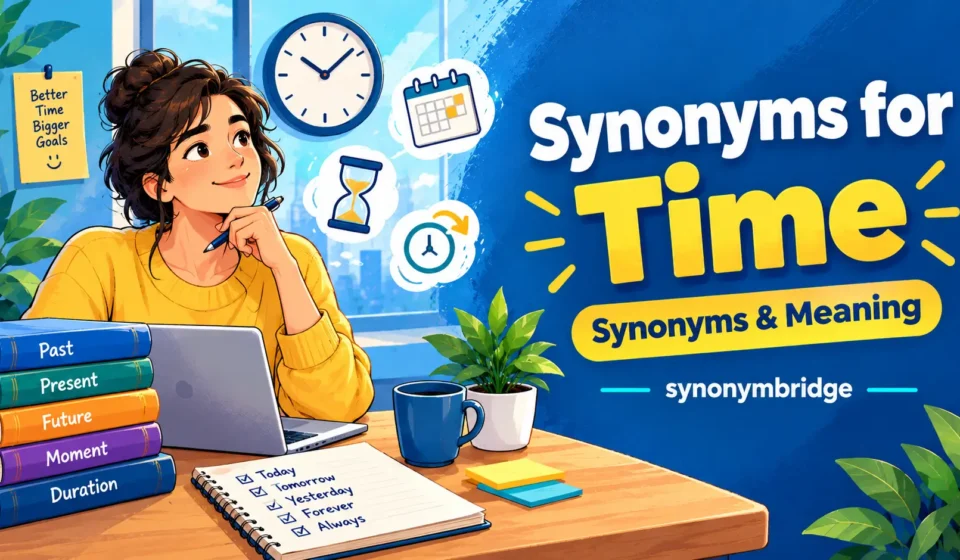
The best synonyms for time include moment, period, duration, era, age, while, and occasion. Each word has a slightly different meaning, so the right choice depends on your sentence. Learning these alternatives helps you write clearly, avoid repeated words, and express ideas in a more natural way.
Imagine writing a school essay about your summer holidays. You write the word “time” in almost every paragraph. Your story starts to sound dull, even though you have many exciting things to share
e. Choosing different words can make your writing clearer and more fun to read. For example, you might say, “We spent a wonderful period at the beach,” instead of repeating the same word again. Small changes like this can make a big difference.
Students can use these words to improve essays and school assignments. Bloggers can make their posts more interesting and easier to read.
Content writers can choose words that fit each topic and audience. Daily English users can speak with more confidence and express ideas clearly.
The key is to learn what each word means and when to use it. Some words describe a short moment, while others refer to long periods or special stages in life.
“The secret of getting ahead is getting started.”
This advice reminds us that even a small step can help us learn something new. Start with a few words, then practice using them in your own sentences.
“Lost time is never found again.”
These words also remind us to value the hours we have and use them wisely.
The following words can replace “time” in different situations. Check each meaning and example to choose the word that fits your sentence.
1. Moment
- Meaning: A moment is a very short period when something happens.
- Examples: Wait a moment before you leave.
- She smiled at that happy moment.
2. Period
- Meaning: A period is a length of time with a clear beginning and end.
- Examples: We studied during the summer period.
- This period was full of changes.
3. Duration
- Meaning: Duration means how long an event or activity lasts.
- Examples: The class has a short duration.
- Check the duration before watching the film.
4. Era
- Meaning: An era is a long period marked by important changes.
- Examples: The internet began a new era.
- That era changed how people shared ideas.
5. Age
- Meaning: An age is a period in history or a stage of life.
- Examples: We live in the digital age.
- She learned many skills at that age.
6. Occasion
- Meaning: An occasion is a special event or a particular time.
- Examples: We met on a happy occasion.
- Her birthday was a joyful occasion.
7. Hour
- Meaning: An hour is a unit of time equal to sixty minutes.
- Examples: I waited for an hour outside.
- The shop closes in one hour.
8. Minute
- Meaning: A minute is a short unit of time lasting sixty seconds.
- Examples: Give me a minute to finish.
- The bus will arrive in one minute.
9. Second
- Meaning: A second is a very short unit of measured time.
- Examples: Wait one second before opening it.
- He finished the task in seconds.
10. Instant
- Meaning: An instant is a very brief moment when something happens.
- Examples: She knew the answer instantly.
- The lights went out in an instant.
11. While
- Meaning: A while is a period that may feel short or long.
- Examples: Sit here for a while.
- We talked for a while after lunch.
12. Spell
- Meaning: A spell is a short period spent doing something.
- Examples: He rested for a spell.
- We enjoyed a spell of warm weather.
13. Stretch
- Meaning: A stretch is an unbroken period during which something continues.
- Examples: She worked for a long stretch.
- We drove for hours without stopping.
14. Interval
- Meaning: An interval is a gap between two events or activities.
- Examples: Take a short interval between lessons.
- The players rested during the interval.
15. Phase
- Meaning: A phase is one stage in a process or period.
- Examples: This phase needs careful planning.
- The project entered a new phase.
16. Stage
- Meaning: A stage is one part of a process or development.
- Examples: We reached the final stage today.
- Each stage brings a new challenge.
17. Season
- Meaning: A season is part of the year or a recurring period.
- Examples: Winter is my favorite season.
- The holiday season brings families together.
18. Term
- Meaning: A term is a set period for study or work.
- Examples: Our school term starts Monday.
- She passed every test this term.
19. Epoch
- Meaning: An epoch is a long period marked by major events.
- Examples: Space travel began a new epoch.
- Historians study each epoch carefully.
20. Generation
- Meaning: A generation is a group of people born around the same period.
- Examples: Each generation faces new challenges.
- My generation grew up with smartphones.
21. Century
- Meaning: A century is a period of one hundred years.
- Examples: The castle is centuries old.
- Technology changed greatly during this century.
22. Millennium
- Meaning: A millennium is a period of one thousand years.
- Examples: The old story lasted a millennium.
- People studied changes across the new millennium.
23. Day
- Meaning: A day is a period of twenty four hours.
- Examples: We spent the day together.
- Every day offers another chance.
24. Night
- Meaning: Night is the dark part of each daily cycle.
- Examples: We watched the stars all night.
- The town becomes quiet at night.
25. Dawn
- Meaning: Dawn is the early time when daylight first appears.
- Examples: We left home at dawn.
- Birds started singing at dawn.
“Time is the wisest counselor of all.”
This saying highlights how experience can help us make better choices as we move through life.
26. Sunrise
- Meaning: Sunrise is the moment when the sun appears above the horizon.
- Examples: We watched the sunrise from shore.
- Sunrise painted the sky with gold.
27. Sunset
- Meaning: Sunset is the time when the sun disappears below the horizon.
- Examples: They reached home before sunset.
- We took photos during the sunset.
28. Midday
- Meaning: Midday is the middle of the day, around twelve o’clock.
- Examples: The meeting begins at midday.
- We ate lunch near midday.
29. Midnight
- Meaning: Midnight is the middle of the night, around twelve o’clock.
- Examples: The clock struck midnight loudly.
- She finished her book near midnight.
30. Present
- Meaning: The present is the time happening now, not the past or future.
- Examples: Focus on the present instead of worrying.
- The present offers chances to learn.
31. Past
- Meaning: The past is the period that has already happened.
- Examples: We learned from past mistakes.
- Her past shaped many of her choices.
32. Future
- Meaning: The future is the period that has not happened yet.
- Examples: They are planning for the future.
- Nobody knows exactly what the future holds.
33. Timetable
- Meaning: A timetable shows when planned events or activities should happen.
- Examples: Check the timetable before leaving home.
- Our timetable changed after the meeting.
34. Schedule
- Meaning: A schedule is a plan that lists activities and their times.
- Examples: My schedule is busy this week.
- We changed the schedule for tomorrow.
35. Deadline
- Meaning: A deadline is the latest time or date to finish something.
- Examples: The deadline is next Friday afternoon.
- Please finish the report before the deadline.
36. Timeline
- Meaning: A timeline shows events in the order they happen over time.
- Examples: The timeline explains each project step.
- We created a timeline for the trip.
37. Timeframe
- Meaning: A timeframe is the period allowed or expected for an activity.
- Examples: We must work within this timeframe.
- The timeframe gives us enough room.
38. Lifespan
- Meaning: A lifespan is the length of time a person or thing lives.
- Examples: This plant has a short lifespan.
- Exercise may support a healthy lifespan.
39. Lifetime
- Meaning: A lifetime is the whole period a person lives.
- Examples: She collected stories throughout her lifetime.
- That was a lifetime of hard work.
40. Eternity
- Meaning: Eternity means endless time or a period that seems extremely long.
- Examples: The wait felt like an eternity.
- They hoped their friendship would last forever.
41. Permanence
- Meaning: Permanence means the state of lasting for a very long time.
- Examples: The artist wanted permanence for her work.
- Nothing in life offers complete permanence.
42. Continuity
- Meaning: Continuity means that something continues without a major break.
- Examples: The team maintained continuity during changes.
- Regular practice creates continuity in learning.
43. Break
- Meaning: A break is a short period when you stop an activity.
- Examples: Let’s take a break after lunch.
- He needed a break from studying.
44. Pause
- Meaning: A pause is a brief stop before an activity continues.
- Examples: She took a pause before answering.
- The speaker paused to drink water.
45. Lull
- Meaning: A lull is a quiet period when little activity happens.
- Examples: We rested during a lull in work.
- A lull came before the next storm.
46. Leisure
- Meaning: Leisure is free time used for rest or enjoyment.
- Examples: I read books during my leisure.
- She enjoys leisure activities with friends.
47. Downtime
- Meaning: Downtime is a period when work or activity stops.
- Examples: We used downtime to clean the office.
- The website had brief downtime yesterday.
48. Workday
- Meaning: A workday is a day or period spent working.
- Examples: My workday ends at five o’clock.
- It was a long workday for everyone.
49. Waiting period
- Meaning: A waiting period is a set time before something can happen.
- Examples: The waiting period ends next week.
- We used the waiting period to prepare.
50. Opportunity
- Meaning: An opportunity is a suitable moment or chance to do something.
- Examples: This is your opportunity to learn.
- She found an opportunity to help others.
Synonyms for Time Period
Useful alternatives for “time period” include duration, interval, phase, era, stage, and span. Use “era” for a major historical period, “phase” for one part of a process, and “interval” for a gap between events.
For example, “During this phase, the team tested its plan.” Choosing the right word makes your writing more exact and easier to understand.
Synonyms for Time Management
Alternatives for “time management” include scheduling, planning, organization, prioritization, and time planning. These words describe ways to arrange tasks and use available hours well.
For example, “Good planning helps me finish my work early.” Students can plan study sessions, while workers can set clear goals and deadlines. Choose the term that best describes the skill or method you want to discuss.
Synonyms for Time Frame
Words similar to “time frame” include period, duration, timeframe, span, and deadline, though their meanings differ. A duration tells how long something lasts, while a deadline gives the final date or time for completion.
For example, “The project must finish within a short period.” Use the most precise option when writing plans, reports, emails, or project updates.
Synonyms for Time Saving
Useful alternatives for “time saving” include efficient, quick, streamlined, convenient, and faster. These words describe methods or tools that help people finish tasks with less wasted time. For example, “A streamlined process makes daily work easier.”
In professional writing, explain how a method saves effort or reduces delays rather than simply calling it quick.
Synonyms for Timely Manner
Alternatives for “in a timely manner” include promptly, quickly, without delay, on time, and as scheduled. The best choice depends on whether you mean acting soon or meeting an agreed deadline.
For example, “Please reply promptly to the client.” In formal emails, “without delay” can sound firm, while “promptly” is polite and professional.
Frequently Asked Questions
1. What is a fancy word for time?
A fancy word for time depends on the meaning you want to express. Temporality refers to the quality or condition of being related to time, while “duration” describes how long something lasts. “Chronology” refers to events arranged in time order.
For everyday writing, “era,” “epoch,” and “interval” can also sound more formal than the simple word “time.” Always choose a word that fits your sentence.
2. What can we use instead of time?
You can use words such as moment, period, duration, occasion, interval, and phase instead of time. The best choice depends on your message. Use “moment” for something brief, “duration” for how long an activity lasts, and “phase” for one part of a process.
For example, “We enjoyed a wonderful moment together” sounds more specific than “We enjoyed a wonderful time together.”
3. What is a unique word for “time”?
One unique word for time is kairos, a Greek word that refers to the right, suitable, or meaningful moment for something to happen. Unlike “chronos,” which refers to time as a measurable sequence, kairos focuses on the importance of the moment.
You may find it useful in creative writing, philosophy, or discussions about making the most of an important opportunity.
4. What is another word for “on time”?
Common alternatives for “on time” include punctually, promptly, as scheduled, and at the appointed time. “Punctually” means arriving or acting at the expected time, while “as scheduled” shows that an event follows its plan.
For example, “The train arrived punctually” means it arrived at the expected time. In professional emails, “as scheduled” is useful when confirming meetings, deliveries, or planned activities.
Conclusion
Learning synonyms for time can make your writing clearer, more interesting, and easier to understand. Instead of using the same word again and again, you can choose an alternative that gives your sentence a more exact meaning. Words such as moment, duration, era, interval, and phase each express a different idea.
These alternatives are useful in many parts of daily life. Students can use them in essays and school assignments. Bloggers can make their articles more engaging.
Content writers can improve their word choices and avoid repetition. Anyone learning English can use these words to speak with greater confidence.
However, remember that not every synonym works in every sentence. A “deadline” is not the same as a “moment,” and an “era” usually describes a much longer period. Always check the meaning and context before replacing a word.
Start by learning three new words each day. Write simple sentences with them, use them in emails, and practice them in everyday conversations. With regular practice, you will build a stronger vocabulary and express your ideas more naturally.
“Well done is better than well said.”
Take small steps, keep practicing, and use each new word when the right moment comes.
“Great things are done by a series of small things brought together.”