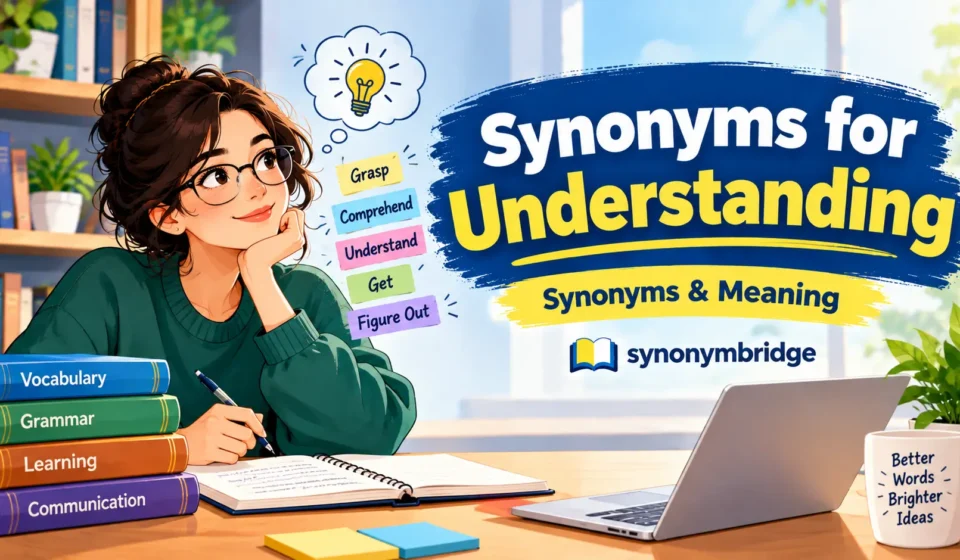
Common synonyms for understanding include comprehension, grasp, insight, awareness, and knowledge. When someone is understanding, you can say they are empathetic, compassionate, or sympathetic. The best synonym depends on your sentence, so choose the word that fits the meaning you want to share.
Picture this. You are writing an email to your boss, and you type the word “understanding” for the fourth time. It feels dull, and you know your message deserves better. That small moment happens to almost every writer.
“The difference between the almost right word and the right word is really a large matter.” Mark Twain
Here is a quick example. Instead of “I have a good understanding of the plan,” you can write “I have a clear grasp of the plan.” The idea is the same, but the feel is fresher. Choosing the right synonyms for understanding makes your writing sharper.
These words help many people. Students use them to improve essays. Bloggers use them to keep readers interested. Content writers use them to avoid repeating words. Daily English users use them to sound clear and kind.
“Seek first to understand, then to be understood.” Stephen Covey
1. Comprehension
- Meaning: The ability to take in an idea and know what it means.
- Examples: Her reading comprehension improved after daily practice. The test checks your comprehension of the story.
2. Grasp
- Meaning: A firm hold on an idea so you can use it.
- Examples: He has a good grasp of math. The kids quickly gained a grasp of fractions.
3. Knowledge
- Meaning: Facts and skills a person learns through study or life.
- Examples: Knowledge grows when you read every day. Her knowledge of birds amazes everyone here.
4. Insight
- Meaning: A clear and deep view into what something really means.
- Examples: The book gave me fresh insight into money. She shared a smart insight during the meeting.
5. Awareness
- Meaning: Knowing that something is true, real, or happening around you.
- Examples: Awareness of the problem came very slowly. The campaign raises awareness about clean water.
6. Perception
- Meaning: The way you notice and make sense of the world.
- Examples: Her perception of the issue changed overnight. Our perception of time shifts when we are bored.
7. Realization
- Meaning: The moment you suddenly see and accept that something is true.
- Examples: A sudden realization made him smile widely. Her realization came halfway through the long movie.
8. Appreciation
- Meaning: Seeing the true value of something and feeling thankful for it.
- Examples: He showed deep appreciation for her hard work. Our appreciation of music grew over the years.
9. Empathy
- Meaning: The power to feel what another person is feeling.
- Examples: A good nurse shows empathy to every patient. Empathy helps friends solve problems without fighting.
10. Sympathy
- Meaning: A feeling of care for someone who is hurting or sad.
- Examples: She sent a card full of sympathy. We felt great sympathy for the lost puppy.
11. Compassion
- Meaning: Deep care for others that makes you want to help them.
- Examples: The teacher treated every child with compassion. Compassion turns a bad day into a better one.
12. Familiarity
- Meaning: Close knowledge of something because you have seen it many times.
- Examples: His familiarity with the city saved us time. Familiarity with the rules makes the game easier.
13. Mastery
- Meaning: Complete skill or deep knowledge in a certain subject or craft.
- Examples: Years of practice led to her mastery. The chef showed true mastery of French cooking.
14. Command
- Meaning: A strong ability to use a language or skill well.
- Examples: She has a strong command of English. His command of the topic impressed the judges.
15. Recognition
- Meaning: Knowing something is true because you have noticed it before.
- Examples: Recognition of the pattern came very quickly. She nodded in recognition of his good point.
16. Discernment
- Meaning: The skill of seeing small differences and judging them wisely.
- Examples: Good discernment helps you pick the right words. He used discernment when reading the long contract.
17. Apprehension
- Meaning: Another word for grasping an idea, mostly used in formal writing.
- Examples: His apprehension of the law was very limited. Slow apprehension of the facts delayed the decision.
18. Cognizance
- Meaning: Full knowledge that something exists or is happening right now.
- Examples: The mayor took cognizance of the complaints. Please take cognizance of the new safety rules.
19. Intelligence
- Meaning: The ability to learn, think, and understand things quickly and well.
- Examples: Her intelligence shines in every class discussion. He solved the puzzle with real intelligence.
20. Wisdom
- Meaning: Good judgment that comes from knowledge and life experience over time.
- Examples: Grandpa shares his wisdom over warm tea. Wisdom grows when you learn from mistakes.
21. Sense
- Meaning: A natural feeling that helps you know what is right.
- Examples: She has a good sense of humor. Use common sense before you click that link.
22. Clarity
- Meaning: The quality of being easy to see, hear, or understand.
- Examples: The teacher spoke with great clarity. Clarity makes every message much stronger.
23. Acumen
- Meaning: Sharp thinking and quick judgment, often in work or business.
- Examples: Her business acumen helped the shop grow. He shows real acumen when reading the market.
24. Intuition
- Meaning: A gut feeling that tells you something without clear proof.
- Examples: My intuition said the plan was risky. Trust your intuition when something feels wrong.
25. Accord
- Meaning: A shared agreement between people about what something means.
- Examples: The two teams reached an accord today. They worked in accord on the final plan.
26. Sympathetic
- Meaning: Showing care and concern for the feelings of other people.
- Examples: The sympathetic nurse listened to every worry. He was sympathetic when I missed the deadline.
27. Compassionate
- Meaning: Caring deeply about others and wanting to ease their pain.
- Examples: A compassionate boss makes the team feel safe. She is a compassionate friend and a great listener.
28. Tolerant
- Meaning: Willing to accept views and ways that differ from your own.
- Examples: A tolerant neighbor accepts different opinions calmly. We should be tolerant of different cultures.
29. Patient
- Meaning: Able to stay calm and kind while waiting or helping.
- Examples: The patient teacher repeated the lesson twice. Be patient with new learners in class.
30. Kind
- Meaning: Friendly, gentle, and caring toward other people in every situation.
- Examples: A kind word can change someone’s day. He was kind enough to explain it again.
31. Considerate
- Meaning: Thinking about the needs and feelings of other people first.
- Examples: A considerate guest cleans up after dinner. It was considerate of you to call.
32. Empathetic
- Meaning: Able to share and feel the emotions of another person.
- Examples: She is empathetic toward every new student. An empathetic leader listens before giving advice.
33. Forgiving
- Meaning: Ready to let go of anger when someone makes a mistake.
- Examples: My forgiving sister let the mistake go. A forgiving heart makes friendships last longer.
34. Perceptive
- Meaning: Quick to notice and understand things that are not obvious.
- Examples: The perceptive teacher noticed he felt sad. She made a perceptive comment about the story.
35. Sensitive
- Meaning: Quick to notice and respond to the feelings of others.
- Examples: He is sensitive to his friends’ moods. Be sensitive when sharing bad news with others.
36. Open minded
- Meaning: Willing to listen to new ideas without judging them first.
- Examples: An open minded reader enjoys different books. Stay open minded when you hear a new opinion.
37. Thoughtful
- Meaning: Showing careful attention to the needs and feelings of others.
- Examples: It was a thoughtful gift for my mother. She wrote a thoughtful note after the meeting.
38. Comprehend
- Meaning: To take in an idea fully and know what it means.
- Examples: Young kids cannot comprehend such big numbers. I comprehend the problem, but I need time.
39. Fathom
- Meaning: To understand something deep or hard after thinking about it.
- Examples: I cannot fathom why he left early. It is hard to fathom the size of space.
40. Digest
- Meaning: To think about new facts until you fully understand them.
- Examples: Give me a moment to digest this news. She needed time to digest the long report.
41. Absorb
- Meaning: To take in new information and keep it in mind.
- Examples: Young children absorb new words very quickly. He tried to absorb every detail of the lesson.
42. Decipher
- Meaning: To work out the meaning of something that is hard to read.
- Examples: I could not decipher his messy handwriting. She helped decipher the old map for us.
43. Follow
- Meaning: To keep up with what someone is saying and understand it.
- Examples: Sorry, I cannot follow your story so far. Do you follow what the teacher just said?
44. Realize
- Meaning: To suddenly become aware that something is true or real.
- Examples: I realize now that I was wrong. He did not realize how late it was.
45. Perceive
- Meaning: To notice something and form an idea about what it means.
- Examples: Most people perceive him as a kind man. I perceive a small mistake in your math.
46. Interpret
- Meaning: To explain what something means in your own way.
- Examples: Scientists interpret the data to find answers. How do you interpret this old poem?
47. Get
- Meaning: A casual word meaning to understand a joke or an idea.
- Examples: I finally get what you are saying. Some people just do not get the joke.
48. Catch
- Meaning: To hear or notice something and understand it at once.
- Examples: I did not catch your name, sorry. She caught the hint and left the room.
49. Figure out
- Meaning: To find the answer to a problem by thinking hard.
- Examples: We figured out the puzzle after an hour. Can you figure out how this app works?
50. Make sense of
- Meaning: To find meaning in something confusing or hard to follow.
- Examples: I cannot make sense of these long instructions. Let us make sense of the numbers together.
51. See
- Meaning: To understand what someone means after they explain it to you.
- Examples: Oh, I see what you mean now. Can you see why this idea matters?
52. Recognize
- Meaning: To know something is true or real after you notice it.
- Examples: We recognize the need for better training. Doctors recognize the signs of stress very quickly.
53. Unravel
- Meaning: To slowly work out the meaning of something that is confusing.
- Examples: Detectives unravel mysteries one clue at a time. He tried to unravel the strange plot twist.
54. Take in
- Meaning: To fully hear, see, and understand new information or facts.
- Examples: It took time to take in the news. She took in every word of the speech.
55. Pick up
- Meaning: To learn or understand something easily without much effort at all.
- Examples: Kids pick up new languages very fast. I picked up the rules by watching others.
56. Know
- Meaning: To have facts or skills about something in your mind.
- Examples: I know how this machine works inside. Do you know the meaning of this word?
57. Cognition
- Meaning: The mental process of learning, thinking, and understanding new things.
- Examples: Sleep helps cognition and memory in children. Reading daily improves cognition as we age.
58. Enlightenment
- Meaning: A deep and clear understanding that feels like seeing the light.
- Examples: The talk brought her sudden enlightenment. Enlightenment often comes after years of quiet study.
59. Expertise
- Meaning: Expert skill and deep knowledge gained from training and long practice.
- Examples: Her expertise in design is well known. We hired him for his tax expertise.
60. Rapport
- Meaning: A warm bond where people understand and trust one another well.
- Examples: The coach built rapport with every player. Good rapport makes teamwork feel easy and fun.
Formal Synonyms for Understanding
In reports, essays, and business emails, a formal tone builds trust. Strong formal choices include comprehension, cognizance, apprehension, discernment, and expertise. For example, you might write, “The committee showed full comprehension of the risks.”
Avoid casual picks like “get” or “catch” in serious writing. Match the word to your reader, and your message will sound polished, clear, and professional every time.
Poetic Synonyms for Understanding
Poets like words that carry feeling and picture. Try enlightenment, insight, intuition, wisdom, and fathom. A line such as “She could not fathom the silence of the sea” feels deep and calm. These words work well in stories, captions, speeches, and love letters. Use them gently, because poetic words shine best when they are not crowded together in one paragraph.
“The limits of my language mean the limits of my world.” Ludwig Wittgenstein
Synonyms for Thank You for Understanding
Ending every email with the same phrase gets boring. Try “I truly appreciate your patience,” “Thanks for your kindness,” “I value your support,” or “Your consideration means a lot.” Each one keeps the message warm and professional.
Pick appreciate, patience, or consideration to match your tone. Short, sincere lines work best, especially when you are sharing delays, changes, or less than perfect news.
Synonyms for Check for Understanding
Teachers use this phrase to see if students truly learned. Fresh options are assess comprehension, confirm grasp, gauge knowledge, review mastery, and test recall. You can say, “Let me gauge your grasp of this lesson.”
These choices work in classrooms, training sessions, and team meetings. Try a quick quiz, a short question, or a thumbs up check to see who is following along.
Synonyms and Antonyms for Understanding
Understanding has clear opposites. Antonyms include confusion, ignorance, misunderstanding, bewilderment, and unawareness. Used as an adjective, the opposite may be intolerant, harsh, or unkind.
Comparing both sides helps you see the exact meaning. For instance, “Her calm understanding replaced his confusion.” Learning pairs like these makes your vocabulary stronger and helps you pick the sharpest word.
People Also Ask
What is another word for understanding?
Another word for understanding is comprehension. Depending on the sentence, you can also use grasp, knowledge, awareness, or insight. For example, “She has a strong grasp of grammar” sounds natural and clear.
When you mean a kind person, use compassionate or empathetic instead. Always check the meaning in your sentence first, because one word does not fit every situation, and the right pick keeps your writing smooth.
How do you say “understand” in a professional way?
In professional writing, swap “understand” for comprehend, appreciate, recognize, or grasp. Try “I fully appreciate your concern” or “We recognize the challenge ahead.” These phrases sound polished and respectful in emails, reports, and meetings.
You can also say “I see your point” for a friendlier feel. Keep sentences short, avoid slang like “get it,” and your tone will stay confident and clear.
What is another word for being understanding?
When someone is kind and patient with others, call them empathetic, compassionate, sympathetic, considerate, or tolerant. For example, “My manager was considerate when I asked for time off.”
These words describe a gentle person who listens without judging. Use them in recommendation letters, reviews, or character descriptions. They add warmth and show that you noticed the person’s caring nature, not just their intelligence.
What’s another word for deeper understanding?
A deeper understanding is called insight, mastery, enlightenment, or discernment. You may also say “a profound grasp” or “a thorough command” of a subject. For example, “Years of study gave her real insight into history.”
These words suggest more than basic knowledge, so they fit essays, speeches, and expert reviews. Use them when you want to show depth, not just simple awareness.
Conclusion
Learning synonyms is one of the easiest ways to grow as a writer and speaker. When you know many synonyms for understanding, you stop repeating the same word and start choosing the best one.
Your blog posts sound fresher, your essays feel stronger, and your speaking becomes more confident.
Words also shape how people feel. A kind email using empathy or appreciation can calm a tense moment, while a smart word like insight can make your idea shine. Good communication is not about big words. It is about the right words.
“Words mean more than what is set down on paper. It takes the human voice to infuse them with deeper meaning.” Maya Angelou
Now it is time to practice. Pick five words from this list and use them this week. Add one to an email, one to a short essay, and one to a chat with a friend. Write a sentence for each, then read it aloud to hear how it sounds. Small daily practice turns new words into natural habits.
“Words are, of course, the most powerful drug used by persons.”Rudyard Kipling
Keep this list close, return to it often, and enjoy the journey. Every new word you learn gives you one more way to say exactly what you mean.