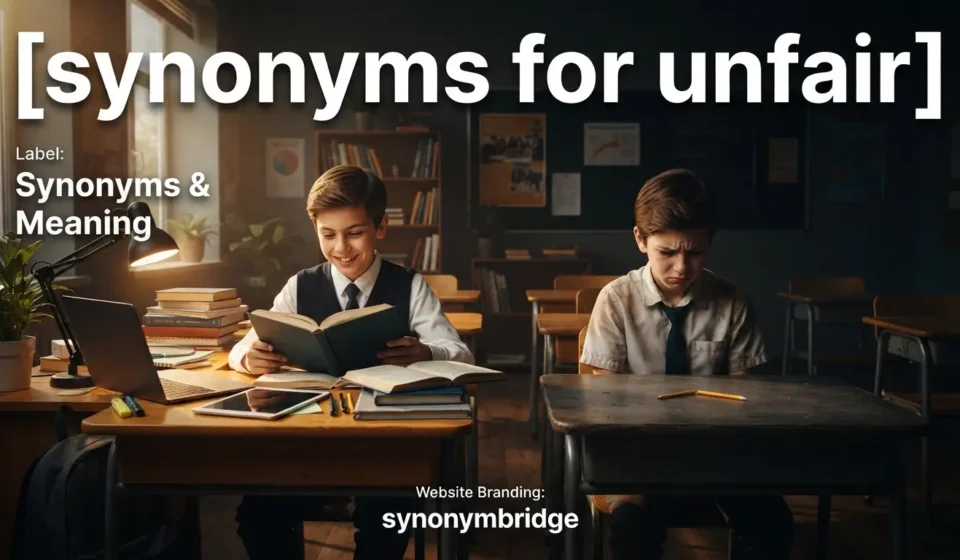
A synonym for unfair is unjust, biased, or one sided. These words describe a person, rule, action, or decision that treats people in a wrong or unequal way. When something is unfair, someone does not get a fair chance, a fair result, or fair treatment, even when they truly deserve it.
A manager gives the easy project to her favorite employee again. Everyone else in the room stays quiet, but they all notice. That small moment is a perfect picture of what it means when something feels unfair.
It happens at school, at work, at home, and even in games with friends. A teacher who grades one student harder than another. A referee who ignores a clear foul.
A sibling who always gets picked first. These small moments add up, and soon we need better words to describe them than just “unfair” again and again.
For students, new words like this make essays and speeches sound stronger and smarter. A bloggers, fresh vocabulary keeps readers interested instead of bored.
For content writers, synonyms help avoid repeating the same word in one article. Daily English users, these words make everyday conversations feel more natural and clear.
“Injustice anywhere is a threat to justice everywhere.”
That single line reminds us why fair words and fair actions truly matter.
“The world is not fair, and it never will be.”
Still, using the right words helps us describe unfairness clearly, so we can talk about it, question it, and eventually change it.
Main Content: 55 Synonyms for Unfair
1. Unjust
- Meaning: This word means something is not fair or right at all.
- Examples: The judge’s unjust ruling upset everyone in the courtroom. Losing your job like that feels truly unjust.
2. Biased
- Meaning: This means favoring one side more than the other side.
- Examples: The biased teacher always praised the same three students. His biased review ignored the product’s real problems.
3. Prejudiced
- Meaning: This means having a fixed, unfair opinion before knowing the facts.
- Examples: Her prejudiced comment hurt the new team member deeply. Please try not to sound so prejudiced during meetings.
4. Partial
- Meaning: This means supporting one person or side too much.
- Examples: The coach seemed partial toward his own son again. A partial decision like that damages everyone’s trust quickly.
5. One sided
- Meaning: This means only showing or favoring a single point of view.
- Examples: That news report felt very one sided and incomplete. His one sided argument ignored the other person’s feelings.
6. Skewed
- Meaning: This means twisted away from the truth or balance.
- Examples: The survey results looked skewed toward younger customers only. A skewed perspective can easily mislead honest readers.
7. Slanted
- Meaning: This means leaning toward one opinion instead of staying neutral.
- Examples: The article felt slanted against the smaller local business. Try writing without a slanted tone next time.
8. Lopsided
- Meaning: This means heavily uneven, with one side much stronger.
- Examples: The contract terms felt lopsided in the company’s favor. Their lopsided deal left the workers with nothing.
9. Unreasonable
- Meaning: This means not fair, sensible, or based on logic.
- Examples: His unreasonable demands made the whole project harder. That is an unreasonable rule for such a small mistake.
10. Unwarranted
- Meaning: This means not deserved or not backed by good reason.
- Examples: The harsh punishment felt completely unwarranted for a first mistake. Her unwarranted criticism left him feeling confused and hurt.
11. Undeserved
- Meaning: This means not earned through effort, skill, or fair reason.
- Examples: He received an undeserved promotion over more qualified coworkers. That undeserved blame should never have landed on her.
12. Unmerited
- Meaning: This means given without any real or fair justification.
- Examples: The team faced unmerited criticism after a strong quarter. Such unmerited praise can actually harm someone’s growth.
13. Uncalled for
- Meaning: This means rude, unfair, or unnecessary given the situation.
- Examples: His angry outburst felt completely uncalled for during the meeting. That kind of uncalled for comment hurts team morale fast.
14. Iniquitous
- Meaning: This is a strong word meaning deeply wrong or unfair.
- Examples: Historians still study that iniquitous law from decades ago. The workers protested against iniquitous wages for years.
15. Disproportionate
- Meaning: This means too large or too small compared to something fair.
- Examples: The fine seemed disproportionate to such a minor offense. A disproportionate response often makes small problems much bigger.
16. Arbitrary
- Meaning: This means decided by chance, not by fair reasoning.
- Examples: The manager made an arbitrary choice without asking anyone. Setting arbitrary rules confuses employees and lowers their trust.
17. Capricious
- Meaning: This means changing suddenly and unfairly without warning or reason.
- Examples: Their capricious boss changed the rules every single week. A capricious decision like that frustrates the whole department.
18. Corrupt
- Meaning: This means dishonest, often for personal gain or unfair power.
- Examples: The corrupt official accepted money to ignore the law. Citizens marched against the corrupt system for months.
19. Crooked
- Meaning: This is a casual word for dishonest and unfair dealing.
- Examples: People called the salesman crooked after the broken promises. That crooked deal cost the family their savings.
20. Dishonest
- Meaning: This means not truthful, often to gain an unfair edge.
- Examples: His dishonest report changed the true meeting results. A dishonest shortcut usually causes bigger problems later.
21. Unscrupulous
- Meaning: This means willing to act unfairly without any moral concern.
- Examples: The unscrupulous landlord ignored every tenant complaint for years. An unscrupulous vendor sold broken items as new.
22. Unethical
- Meaning: This means going against fair and honest moral standards.
- Examples: Copying a coworker’s idea is clearly unethical behavior. The company faced backlash for its unethical hiring practices.
23. Wrongful
- Meaning: This means not lawful, fair, or morally correct at all.
- Examples: She filed a claim for wrongful dismissal last month. His wrongful arrest changed the family’s life forever.
24. Illegitimate
- Meaning: This means not fair, official, or accepted under proper rules.
- Examples: The election result was called illegitimate by many voters. That illegitimate contract will not hold up in court.
25. Improper
- Meaning: This means not correct, suitable, or fair for the situation.
- Examples: His improper conduct at work led to a warning. That improper comment made everyone feel uncomfortable instantly.
26. Prejudicial
- Meaning: This means causing unfair harm because of bias or opinion.
- Examples: The lawyer called the evidence prejudicial and asked for removal. Prejudicial treatment can quietly shape someone’s whole future.
27. Partisan
- Meaning: This means strongly biased toward one group, party, or side.
- Examples: The debate turned partisan within just a few minutes. A partisan decision rarely satisfies everyone involved fairly.
28. Bigoted
- Meaning: This means holding strong unfair views against a certain group.
- Examples: His bigoted joke offended almost the entire office. Bigoted attitudes have no place in a fair workplace.
29. Intolerant
- Meaning: This means unwilling to accept views or people different from you.
- Examples: An intolerant manager rarely listens to new ideas fairly. His intolerant rules pushed talented staff members away.
30. Discriminatory
- Meaning: This means treating a person unfairly because of who they are.
- Examples: The company faced a lawsuit over discriminatory hiring practices. That discriminatory policy excluded qualified candidates for years.
31. Nepotistic
- Meaning: This means unfairly favoring family or friends over qualified others.
- Examples: Employees complained about the firm’s nepotistic promotion pattern. A nepotistic culture often pushes real talent away.
32. Rigged
- Meaning: This means secretly arranged to unfairly favor one outcome.
- Examples: Fans claimed the contest results looked completely rigged. A rigged system rarely gives ordinary people a fair chance.
33. Fixed
- Meaning: This means dishonestly arranged ahead of time for one result.
- Examples: They suspected the match was secretly fixed beforehand. A fixed outcome betrays everyone who trusted the process.
34. Loaded
- Meaning: This means designed unfairly to favor a certain answer or side.
- Examples: That loaded survey question pushed people toward one answer. A loaded interview question can trap an honest candidate.
35. Tilted
- Meaning: This means shifted unfairly toward one side or advantage.
- Examples: The playing field felt tilted against smaller local businesses. New rules tilted the market toward large corporations only.
36. Uneven
- Meaning: This means not equal, balanced, or fair between two sides.
- Examples: The uneven workload left one team completely exhausted. Uneven funding hurt schools in poorer neighborhoods badly.
37. Unbalanced
- Meaning: This means a lack of fair balance between two or more sides.
- Examples: The unbalanced coverage favored one candidate over the other. His unbalanced view ignored half of the real story.
38. Unequal
- Meaning: This means not the same in size, value, or treatment.
- Examples: The unequal pay gap frustrated many long time employees. Their unequal chances made the whole contest feel pointless.
39. Harsh
- Meaning: This means unfairly severe, strict, or hard on someone.
- Examples: The harsh punishment did not match the small mistake. His harsh feedback discouraged the entire junior team.
40. Oppressive
- Meaning: This means cruelly and unfairly controlling other people.
- Examples: Workers rebelled against the factory’s oppressive rules and hours. That oppressive regime denied basic rights for decades.
41. Exploitative
- Meaning: This means unfairly using someone else for personal benefit.
- Examples: The exploitative contract paid workers far below fair value. His exploitative tactics finally caught the regulator’s attention.
42. Heartless
- Meaning: This means acting without kindness, fairness, or basic sympathy.
- Examples: The heartless decision left the family with nothing. His heartless reply shocked everyone reading the thread.
43. Merciless
- Meaning: This means showing no fairness, kindness, or forgiveness at all.
- Examples: The merciless critic tore the young writer’s work apart. A merciless boss rarely earns loyal, happy employees.
44. Ruthless
- Meaning: This means willing to act unfairly to win or gain power.
- Examples: The ruthless executive fired staff without any warning. Her ruthless ambition often crossed clearly unfair lines.
45. Inequitable
- Meaning: This means unfair in a way that breaks basic equal treatment.
- Examples: The report exposed inequitable access to good healthcare. That inequitable system favored wealthy families for generations.
46. Unrighteous
- Meaning: This means morally wrong, unjust, and against fair conduct.
- Examples: The story condemned the king’s unrighteous treatment of villagers. Unrighteous rulers rarely stay in power for long.
47. Callous
- Meaning: This means unfairly cold and unconcerned about others’ pain.
- Examples: His callous remark ignored the grieving family completely. That callous policy hurt thousands of ordinary workers.
48. Underhanded
- Meaning: This means secretly dishonest to gain an unfair advantage.
- Examples: They used underhanded tricks to win the contract unfairly. His underhanded move damaged the whole partnership instantly.
49. Shady
- Meaning: This is a casual word for dishonest and possibly unfair.
- Examples: Something about that shady deal felt very wrong. Avoid any shady offers that sound too good.
50. Devious
- Meaning: This means cleverly dishonest to unfairly get what you want.
- Examples: His devious plan tricked several trusting new investors. A devious scheme like that always unravels eventually.
51. Duplicitous
- Meaning: This means dishonest by saying one thing and doing another unfairly.
- Examples: Her duplicitous behavior finally cost her their friendship. A duplicitous partner is nearly impossible to trust again.
52. Foul
- Meaning: This means unfair or against the accepted rules of conduct.
- Examples: The referee called it a clear foul move. That foul tactic broke every rule in the handbook.
53. Unconscionable
- Meaning: This means so unfair that it feels shocking or unacceptable.
- Examples: The interest rate on that loan seemed unconscionable. Charging older customers that much is simply unconscionable.
54. Outrageous
- Meaning: This means so unfair or extreme that it shocks people.
- Examples: Customers called the sudden price hike completely outrageous. His outrageous demands ended the negotiation immediately.
55. Preferential
- Meaning: This means giving unfair special treatment to one chosen person.
- Examples: The intern received preferential treatment from the department head. Preferential seating for one client upset everyone else.
Synonyms for Unfair Treatment
When people talk about unfair treatment, they usually mean being ignored, blamed, or punished without a fair reason. Good alternative phrases include discriminatory treatment, prejudicial handling, and unjust conduct. These words work well in workplace complaints, school essays, and HR documents.
Using varied phrases here helps writers sound professional instead of repeating “unfair treatment” over and over in the same report or letter.
Synonyms for Unfair Advantage
An unfair advantage happens when one side gets extra help that others do not receive. Common synonyms include preferential edge, unjust head start, and rigged advantage. These terms fit naturally into business writing, sports commentary, and competitive analysis. Choosing the right synonym depends on tone: “rigged advantage” feels stronger and more dramatic, while “preferential edge” sounds calmer and more formal.
Formal Synonyms for Unfair
For reports, legal writing, or academic essays, softer everyday words often feel out of place. Inequitable, unjust, and discriminatory work well in formal settings because they sound precise and professional. These words also appear often in policy documents, court rulings, and research papers.
Choosing formal synonyms shows readers that the writer understands the topic seriously and respects the formal tone required.
Strong Synonyms for Unfair
Sometimes a writer needs a word with real emotional weight. Unconscionable, outrageous, and iniquitous carry much stronger feeling than the plain word “unfair.” These synonyms work best in persuasive essays, opinion pieces, and speeches meant to spark real emotion. Use them carefully, though, since overusing strong words can weaken their impact across a long piece of writing.
Synonyms for Unfair Competition
Unfair competition describes businesses that break rules to beat rivals dishonestly. Useful synonyms include rigged competition, corrupt rivalry, and exploitative practices. These phrases appear often in business articles, marketing ethics discussions, and legal complaints between companies.
Picking the right synonym depends on if the writer wants a neutral business tone or a sharper, more critical one.
“Where justice is denied, poverty is enforced, and ignorance perpetuates itself.”
That thought shows why choosing strong, honest words about fairness truly matters in real life, not just in writing.
FAQ Section: People Also Ask
What is another word for “unfairness”?
Common alternatives include injustice, inequity, and bias. Each word carries a slightly different feeling: “injustice” often points to legal or moral wrongs, while “inequity” focuses more on unequal opportunity or resources.
“Bias” usually describes a personal or hidden unfair leaning. Writers often mix these words to avoid repeating “unfairness” throughout longer essays, reports, or persuasive articles about social or workplace issues.
What are other words for injustice?
Good synonyms include iniquity, wrongdoing, inequity, and oppression. These words often appear in history books, news reports, and speeches about civil rights or social change. “Iniquity” sounds more formal and old fashioned, while “wrongdoing” feels simpler and more direct. Choosing the right word depends on if the writing needs a serious, formal tone or a more everyday, conversational feel.
What is a synonym for unfairly?
Try words like unjustly, wrongfully, or inequitably. These adverbs describe how an action was carried out, not just the action itself. For example, “she was treated unjustly” sounds natural in both spoken and written English. These synonyms are especially useful in legal writing, news reporting, and personal essays describing a specific unfair experience or event.
What is another word for biased or unfair?
Strong choices include partial, prejudiced, and one sided. “Partial” works well in formal writing, while “one sided” feels more casual and easy to understand. “Prejudiced” carries a heavier emotional weight, often connected to unfair opinions about people or groups. Picking between these depends on how strong or gentle the writer wants the sentence to sound.
Conclusion
Learning new synonyms for a common word like “unfair” makes writing stronger, clearer, and more interesting to read. Instead of repeating the same word again and again, a writer can choose from dozens of options, each with its own tone and strength. This small skill improves blog posts, school essays, work emails, and everyday conversations.
It also helps readers stay engaged, because fresh vocabulary feels more natural and less robotic than constant repetition.
“Language is the road map of a culture.”
Every new word learned adds one more marker to that map, helping writers express exact feelings instead of settling for the closest guess.
Try picking two or three words from this list and using them in your next email, essay, or blog post. Notice how the tone shifts depending on the word chosen. Over time, this small daily habit builds real, lasting improvement in both writing and speaking.
“The limits of my language mean the limits of my world.”
Expanding vocabulary, even one word at a time, quietly expands what a writer can express — and that makes every sentence a little more powerful.