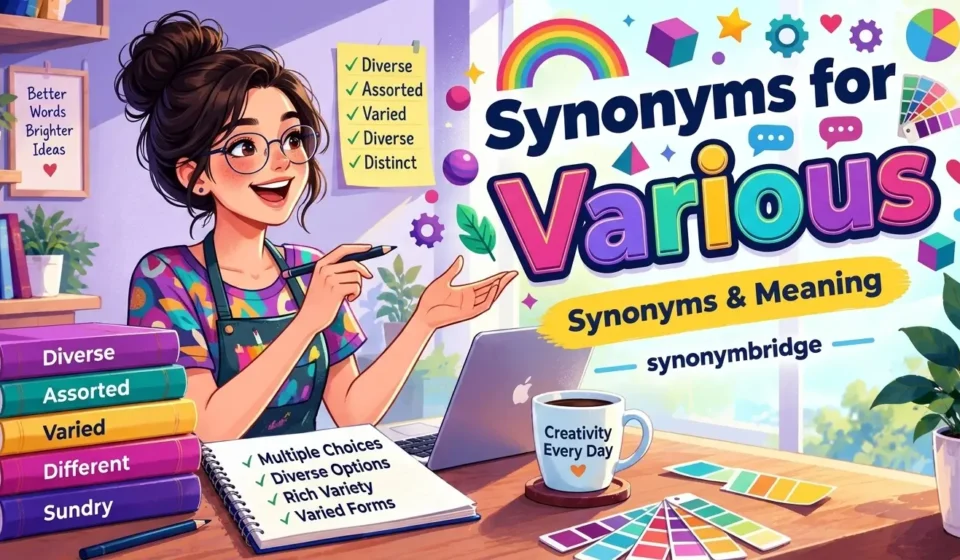
Synonyms for various include different, diverse, several, multiple, numerous, assorted, and varied. These words help describe people, things, choices, and ideas that are not all the same. The best word depends on your sentence, tone, and meaning. Choosing the right synonym makes your writing clearer and more natural.
Imagine you are shopping for a new shirt. You see blue, red, green, and yellow shirts on the same shelf. Instead of naming every color, you can say the store offers various colors. One simple word helps you describe many choices at once.
“Variety is the spice of life.”
Learning different words for common English terms can make your writing more interesting. Students can use them to improve essays and school assignments. Bloggers can use them to describe topics, ideas, and choices without repeating the same words.
Content writers can make articles clearer and more engaging. People who use English every day can also express their thoughts with greater ease.
“A word well chosen can make a sentence shine.”
However, not every synonym fits every sentence. Some words sound formal, while others work better in casual conversation. Learning their meanings and examples will help you choose the right word for each situation.
In this guide, you will find useful alternatives, simple example sentences, and answers to common questions about the word various.
The following words can replace various in different situations. Check each meaning and example to understand how to use it naturally.
1. Different
- Meaning: Different describes things that are not the same as each other.
- Examples: We tried different ways to solve it. She likes different kinds of music.
2. Diverse
- Meaning: Diverse describes things that show many kinds, features, or backgrounds.
- Examples: Our class has diverse learning needs. The city offers diverse food choices.
3. Several
- Meaning: Several means more than two but not a large number.
- Examples: I bought several books yesterday. Several guests arrived before lunch.
4. Multiple
- Meaning: Multiple means having or involving more than one thing.
- Examples: She has multiple reasons to stay. The app offers multiple payment options.
5. Numerous
- Meaning: Numerous means there are many people or things to consider.
- Examples: Numerous birds gathered near the lake. We received numerous helpful suggestions today.
6. Many
- Meaning: Many describes a large number of people, objects, or ideas.
- Examples: Many students joined the school club. She explored many places during vacation.
7. Assorted
- Meaning: Assorted describes a collection containing different kinds of things.
- Examples: He bought assorted snacks for everyone. The gift box contains assorted chocolates.
8. Varied
- Meaning: Varied describes things that differ in type, style, or form.
- Examples: Her daily meals are varied. The course includes varied writing tasks.
9. Different kinds of
- Meaning: This phrase points to several types that do not all match.
- Examples: We studied different kinds of plants. The shop sells different kinds of shoes.
10. Various types of
- Meaning: This phrase describes several groups or classes of similar things.
- Examples: They grow various types of flowers. We discussed various types of games.
11. Mixed
- Meaning: Mixed describes things of different kinds brought together in one group.
- Examples: She made a mixed fruit salad. The class has mixed skill levels.
12. Assorted types
- Meaning: Assorted types refers to a selection of different kinds of items.
- Examples: The market sells assorted types of cheese. We packed assorted types of supplies.
13. A range of
- Meaning: This phrase describes several choices or items within a group.
- Examples: The store offers a range of bags. We discussed a range of topics.
14. A variety of
- Meaning: This phrase means many different kinds of people or things.
- Examples: The menu has a variety of meals. She enjoys a variety of hobbies.
15. A selection of
- Meaning: This phrase describes a group of items chosen from many options.
- Examples: We picked a selection of books. The café serves a selection of teas.
16. All sorts of
- Meaning: This informal phrase describes many different kinds of things.
- Examples: He collects all sorts of coins. We heard all sorts of stories.
17. All kinds of
- Meaning: This phrase refers to many types within a broad group.
- Examples: She enjoys all kinds of sports. They sell all kinds of furniture.
18. Sundry
- Meaning: Sundry means several different items, often without one clear group.
- Examples: The drawer holds sundry office supplies. Sundry expenses appeared on the bill.
19. Manifold
- Meaning: Manifold describes things that are many, varied, or have several parts.
- Examples: The plan offers manifold benefits. Her work has manifold uses.
20. Diversified
- Meaning: Diversified describes something that includes several different types or areas.
- Examples: The company has a diversified product range. He built a diversified investment portfolio.
21. Heterogeneous
- Meaning: Heterogeneous describes a group made up of different kinds of parts.
- Examples: The team has a heterogeneous skill set. Scientists studied a heterogeneous sample.
22. Variegated
- Meaning: Variegated describes something with different colors, patterns, or features.
- Examples: She planted variegated leaves near home. The bird has variegated feathers.
23. Disparate
- Meaning: Disparate describes things that are very different from one another.
- Examples: The report compares disparate opinions. They combined disparate ideas into one plan.
24. Distinct
- Meaning: Distinct describes things that are clearly separate or easy to tell apart.
- Examples: Each room has a distinct style. The two plans have distinct goals.
25. Alternative
- Meaning: Alternative describes another choice that can replace an existing option.
- Examples: We explored alternative routes home. She suggested an alternative solution.
26. Numerous kinds
- Meaning: This phrase describes a large number of different types within a group.
- Examples: The garden contains numerous kinds of roses. We studied numerous kinds of insects.
27. Plural
- Meaning: Plural relates to more than one person, object, or idea.
- Examples: The plural forms were easy to learn. The report presents plural viewpoints.
28. Multifarious
- Meaning: Multifarious describes something that has many different parts or features.
- Examples: The museum displays multifarious objects. Her job involves multifarious duties.
29. Multiform
- Meaning: Multiform describes something that exists in many different forms.
- Examples: The disease has multiform symptoms. The artist explores multiform patterns.
30. Many sided
- Meaning: Many sided describes something with several parts, views, or aspects.
- Examples: The issue is many sided and complex. We need a many sided discussion.
31. Wide ranging
- Meaning: Wide ranging describes something that covers many topics, areas, or subjects.
- Examples: She conducted wide ranging research on health. The meeting covered wide ranging concerns.
32. Far ranging
- Meaning: Far ranging describes something that reaches across many topics or areas.
- Examples: The study has far ranging effects. They discussed far ranging changes in education.
33. Broad
- Meaning: Broad describes something that covers many subjects or includes many choices.
- Examples: The course gives a broad overview. We considered a broad set of options.
34. Extensive
- Meaning: Extensive describes something that covers a large amount or many areas.
- Examples: She has extensive knowledge of plants. The team completed extensive research.
35. Comprehensive
- Meaning: Comprehensive describes something that includes nearly all important parts or details.
- Examples: The guide offers comprehensive travel advice. We prepared a comprehensive project plan.
36. Inclusive
- Meaning: Inclusive describes something that welcomes or covers many people or groups.
- Examples: The school promotes inclusive learning. We designed an inclusive community event.
37. Variform
- Meaning: Variform describes something that takes many shapes or forms.
- Examples: The artist creates variform sculptures. The design includes variform elements.
38. Multifaceted
- Meaning: Multifaceted describes something with many different sides, parts, or features.
- Examples: She has a multifaceted career. The problem needs a multifaceted approach.
39. Complicated
- Meaning: Complicated describes something with many connected parts that are hard to understand.
- Examples: The process has complicated steps. We solved a complicated puzzle together.
40. Varied in nature
- Meaning: This phrase describes things that differ in their basic qualities or features.
- Examples: The tasks are varied in nature. Our guests have varied interests.
41. Changeable
- Meaning: Changeable describes something that can differ or change over time.
- Examples: Mountain weather is often changeable. Her schedule remains changeable each week.
42. Unequal
- Meaning: Unequal describes things that are not equal in size, amount, or value.
- Examples: The teams had unequal resources. They received unequal shares of the prize.
43. Divergent
- Meaning: Divergent describes ideas or paths that move in different directions.
- Examples: The writers offered divergent opinions. Their plans took divergent paths.
44. Contrasting
- Meaning: Contrasting describes things with clear differences between their qualities or features.
- Examples: The room uses contrasting colors. We compared contrasting views on education.
45. Nonuniform
- Meaning: Nonuniform describes something that does not stay the same throughout.
- Examples: The surface has a nonuniform texture. Results showed a nonuniform pattern.
46. Inconsistent
- Meaning: Inconsistent describes things that do not stay the same or agree.
- Examples: His answers were inconsistent across tests. The service quality seemed inconsistent.
47. Scattered
- Meaning: Scattered describes things spread across different places rather than kept together.
- Examples: Scattered clouds covered the sky. We found scattered notes on desks.
48. Widespread
- Meaning: Widespread describes something found across many places or among many people.
- Examples: The news received widespread attention. Widespread support helped the project succeed.
49. Variously
- Meaning: Variously means in different ways or with different descriptions.
- Examples: The event was variously described by guests. The term is variously used in science.
50. Differing
- Meaning: Differing describes people or things that do not agree or match.
- Examples: They shared differing views on school rules. The reports gave differing results.
51. Discriminating
- Meaning: Discriminating describes careful choices made by noticing important differences.
- Examples: She is a discriminating art buyer. Discriminating readers notice small details.
52. Assorted varieties
- Meaning: This phrase describes several varieties gathered or offered together.
- Examples: The shop sells assorted varieties of tea. We sampled assorted varieties of apples.
53. Many different
- Meaning: This phrase emphasizes that several people or things are not alike.
- Examples: Many different families attended the fair. She tried many different recipes.
54. A number of
- Meaning: This phrase refers to several people or things within a group.
- Examples: A number of guests arrived early. We considered a number of options.
55. Several different
- Meaning: This phrase emphasizes more than one choice, with clear differences between them.
- Examples: She tested several different designs today. We visited several different towns nearby.
Choosing the Right Synonym for Various
The best alternative depends on what you want to describe. Use several for a small number, numerous for a large number, and diverse when highlighting differences within a group. For professional writing, a range of, multiple, and varied are often natural choices.
More advanced words, such as heterogeneous and multifarious, work best when their precise meanings fit the subject.
“The right word makes your meaning clear.”
Synonyms for Various Ways
When describing ways to do something, choose words that show how people can act or solve a problem. Different ways, alternative methods, and several approaches work well in everyday English.
For example, a teacher may explain various ways to learn spelling. In a formal report, multiple approaches may sound more professional. Pick the phrase that matches the action and the number of choices.
Synonyms for Various Aspects
When discussing parts of a subject, use phrases such as different aspects, multiple features, or diverse elements. These expressions help readers understand that a topic has several sides.
For example, a report on education might cover different aspects of learning, including teaching, tests, and student needs. In academic writing, multiple dimensions can also work when discussing a complex subject.
Synonyms for Various Things
If you are talking about objects, ideas, or activities, different things, all kinds of things, and a variety of items are useful alternatives. Choose specific nouns whenever possible to make your meaning clearer.
For example, instead of saying that a shop sells various things, you could say that it sells books, toys, and clothes. This gives readers a clearer picture of what is available.
Synonyms for Various Types
When describing groups or categories, try different types, several kinds, multiple categories, or a range of varieties. These expressions work well when discussing products, animals, food, or learning materials.
For example, a science lesson may cover various types of rocks. A product guide might use different categories to organize its information. Choose the phrase that best fits the items you are grouping.
Academic Synonyms for Various
Academic writing often benefits from precise and clear vocabulary. Diverse, multiple, varied, and a range of are useful choices in essays and research papers. Use heterogeneous when a group contains different kinds of elements, especially in scientific contexts.
However, avoid advanced words simply to sound formal. A clear phrase that accurately expresses your point is usually better than an unfamiliar word.
Frequently Asked Questions
1. What is a formal synonym for “various”?
Formal synonyms for various include diverse, multiple, numerous, a range of, and a variety of. The best choice depends on your sentence. Use multiple when you mean more than one, and numerous when you want to stress a large number.
In a report, a range of solutions sounds natural. In academic writing, diverse perspectives are useful when discussing different opinions or experiences.
2. What is a synonym for “many and various”?
Numerous and diverse is a useful alternative to many and various. The word numerous emphasizes the number of items, while diverse highlights their differences. For example, you could write, “The library offers numerous and diverse resources.” In simpler writing, many different is also a good choice.
Select the expression that fits your sentence, and avoid adding extra words if one clear alternative communicates the meaning.
3. What is a better word for “diverse”?
The best alternative to diverse depends on what you are describing. Use varied when things differ in style or form, different for things that are not alike, and multifaceted when a subject has many sides. For example, a varied menu offers different food choices.
A diverse team may include people with different backgrounds and experiences. Choose the word that expresses the specific kind of difference you mean.
4. What is the nearest meaning of various?
The nearest everyday meanings of various are different, several, and a variety of. These words are related, but they are not always interchangeable.
Various options emphasize different choices, while several options mainly tell readers that more than one choice exists.
If you want to highlight differences, choose different or diverse. If you simply want to mention a number of items, several may be more suitable.
Conclusion
Learning synonyms for various helps you express ideas in a clearer and more interesting way. Instead of repeating the same word, you can choose alternatives that fit your subject and tone.
Words such as different, several, diverse, and multiple are useful in everyday conversations, while comprehensive, multifaceted, and heterogeneous may suit more specific contexts.
Students can use these words in essays and homework. Bloggers and content writers can use them to make articles easier to read and reduce unnecessary repetition.
English learners can practice them in conversations, emails, and messages. The goal is not to use the hardest word. It is to choose the word that expresses your meaning best.
Start with three words from this list. Write one sentence with each word, then try using them in a short paragraph. Pay attention to how the meaning changes when you replace one synonym with another. With practice, choosing the right word will become easier.
“Practice makes progress.”
Keep learning, reading, and writing. A growing vocabulary gives you more ways to share your thoughts, explain your ideas, and communicate with confidence.
“Clear words help people understand each other.”