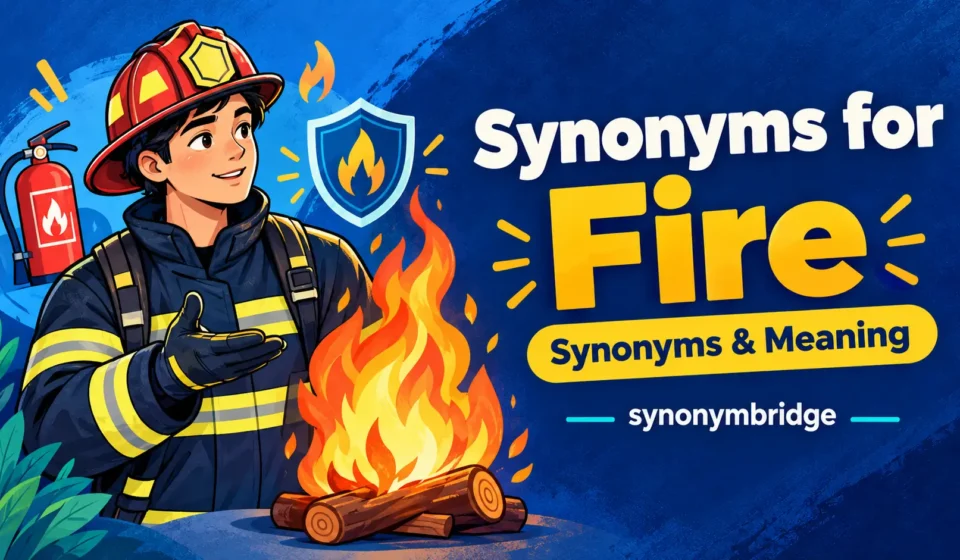
Synonyms for fire include flame, blaze, inferno, conflagration, and combustion. These words describe different kinds of fire, from a small flame in a candle to a large, dangerous blaze. Some words also describe strong passion, energy, or excitement, so the best choice depends on your sentence.
Imagine sitting beside a campfire on a cool evening. The flames dance, the wood crackles, and everyone enjoys the warm glow.
Now imagine writing a story about that scene. Using the word “fire” again and again can make your writing feel dull. A few fresh words can help you paint a clearer picture.
For example, you might describe a small campfire as a gentle flame or a forest fire as a raging blaze. Each word gives readers a different idea of what is happening.
Learning new words helps students write better essays and tell stronger stories. Bloggers can use them to make their posts more interesting.
Content writers can choose clear words that fit each topic. Daily English users can speak with more detail and confidence.
The key is to choose a word that fits the size, purpose, and feeling of the fire. Some words suit real flames, while others work better for passion or excitement.
“Words are, of course, the most powerful drug used by people.” Rudyard Kipling
A little practice can help you choose the right word with ease.
“The difference between the right word and the almost right word is the difference between lightning and a lightning bug.” Often attributed to Mark Twain
Use these words to describe flames, burning, heat, and related ideas. Remember that not every word fits every type of fire.
1. Flame
- Meaning: A flame is the bright, hot part of something that burns.
- Examples: A small flame lit the dark room.
- Examples: The candle flame moved in the breeze.
2. Blaze
- Meaning: A blaze is a strong fire that burns brightly.
- Examples: A bright blaze lit the night.
- Examples: Firefighters rushed to stop the blaze.
3. Inferno
- Meaning: An inferno is a very large and dangerous fire.
- Examples: The old building became a raging inferno.
- Examples: Thick smoke rose from the inferno.
4. Conflagration
- Meaning: A conflagration is a large fire that causes great damage.
- Examples: The conflagration spread across several homes.
- Examples: News crews reported the huge conflagration.
5. Combustion
- Meaning: Combustion is the process of burning when a substance reacts with oxygen.
- Examples: Combustion releases heat and light.
- Examples: The science lesson explained combustion clearly.
6. Bonfire
- Meaning: A bonfire is a large outdoor fire made for warmth or fun.
- Examples: We sang songs beside the bonfire.
- Examples: The scouts built a safe bonfire.
7. Campfire
- Meaning: A campfire is a small outdoor fire used while camping.
- Examples: We cooked dinner over the campfire.
- Examples: The campfire kept our group warm.
8. Wildfire
- Meaning: A wildfire is an uncontrolled fire that spreads through wildland.
- Examples: The wildfire burned through dry grass.
- Examples: Strong winds pushed the wildfire uphill.
9. Firestorm
- Meaning: A firestorm is a fierce fire that creates powerful winds.
- Examples: The firestorm destroyed many nearby buildings.
- Examples: The report described a dangerous firestorm.
10. Flare
- Meaning: A flare is a sudden burst of bright light or flame.
- Examples: A flare lit the night sky.
- Examples: The signal flare guided the rescue team.
11. Spark
- Meaning: A spark is a tiny, bright piece of burning material.
- Examples: One spark jumped from the wood.
- Examples: The spark faded on the ground.
12. Ember
- Meaning: An ember is a small piece of wood or coal that still glows.
- Examples: A red ember glowed beneath the ash.
- Examples: She watched an ember slowly fade.
13. Glowing Coal
- Meaning: Glowing coal is hot fuel that shines without large flames.
- Examples: Glowing coal warmed the cooking pot.
- Examples: The glowing coal stayed hot overnight.
14. Fireball
- Meaning: A fireball is a round mass of flame or burning gas.
- Examples: A fireball lit the movie scene.
- Examples: The fireball rose above the ground.
15. Firebrand
- Meaning: A firebrand is a burning piece of wood or a bold, passionate person.
- Examples: A firebrand fell from the old pile.
- Examples: The speaker was a political firebrand.
16. Wild Flame
- Meaning: A wild flame is a strong flame that moves without control.
- Examples: A wild flame leaped into the air.
- Examples: They stayed far from the wild flame.
17. Burning
- Meaning: Burning is the process of being on fire or giving off heat.
- Examples: The burning wood filled the air with smoke.
- Examples: Burning leaves gave off a sharp smell.
18. Incandescence
- Meaning: Incandescence is light made when something becomes very hot.
- Examples: The metal showed a bright incandescence.
- Examples: Heat caused the wire’s incandescence.
19. Ignition
- Meaning: Ignition is the moment something starts to burn.
- Examples: The engine failed during ignition.
- Examples: Dry grass made ignition more likely.
20. Combustible Flame
- Meaning: A combustible flame is a flame fed by material that can burn.
- Examples: The gas produced a steady flame.
- Examples: Keep paper away from the flame.
21. Pyre
- Meaning: A pyre is a pile of wood used for burning a body or object.
- Examples: The ancient story described a funeral pyre.
- Examples: The historical film showed a wooden pyre.
22. Furnace Fire
- Meaning: A furnace fire is a controlled fire used to create strong heat.
- Examples: The furnace fire heated the metal.
- Examples: Workers checked the furnace fire each hour.
23. Hearth Fire
- Meaning: A hearth fire burns in a fireplace or a home hearth.
- Examples: The hearth fire warmed the family room.
- Examples: We sat near the hearth fire.
24. House Fire
- Meaning: A house fire is a fire that burns inside a home.
- Examples: The house fire started in the kitchen.
- Examples: Neighbors helped after the house fire.
25. Forest Fire
- Meaning: A forest fire is a fire that spreads through trees and woodland.
- Examples: The forest fire damaged many tall trees.
- Examples: Rain helped slow the forest fire.
26. Grassfire
- Meaning: A grassfire is a fire that spreads through dry grass.
- Examples: A grassfire moved across the open field.
- Examples: Fire crews stopped the grassfire quickly.
27. Brushfire
- Meaning: A brushfire is a fire that burns shrubs and low plants.
- Examples: The brushfire spread along the hillside.
- Examples: Crews worked hard to contain the brushfire.
28. Flame Up
- Meaning: A flame up is a sudden increase in flames or burning.
- Examples: A flame up startled the cooking team.
- Examples: The flame up ended after a moment.
29. Flash Fire
- Meaning: A flash fire is a sudden fire that spreads quickly through flammable material.
- Examples: The safety class covered flash fire risks.
- Examples: Workers learned how to avoid flash fires.
30. Backfire
- Meaning: A backfire is a sudden flame or explosion caused by fuel burning the wrong way.
- Examples: The old engine made a loud backfire.
- Examples: A backfire startled everyone nearby.
31. Explosion
- Meaning: An explosion is a sudden burst of energy that can produce heat and flames.
- Examples: The explosion sent smoke into the sky.
- Examples: Everyone moved away from the explosion.
32. Flash
- Meaning: A flash is a sudden burst of bright light.
- Examples: A flash of fire lit the room.
- Examples: The camera caught a bright flash.
33. Scorch
- Meaning: A scorch is a mark left when heat burns a surface.
- Examples: The hot pan left a scorch mark.
- Examples: Fire caused a scorch on the wall.
34. Blazing Fire
- Meaning: A blazing fire burns brightly and gives off strong heat.
- Examples: A blazing fire warmed the cold cabin.
- Examples: The blazing fire lit the campsite.
35. Raging Fire
- Meaning: A raging fire burns fiercely and can be hard to control.
- Examples: A raging fire crossed the dry field.
- Examples: Firefighters worked near the raging fire.
36. Roaring Fire
- Meaning: A roaring fire burns strongly and makes a loud sound.
- Examples: A roaring fire warmed the old lodge.
- Examples: We heard the roaring fire crackle.
37. Smolder
- Meaning: To smolder means to burn slowly without producing much flame.
- Examples: The wood continued to smolder overnight.
- Examples: Ashes can smolder long after flames fade.
38. Incineration
- Meaning: Incineration is the burning of waste or other material until little remains.
- Examples: The plant uses incineration to treat waste.
- Examples: Safe incineration requires careful control.
39. Pyrotechnics
- Meaning: Pyrotechnics are special effects that use fire, sparks, or fireworks.
- Examples: Pyrotechnics lit the concert stage.
- Examples: The show used colorful pyrotechnics outdoors.
40. Firelight
- Meaning: Firelight is the light that comes from a burning fire.
- Examples: Firelight danced across the stone walls.
- Examples: We read by the soft firelight.
41. Heat
- Meaning: Heat is energy that makes something warm or hot.
- Examples: The fire sent heat across the room.
- Examples: We felt the heat from the stove.
42. Arson
- Meaning: Arson is the crime of deliberately setting fire to property.
- Examples: Police investigated the suspected arson case.
- Examples: The court heard evidence about arson.
43. Wildfire Blaze
- Meaning: A wildfire blaze is a large, uncontrolled fire in natural areas.
- Examples: The wildfire blaze spread across the valley.
- Examples: Crews tracked the wildfire blaze from above.
44. Flame Front
- Meaning: A flame front is the moving edge of a spreading fire.
- Examples: The flame front moved toward the road.
- Examples: Experts tracked the flame front carefully.
45. Fire Hazard
- Meaning: A fire hazard is something that could cause a fire or help it spread.
- Examples: Loose wires can become a fire hazard.
- Examples: Keep paper away from this fire hazard.
46. Combustion Flame
- Meaning: A combustion flame is the visible light produced by a burning process.
- Examples: The blue combustion flame burned steadily.
- Examples: The lab measured the combustion flame’s temperature.
47. Kindling
- Meaning: Kindling is small, dry material used to help start a fire.
- Examples: We gathered kindling before sunset.
- Examples: Dry kindling helped the campfire start.
48. Fire Glow
- Meaning: Fire glow is the warm light seen from burning material.
- Examples: A soft fire glow filled the tent.
- Examples: The fire glow brightened their faces.
49. Firebrand Flame
- Meaning: A firebrand flame describes a burning piece of wood that carries fire.
- Examples: A firebrand landed beside the stones.
- Examples: They moved the firebrand away safely.
50. Blaze Up
- Meaning: A blaze up is a sudden rise in flames or fire intensity.
- Examples: The blaze up lasted only a few seconds.
- Examples: The cook stepped back from the blaze up.
Note: Some entries above are related fire terms or descriptive phrases rather than exact synonyms. In formal writing, words such as flame, blaze, inferno, and conflagration are usually stronger direct alternatives. Choose each word based on the meaning you want.
Synonyms for Fire or Flame
The words fire and flame often describe burning, but they are not always interchangeable. A flame is the bright, visible part of a fire, while blaze suggests a strong or bright fire. Inferno describes a very large, dangerous fire.
Use flame for candles, blaze for a strong fire, and inferno when describing great size or danger.
Synonyms for Fire Slang
In casual speech, fire can mean something excellent, exciting, or impressive. Words such as lit, awesome, amazing, and dope may work in informal conversations, depending on the audience.
For example, someone might say, “That song is fire!” This use is different from a real flame, so avoid it in formal reports or safety instructions.
Synonyms for Fire Noun
As a noun, fire can refer to flames, burning, or a destructive event. Depending on the sentence, you might use flame, blaze, inferno, or conflagration. For example, “The blaze damaged the barn” sounds more vivid than “The fire damaged the barn.”
However, combustion refers to the burning process, so it fits science writing better than everyday storytelling.
Synonyms for Fired Up
The phrase fired up often means excited, eager, or ready to act. Useful alternatives include motivated, excited, energized, passionate, and enthusiastic. For example, “The team felt energized before the match” expresses a similar idea without mentioning a real fire. In casual speech, “pumped up” can also work when someone feels excited about an event or challenge.
Synonyms for Fireplace
A fireplace is a place in a room where a fire can burn safely. Related terms include hearth, firebox, and fire surround, although each describes a different part or feature.
A hearth is the floor or area in front of a fireplace, while a firebox is the space where the fire burns. Use the precise term when describing home design or heating.
Frequently Asked Questions
What are some fancy words for fire?
Fancy words for fire include conflagration, inferno, combustion, incandescence, and pyre. Each word has a special use. Conflagration describes a large, destructive fire, while inferno suggests extreme heat and danger.
Incandescence refers to light produced by intense heat. Choose a word that fits your meaning and audience. These terms can make essays, reports, and stories more precise when used correctly.
What is a cool way to say fire?
A cool way to say fire depends on your tone. In creative writing, try blaze, inferno, wildfire, or flame. In casual slang, people may say lit to describe something exciting or excellent. For example, “The concert was lit” expresses excitement, not an actual fire.
For a dramatic story, “a roaring blaze” creates a vivid picture. Always consider your audience before choosing casual or dramatic language.
What to say instead of fire?
You can use flame, blaze, inferno, bonfire, or conflagration instead of fire, depending on the situation. Use flame for a candle or lighter, and bonfire for a large outdoor fire. Use inferno when describing a huge, dangerous fire.
In science writing, combustion may be more accurate when discussing the burning process. Choosing the right word helps readers understand the size, setting, and nature of the fire.
What are the other names for fire?
Other names and related terms for fire include flame, blaze, inferno, bonfire, campfire, wildfire, and conflagration. Some describe where a fire burns, while others describe its size or strength.
A campfire is made for outdoor use, whereas a wildfire spreads without control through natural areas. In everyday English, flame and blaze are useful alternatives. In formal reports, choose a precise term that matches the event.
Conclusion
Learning synonyms for fire can make your writing more vivid, clear, and interesting. Instead of using the same word in every sentence, you can choose flame, blaze, inferno, or bonfire to describe a specific scene. Each word adds a slightly different meaning and helps readers picture what is happening.
Students can use these words in essays and school projects. Bloggers can make articles more engaging, while content writers can choose terms that suit their topics.
English learners can also build confidence by using new words in everyday conversations.
Remember that not every related term is a direct synonym. For example, combustion describes a burning process, while kindling is material used to start a fire. Always check the meaning before choosing a replacement.
“The limits of my language mean the limits of my world.” Ludwig Wittgenstein
Start by learning three new words at a time. Try using them in an email, a short story, or a daily conversation. Then notice how each word changes the meaning of your sentence.
“A word after a word after a word is power.” Margaret Atwood
With regular practice, you can build a stronger vocabulary and express your ideas with greater accuracy and confidence.