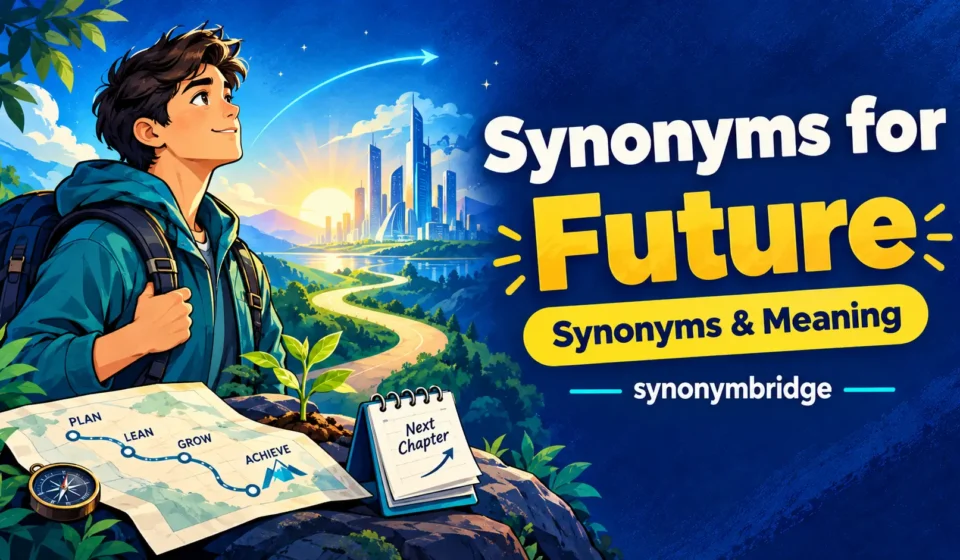
Synonyms for future include tomorrow, time ahead, coming days, prospects, outlook, destiny, and what lies ahead. These words help you talk about plans, hopes, dreams, and changes. Some fit daily talks, while others work better in essays, stories, business plans, and formal writing.
Imagine a student sitting at a desk, thinking about life after school. She wants to go to college, find a good job, and help her family. When she talks about these dreams, she needs words that express hope and plans in a clear way.
For example, a young person might say, “I look forward to what lies ahead.” This sounds more personal than simply saying, “I think about the future.”
Learning different words makes your writing more interesting and helps you share your thoughts with care. Students can use them in essays and school projects. Bloggers can make their posts more engaging.
Content writers can explain plans, trends, and new ideas with greater detail. Daily English users can speak with more confidence and express their hopes in simple ways.
The best word depends on what you want to say. A word about hope may not fit a serious business plan. So, learning the meaning and use of each word helps you choose the right one.
“The best way to predict the future is to create it.”
A small choice today can also shape what happens tomorrow. When you learn to describe your goals clearly, you can share your ideas with others and plan your next steps.
“Every day is a chance to begin again.”
55 Synonyms for Future
The following words and phrases can help you describe the time ahead, upcoming events, hopes, plans, and possible outcomes. Some are direct alternatives, while others fit only certain situations.
1. Tomorrow
- Meaning: Tomorrow is the day that comes right after today.
- Examples: I will start my new job tomorrow. Tomorrow brings another chance to learn.
2. Time Ahead
- Meaning: Time ahead means the days or years that have not come yet.
- Examples: We have many plans for the time ahead. The time ahead looks bright for us.
3. Coming Days
- Meaning: Coming days are the days that will happen soon.
- Examples: We will finish the work in the coming days. The coming days may bring good news.
4. Prospects
- Meaning: Prospects are the chances for success or good things later.
- Examples: Her job prospects look better after training. The team has strong prospects this year.
5. Outlook
- Meaning: Outlook describes what someone thinks may happen in the future.
- Examples: His outlook on life is very positive. The business outlook looks good this year.
6. Destiny
- Meaning: Destiny is what someone believes will happen in their life.
- Examples: She believes destiny will guide her path. He hopes for a happy destiny.
7. What Lies Ahead
- Meaning: This phrase describes events that may happen in the time ahead.
- Examples: We are ready for what lies ahead. Nobody knows what lies ahead for them.
8. The Days to Come
- Meaning: This phrase means the days that will happen after today.
- Examples: The days to come will be busy. We hope for better days to come.
9. Coming Years
- Meaning: Coming years are the years that will follow the present year.
- Examples: She plans to study in coming years. The coming years may bring many changes.
10. Time to Come
- Meaning: Time to come means a period that will happen later.
- Examples: We will remember this in time to come. Better chances may come in time to come.
11. Tomorrow’s World
- Meaning: Tomorrow’s world describes the world people may live in later.
- Examples: Children will shape tomorrow’s world with care. Clean energy may change tomorrow’s world.
12. The Next Chapter
- Meaning: The next chapter means a new stage in someone’s life.
- Examples: College is the next chapter of her life. We are excited for the next chapter.
13. The Long Term
- Meaning: The long term means a period that lasts many years.
- Examples: Save money for the long term. This choice may help us in the long term.
14. The Road Ahead
- Meaning: The road ahead describes the path or challenges that may come.
- Examples: The road ahead may not be easy. We will face the road ahead together.
15. Coming Times
- Meaning: Coming times are periods that will happen after the present.
- Examples: Coming times may bring new ways to work. We must prepare for coming times.
16. Days Ahead
- Meaning: Days ahead means the days that are still to come.
- Examples: We have a busy few days ahead. The days ahead will test our skills.
17. Later Life
- Meaning: Later life means the stage of life that comes after now.
- Examples: She wants to travel in later life. He is saving for later life.
18. The Next Stage
- Meaning: The next stage is the part that follows the current one.
- Examples: The next stage begins after this test. We are ready for the next stage.
19. What Comes Next
- Meaning: This phrase asks or tells what will happen after the present.
- Examples: We do not know what comes next. Let’s plan what comes next together.
20. Upcoming Time
- Meaning: Upcoming time refers to a period that will begin soon.
- Examples: We have big plans for the upcoming time. The upcoming time may be full of change.
21. Possibilities
- Meaning: Possibilities are things that may happen or become true later.
- Examples: There are many possibilities after graduation. Keep an open mind to new possibilities.
22. Potential
- Meaning: Potential is the chance for someone or something to grow or succeed.
- Examples: This young team has great potential. Her skills show potential for future success.
23. Promise
- Meaning: Promise can describe signs that someone or something may do well later.
- Examples: The new plan shows promise for growth. This young player has promise.
24. Hope
- Meaning: Hope is the feeling that good things may happen later.
- Examples: She holds hope for a better life. Hope keeps us moving through hard times.
25. Expectation
- Meaning: Expectation is a belief about what may happen later.
- Examples: Our expectation is that sales will rise. He has high expectations for the year.
26. Forecast
- Meaning: A forecast is a statement about what may happen later.
- Examples: The weather forecast says rain is coming. Their sales forecast looks strong this year.
27. Projection
- Meaning: A projection is an estimate of what may happen based on facts.
- Examples: The report gives a sales projection for next year. Their growth projection seems fair.
28. Horizon
- Meaning: Horizon can mean the range of chances that may open up.
- Examples: A new course widened her career horizon. The team sees fresh chances on the horizon.
29. Coming Era
- Meaning: A coming era is a new period that will begin later.
- Examples: Clean power may shape the coming era. The coming era could change how we learn.
30. New Age
- Meaning: A new age is a period marked by fresh ideas or changes.
- Examples: Digital tools have brought a new age. We may enter a new age of travel.
31. Destiny Ahead
- Meaning: Destiny ahead refers to what someone thinks may await them later.
- Examples: She feels good about her destiny ahead. His destiny ahead is still unknown.
32. Eventuality
- Meaning: An eventuality is something that may happen at some later time.
- Examples: We prepared for every possible eventuality. Rain is one eventuality we must consider.
33. Afterward
- Meaning: Afterward means at a time after something else has happened.
- Examples: We will talk about the plan afterward. She felt proud afterward.
34. Hereafter
- Meaning: Hereafter means the time after now, often in formal writing.
- Examples: The new rules apply hereafter. Hereafter, all staff must sign in.
35. Thereafter
- Meaning: Thereafter means after a certain event or time has passed.
- Examples: He moved abroad and worked there thereafter. The team met weekly thereafter.
36. Posterity
- Meaning: Posterity means the people who will live in the years ahead.
- Examples: We should protect forests for posterity. This story may inspire posterity one day.
37. Future Generations
- Meaning: Future generations are people who will be alive in later years.
- Examples: We must save water for future generations. Our choices affect future generations every day.
38. The Next Generation
- Meaning: The next generation means the group of people born after us.
- Examples: Teachers help the next generation grow. The next generation may use smarter tools.
39. Long Range View
- Meaning: A long range view considers what may happen over many years.
- Examples: The leader took a long range view. A long range view can guide better choices.
40. Upcoming Period
- Meaning: An upcoming period is a stretch of time that will begin soon.
- Examples: We will hire more staff in the upcoming period. The upcoming period may be busy.
41. Prospective Time
- Meaning: Prospective time refers to a time that may come later.
- Examples: We discussed changes for the prospective time. The plan covers needs in prospective time.
42. Advancement
- Meaning: Advancement means progress toward a better level or position.
- Examples: Her training supports career advancement. New skills can lead to advancement at work.
43. Progress
- Meaning: Progress is movement toward a goal or a better state.
- Examples: Small steps bring progress over time. We made good progress this month.
44. Growth
- Meaning: Growth is the process of becoming bigger, stronger, or better.
- Examples: The company plans for steady growth. Learning every day supports personal growth.
45. Development
- Meaning: Development is the process of growing or changing over time.
- Examples: The town expects new development soon. Her skills need time for development.
46. Evolution
- Meaning: Evolution is a gradual change that happens over a long time.
- Examples: Technology continues its evolution each year. The team’s evolution has been impressive.
47. New Beginning
- Meaning: A new beginning is a fresh start after a change.
- Examples: Moving abroad gave him a new beginning. Monday feels like a new beginning.
48. Next Phase
- Meaning: The next phase is the part that follows the current stage.
- Examples: The next phase starts after the review. We are planning the next phase now.
49. Coming Season
- Meaning: A coming season is the next period of the year or activity.
- Examples: We will plant seeds in the coming season. The team is training for the coming season.
50. New Frontier
- Meaning: A new frontier is an area with fresh chances to explore.
- Examples: Space travel is a new frontier for science. The project opens a new frontier for learning.
51. Eventual Outcome
- Meaning: The eventual outcome is the final result that happens after some time.
- Examples: We cannot know the eventual outcome yet. Patience may affect the eventual outcome.
52. End Result
- Meaning: The end result is what happens when a process is finished.
- Examples: Hard work shaped the end result. We will review the end result tomorrow.
53. Long Term Outlook
- Meaning: A long term outlook describes what may happen over a long period.
- Examples: The long term outlook for jobs seems positive. We need a long term outlook for growth.
54. Future State
- Meaning: A future state is the condition something may reach later.
- Examples: The plan describes our future state clearly. Better tools could improve the future state.
55. What Is Yet to Come
- Meaning: This phrase describes events that have not happened but may happen later.
- Examples: We are excited about what is yet to come. Only time will show what is yet to come.
Synonyms for Future Plans
Words and phrases for future plans include intentions, aims, goals, plans ahead, and upcoming projects. Use intentions when explaining what you mean to do, and aims when talking about what you want to achieve.
For example, “Our intentions are clear” sounds formal, while “We have big plans ahead” feels friendly. Choose the phrase that fits your sentence and the level of detail you need.
Synonyms for Future Generations
Useful alternatives for future generations include posterity, the next generation, and people yet to come. Posterity works well in formal writing about protecting nature, history, or culture. The next generation is more common when discussing children, education, or technology. For example, “We must protect forests for posterity” stresses long term care, while “We must teach the next generation” focuses on helping young people.
Synonyms for Future Goals
You can describe future goals as aims, ambitions, targets, objectives, or plans. Aims and ambitions suit personal dreams, while targets and objectives often fit school or work.
For example, a student may set a goal to pass an exam, while a business may set a target to increase sales. Pick a word that makes the goal clear and matches how formal your writing needs to be.
Synonyms for Future Research
In academic writing, alternatives for future research include further study, later investigation, additional research, and work to come. Further study is a clear choice when more learning is needed. Additional research works well in reports and papers.
For example, “Further study is needed to test this idea” tells readers that the current evidence is not enough. Use these phrases to show what researchers should explore next.
Synonyms for Future Endeavours
Alternatives for future endeavours include upcoming efforts, next projects, future pursuits, and plans ahead. Future pursuits sounds formal and suits professional messages, while next projects is more direct.
For example, “I wish you success in your future pursuits” is suitable for a farewell note. In everyday writing, “Good luck with your next projects” sounds warmer and simpler. Choose the phrase that fits your relationship with the reader.
Frequently Asked Questions
1. What words are similar to future?
Words similar to future include tomorrow, prospects, outlook, time ahead, coming days, and what lies ahead. Each phrase has a slightly different use. Tomorrow can mean the next day, while prospects often refer to chances for success.
Outlook describes what someone expects to happen. In everyday speech, “time ahead” and “coming days” are simple choices. Always consider the sentence before choosing a replacement.
2. What is another word for seeing the future?
Words for seeing or knowing what may happen include foresight, prediction, forecasting, and vision. Foresight means thinking ahead and preparing for possible events. Prediction means saying what you think will happen.
Forecasting often involves using facts, such as weather data or sales figures. Vision can describe a clear idea of what you want to achieve. These words are not exact matches, so choose one based on your meaning.
3. What is a fancy word for future plans?
Prospective intentions is a formal phrase for plans that may be carried out later, but it is not common in everyday English. More natural choices include future aspirations, forthcoming plans, and long term objectives.
Use aspirations for hopes and ambitions, especially in personal writing. Choose long term objectives for work reports or business documents. For a simple email, “plans for the coming months” is clear, polite, and easy to understand.
4. What is a positive word for the future?
Promise is a positive word for the future when something shows signs of success. You can also use hope, potential, opportunity, and prospects to express a positive outlook. For example, “The project has great promise” suggests that it may do well.
“There are new opportunities ahead” shows that good chances may come. Choose the word that best expresses your message instead of adding positive words that do not fit.
Choosing the Right Word for the Future
The best alternative depends on the message you want to share. Use tomorrow for the next day, prospects for chances of success, and outlook for expectations. In academic writing, further study and long term objectives can sound clear and professional.
For personal messages, new beginnings and what lies ahead may feel warmer.
“Great things are done by a series of small things brought together.”
This idea is useful when writing about plans and progress. A strong sentence does not need a difficult word. It needs the right word for the meaning, reader, and situation.
Conclusion
Learning synonyms for the future helps you share ideas with greater care and confidence. Instead of using the same word in every sentence, you can choose words that express hope, plans, progress, or change.
Words such as prospects, outlook, potential, and new beginning each add a different meaning to your writing.
Students can use these words in essays, homework, and school projects. Bloggers can make their articles more engaging and easier to read. Content writers can explain upcoming trends, goals, and plans without repeating the same phrases.
In daily conversations, these words help you talk about dreams, choices, and what may happen next.
Start by learning five words from this list. Write a sentence with each word, then use them in an email, a short essay, or a conversation with a friend. Pay attention to how each word fits its sentence. With regular practice, choosing the right word will become easier.
Remember that good writing is not about using the fanciest words. It is about making your meaning clear and helping readers understand your message.
“The future depends on what you do today.”
Take one small step toward your goals today, even if the next steps are not yet clear.
“Small steps can lead to big changes.”