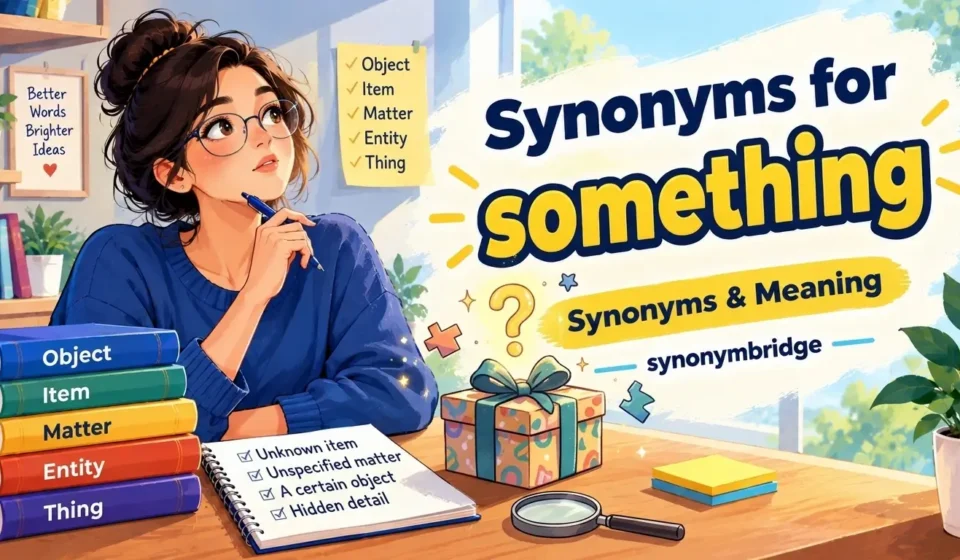
Synonyms for something include item, object, thing, matter, subject, detail, element, and stuff. The best choice depends on what you mean and how you use it. These words help you describe objects, ideas, events, and unknown things more clearly in daily conversations, schoolwork, emails, and online writing.
Imagine writing an email to a friend. You want to say, “I found something interesting,” but you have used the word something many times. A more exact word can make your message clearer and more fun to read.
For example, you could say, “I found an interesting book at the store.” The word book tells your reader exactly what you found. Choosing the right word helps people understand your message without guessing.
Learning synonyms for something is useful in many ways. Students can use them to make essays and homework clearer. Bloggers can use them to keep readers interested. Content writers can choose words that fit each topic. Daily English users can speak and write with more ease.
You do not need to replace something every time. Sometimes, it is the best word because the object or idea is not known. The goal is to choose words that fit your meaning and sound natural.
“The right word can make a simple idea shine.”
When you learn more words, you can share your thoughts with less effort. You can also avoid using the same word again and again. A few small changes can make your writing stronger.
“Clear words help people understand each other.”
These words can replace something when you want to describe an object, idea, event, or matter. Choose the word that best matches your sentence.
1. Item
- Meaning: An item is one thing that belongs to a group or list.
- Examples: Please add this item to the list.
- Examples: Each item has a different price.
2. Object
- Meaning: An object is something you can often see or touch.
- Examples: That object looks strange on my desk.
- Examples: Please move the object near the door.
3. Thing
- Meaning: A thing is a general word for an object or idea.
- Examples: One thing makes me happy today.
- Examples: Put that thing inside the box.
4. Matter
- Meaning: A matter is a subject, problem, or situation that needs attention.
- Examples: We need to discuss this matter today.
- Examples: The matter is more serious than expected.
5. Subject
- Meaning: A subject is a topic that people talk or write about.
- Examples: Choose a subject for your school essay.
- Examples: Money became the main subject of discussion.
6. Detail
- Meaning: A detail is one small part of a larger idea or story.
- Examples: She shared one detail about the trip.
- Examples: Every detail makes the story more real.
7. Element
- Meaning: An element is one part of a whole thing or plan.
- Examples: Trust is an important element of friendship.
- Examples: Add one more element to your design.
8. Stuff
- Meaning: Stuff is an informal word for things you do not name.
- Examples: I left my stuff in the car.
- Examples: We talked about school stuff after lunch.
9. Something new
- Meaning: Something new is an idea, object, or experience you have not known before.
- Examples: I want to learn something new today.
- Examples: She bought something new for her room.
10. Something special
- Meaning: Something special is a thing that feels important or different.
- Examples: He planned something special for her birthday.
- Examples: This gift means something special to me.
11. Feature
- Meaning: A feature is one part or quality of a person, object, or product.
- Examples: This phone has a useful new feature.
- Examples: The best feature is its clear screen.
12. Aspect
- Meaning: An aspect is one part of a topic, plan, or situation.
- Examples: We discussed every aspect of the project.
- Examples: Cost is one aspect to consider.
13. Element of surprise
- Meaning: An element of surprise is an unexpected part of an event.
- Examples: Her visit added an element of surprise.
- Examples: The ending has a fun surprise element.
14. Experience
- Meaning: An experience is something that happens to you or that you do.
- Examples: The trip was a great experience for me.
- Examples: We shared a funny experience after class.
15. Event
- Meaning: An event is something that happens at a certain time or place.
- Examples: The event changed our plans for today.
- Examples: Everyone remembered that event for years.
16. Occurrence
- Meaning: An occurrence is an event or action that happens.
- Examples: This occurrence surprised everyone in the room.
- Examples: The strange occurrence made us stop.
17. Incident
- Meaning: An incident is an event, often one that is unusual or troubling.
- Examples: The incident happened outside the school.
- Examples: We reported the incident to our teacher.
18. Situation
- Meaning: A situation is the way things are at a certain time.
- Examples: We handled the situation with care.
- Examples: This situation needs a simple answer.
19. Issue
- Meaning: An issue is a topic or problem that needs attention.
- Examples: We must fix this issue before Friday.
- Examples: The issue caused a short delay.
20. Problem
- Meaning: A problem is something difficult that needs a solution.
- Examples: We found a problem in the report.
- Examples: Her quick idea solved the problem.
21. Idea
- Meaning: An idea is a thought, plan, or suggestion in your mind.
- Examples: I have an idea for our project.
- Examples: That idea could help the whole team.
22. Thought
- Meaning: A thought is an idea or opinion that comes to your mind.
- Examples: One thought stayed with me all day.
- Examples: Share your thought with the group.
23. Concept
- Meaning: A concept is a general idea about how something works.
- Examples: The teacher explained the concept in simple words.
- Examples: This concept is easy to understand now.
24. Point
- Meaning: A point is one idea or fact in a discussion.
- Examples: She made a good point during class.
- Examples: Please explain your point one more time.
25. Fact
- Meaning: A fact is information that is true and can be checked.
- Examples: Each fact came from a trusted source.
- Examples: This fact helps explain the main idea.
26. Information
- Meaning: Information is knowledge or facts that tell you about something.
- Examples: I need more information before deciding.
- Examples: The website gives useful information about plants.
27. Content
- Meaning: Content is the words, images, or ideas inside a piece of work.
- Examples: The content of this page is helpful.
- Examples: We added fresh content to the website.
28. Material
- Meaning: Material is information or resources used for a task.
- Examples: The teacher shared material for our lesson.
- Examples: Keep all the study material together.
29. Resource
- Meaning: A resource is something useful that helps you do a task.
- Examples: This guide is a useful learning resource.
- Examples: We found a free resource online.
30. Component
- Meaning: A component is one part that helps make a whole.
- Examples: Each component has a clear purpose.
- Examples: This component needs careful testing before use.
31. Part
- Meaning: A part is one piece or section of something larger.
- Examples: This part of the book is exciting.
- Examples: Please read the last part again.
32. Piece
- Meaning: A piece is one portion or part of a larger whole.
- Examples: I found a piece of paper nearby.
- Examples: Each piece fits into the puzzle.
33. Example
- Meaning: An example is something that helps explain an idea clearly.
- Examples: Give me an example from daily life.
- Examples: Her story is a good example.
34. Reason
- Meaning: A reason explains why something happens or why someone acts.
- Examples: One reason for leaving was the rain.
- Examples: Tell me the reason for your choice.
35. Purpose
- Meaning: A purpose is the reason why someone does something.
- Examples: The purpose of this meeting is clear.
- Examples: Every task should have a purpose.
36. Goal
- Meaning: A goal is something you want to do or achieve.
- Examples: My goal is to improve my writing.
- Examples: We reached our goal before the deadline.
37. Task
- Meaning: A task is a piece of work that needs to be done.
- Examples: I finished one task before lunch.
- Examples: This task will take ten minutes.
38. Action
- Meaning: An action is something a person does in a situation.
- Examples: Her action helped the whole team.
- Examples: Every action can lead to change.
39. Change
- Meaning: A change is when something becomes different from before.
- Examples: We noticed a change in his mood.
- Examples: One small change improved the whole plan.
40. Occasional detail
- Meaning: An occasional detail is a small piece of information mentioned from time to time.
- Examples: He shared an occasional detail about work.
- Example: One occasional detail made us laugh.
How to Choose the Right Synonym
Not every word in this list can replace something in every sentence. Context matters. Use object for a physical thing, idea for a thought, issue for a matter that needs attention, and event for something that happens.
In formal writing, words such as aspect, element, and concept may fit better than stuff. In casual speech, thing and stuff often sound more natural.
“A clear word makes your meaning easier to follow.”
Edit each sentence by focusing on its meaning. Name the exact object when you know it. Use idea or concept to describe a thought. When the thing is unknown, something may still be the best choice.
Synonyms for Something New
When you describe something new, choose words that show it is fresh, recent, or unfamiliar. You can use novelty, innovation, or new development in the right context.
For example, a new phone feature may be an innovation, while a new class may be a fresh experience. These alternatives help you explain what has changed without repeating the word something.
Synonyms for Something Else
Use another thing, an alternative, or a different option when you mean something else. These phrases work well when comparing choices or asking for a replacement.
For example, “Can we try another option?” sounds clearer than “Can we try something else?” Choose alternative in formal writing and something else in everyday conversations.
Synonyms for Something Good
When you describe something good, try excellent, valuable, beneficial, or positive. Each word has a slightly different meaning. Excellent describes high quality, beneficial means helpful, and valuable can mean useful or important.
For example, you might call a helpful lesson beneficial or describe a great result as excellent. Pick the word that best explains why the thing is good.
Synonyms for Something Important
Words such as essential, significant, crucial, and vital can replace something important when the meaning fits. Use essential for something needed, crucial for something that can affect an outcome, and significant for something that matters.
For example, clean water is essential for life. These choices can make essays, reports, and work emails more direct and precise.
Synonyms for Something Fishy
If something seems suspicious, you can say it looks shady, questionable, odd, or dubious. These words suggest that a person, action, or situation may not be honest or normal.
For example, an offer that promises huge rewards for no effort may seem suspicious. Use shady in casual speech and questionable or dubious in more formal writing.
Frequently Asked Questions
1. What Can I Say Instead of Something?
You can replace something with item, object, idea, matter, detail, or event, depending on your meaning. If you know exactly what you mean, use its name. For example, instead of “I need something to write with,” you can say, “I need a pen.”
Specific words make your message clearer and help readers understand you without guessing.
2. What Is a Better Word for “Using Something”?
The best alternative depends on how you use the word using. Employing works in formal or professional writing, while applying suits a method, skill, or rule. You can also use operating for a machine or device and utilizing for making practical use of a resource.
For example, “She is using a new method” could become “She is applying a new method.”
3. What Can I Say Instead of Things?
You can use items, objects, belongings, details, matters, or possessions instead of things. The right choice depends on what you want to describe. Use belongings for personal property, items for a list, and details for parts of a story or plan.
Instead of saying, “Pack your things,” you could say, “Pack your belongings.” This makes the meaning more exact.
4. What’s Another Word for Saying Something?
Words such as stating, mentioning, expressing, sharing, and explaining can replace saying, depending on the situation. Use mentioning for a brief reference, explaining when giving details, and expressing when sharing a feeling or opinion.
For example, “She said her opinion” is better written as “She expressed her opinion.” Choosing the right verb helps your sentences sound natural and clear.
Conclusion
Learning synonyms for something can help you become a better writer and speaker. Instead of using the same general word in every sentence, you can choose a word that gives readers more information. Words such as item, object, idea, matter, and event each work in different situations.
For students, these words can make essays, homework, and class answers clearer. Bloggers can use them to keep articles easy to read and avoid repeated wording.
Content writers can choose more exact terms for headings, descriptions, and examples. In daily conversations, the right word helps you share your thoughts with less confusion.
Start with a few simple words from this list. Try using item when naming something on a list, idea when sharing a thought, and issue when talking about a problem. You can also practice these words in emails, essays, social posts, and everyday chats.
Remember, you do not have to replace something every time. If you do not know what a thing is or want to keep it general, the original word may be the best choice.
“Practice a little each day, and your words will grow.”
Keep reading, writing, and trying new words. With time, choosing the right synonym will feel easier, and your English will become clearer and more natural.
“Good communication starts with words that fit.”