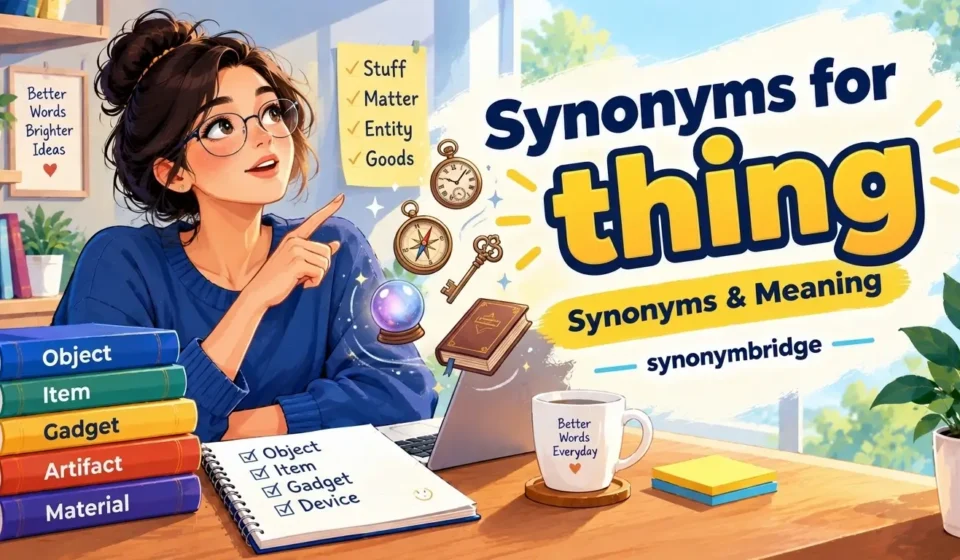
The best synonyms for thing include object, item, matter, issue, idea, fact, and subject. The right word depends on what you mean. Use object for something you can touch, matter for a topic, and issue for a problem. These words make your writing clearer and more precise.
Imagine writing an essay about your favorite book. You have many ideas, but you keep using the word “thing” in every sentence. Your writing starts to sound dull. You want to explain your thoughts clearly, but you need better words to express them.
For example, instead of saying, “One thing I love is the story,” you could write, “One aspect I love is the story.” This small change makes your sentence sound more natural.
Learning synonyms for thing can help you choose words that fit your meaning. Students can use them to write stronger essays.
Bloggers can make their posts easier to read. Content writers can create clear and useful articles. Daily English users can express their thoughts with more confidence.
“The difference between the right word and the almost right word is the difference between lightning and a lightning bug.”
You do not need to use difficult words to sound smart. You only need to choose words that explain your ideas well.
“Words are, of course, the most powerful drug used by people.”
With practice, you can replace vague words with clear ones and make your writing more interesting.
50 Synonyms for Thing
1. Object
- Meaning: An object is something you can see, touch, or use.
- Examples: This object belongs on my desk. Please move that object near the window.
2. Item
- Meaning: An item is one thing listed, sold, or used separately.
- Examples: Each item costs five dollars. I forgot one item on the list.
3. Thing
- Meaning: Thing is a general word for something you cannot name.
- Examples: That thing looks strange to me. Put the thing beside your bag.
4. Matter
- Meaning: A matter is a subject, concern, or situation that needs attention.
- Examples: We need to discuss this matter today. The matter is important to our team.
5. Issue
- Meaning: An issue is a topic or problem that needs thought or action.
- Examples: We solved the issue before lunch. This issue needs more time and care.
6. Subject
- Meaning: A subject is something people talk about, study, or think about.
- Examples: Music is my favorite subject at school. We changed the subject during dinner.
7. Object of Interest
- Meaning: An object of interest is something that attracts attention or study.
- Examples: The old map became an object of interest. Visitors admired the object of interest nearby.
8. Item of Interest
- Meaning: An item of interest is something worth noticing, learning, or discussing.
- Examples: This photo is an item of interest. The report lists each item of interest.
9. Idea
- Meaning: An idea is a thought, plan, or suggestion in your mind.
- Examples: I have an idea for dinner. Her idea helped our group finish early.
10. Concept
- Meaning: A concept is a general thought or understanding about something.
- Examples: The concept sounds simple to me. Our teacher explained the concept with pictures.
11. Fact
- Meaning: A fact is something known or proven to be true.
- Examples: One fact changed my view completely. Please check every fact before sharing it.
12. Detail
- Meaning: A detail is one small part of a larger thing.
- Examples: I missed one detail in class. This detail makes the story more real.
13. Aspect
- Meaning: An aspect is one part or feature of something larger.
- Examples: Cost is one aspect of planning. We discussed every aspect of the new plan.
14. Element
- Meaning: An element is one part that helps make something whole.
- Examples: Trust is an element of friendship. Each element adds value to the design.
15. Feature
- Meaning: A feature is a part or quality that makes something special.
- Examples: The camera has a useful feature. This feature makes the app easier to use.
16. Part
- Meaning: A part is one piece or section of a larger whole.
- Examples: This part needs a little more work. I enjoyed the last part of the show.
17. Piece
- Meaning: A piece is one separate part of something larger.
- Examples: I found a piece under the table. She gave me a piece of paper.
18. Component
- Meaning: A component is one part that helps something work or exist.
- Examples: This component needs careful testing. Every component fits inside the small machine.
19. Unit
- Meaning: A unit is one single part of a group or system.
- Examples: Each unit has its own number. We packed every unit into one box.
20. Element of Concern
- Meaning: An element of concern is a part that may cause worry or trouble.
- Examples: Safety became an element of concern. We discussed the element of concern at work.
21. Situation
- Meaning: A situation is the way things are at a certain time.
- Examples: The situation changed after lunch. We handled the situation with care.
22. Event
- Meaning: An event is something that happens at a particular time or place.
- Examples: The event brought our whole family together. I still remember that event from childhood.
23. Occurrence
- Meaning: An occurrence is something that happens, often without much warning.
- Examples: Such an occurrence is rare here. We reported the occurrence to our manager.
24. Incident
- Meaning: An incident is an event, often one that causes trouble.
- Examples: The incident happened near the school. Our teacher explained the incident to everyone.
25. Experience
- Meaning: An experience is something that happens to you or teaches you something.
- Examples: The trip was a happy experience. Every experience taught me something new.
26. Activity
- Meaning: An activity is something people do for work, fun, or learning.
- Examples: Reading is my favorite evening activity. We planned an activity for the children.
27. Task
- Meaning: A task is a piece of work that someone needs to do.
- Examples: I finished my task before dinner. This task takes only ten minutes.
28. Job
- Meaning: A job is a piece of work that needs to be done.
- Examples: I have one job left today. She did a great job with cleanup.
29. Business
- Meaning: Business can mean a matter that needs attention or action.
- Examples: We have some business to discuss. That is not your business to manage.
30. Concern
- Meaning: A concern is something that matters to someone or causes worry.
- Examples: Cost is my main concern today. Her concern helped us spot the problem.
31. Problem
- Meaning: A problem is something difficult that needs a solution.
- Examples: We found a problem with the plan. This problem has an easy answer.
32. Question
- Meaning: A question is something people ask or think about finding an answer.
- Examples: One question stayed in my mind. Please write your question on the board.
33. Point
- Meaning: A point is one idea or fact in a discussion.
- Examples: You made a useful point today. I understand your point much better now.
34. Topic
- Meaning: A topic is something people discuss, write about, or study.
- Examples: Our topic today is healthy food. She chose a topic for her essay.
35. Theme
- Meaning: A theme is the main idea running through a story or subject.
- Examples: Friendship is the theme of this story. The theme connects every part of the book.
36. Issue at Hand
- Meaning: The issue at hand is the main matter needing attention now.
- Examples: Let us focus on the issue at hand. The issue at hand needs a clear answer.
37. Circumstance
- Meaning: A circumstance is a fact or condition that affects a situation.
- Examples: Under these circumstances, we should wait. Each circumstance can change the final choice.
38. Condition
- Meaning: A condition is the state something is in at a given time.
- Examples: The car is in good condition. Check the condition before buying the bike.
39. Affair
- Meaning: An affair can mean a matter, event, or personal concern.
- Examples: The whole affair ended quite peacefully. It was a private affair for them.
40. Phenomenon
- Meaning: A phenomenon is an event or fact that people notice or study.
- Examples: The bright lights were a rare phenomenon. Scientists studied this phenomenon for many years.
41. Occasion
- Meaning: An occasion is a special event or a time when something happens.
- Examples: We saved this dress for the occasion. Her birthday was a joyful occasion for everyone.
42. Entity
- Meaning: An entity is something that exists as a separate whole.
- Examples: The group became a separate entity. Each entity has a clear role here.
43. Material
- Meaning: Material is information or content used for a task or purpose.
- Examples: I gathered material for my school project. This material will help us prepare the lesson.
44. Content
- Meaning: Content is the information, ideas, or material inside something.
- Examples: The content is easy to understand. Please review the content before publishing it.
45. Information
- Meaning: Information is knowledge or facts that help explain something.
- Examples: I need more information about the course. This information helped me make a choice.
46. Evidence
- Meaning: Evidence is information or proof that helps show what is true.
- Examples: We found evidence near the gate. The evidence supports her answer clearly.
47. Resource
- Meaning: A resource is something useful that helps you reach a goal.
- Examples: This guide is a helpful resource. We used every resource available to us.
48. Possession
- Meaning: A possession is something owned by a person.
- Examples: The watch is my favorite possession. She kept her possessions in one bag.
49. Gadget
- Meaning: A gadget is a small tool or device made for a task.
- Examples: This gadget helps me open jars. He bought a gadget for his kitchen.
50. Contraption
- Meaning: A contraption is a device that looks unusual or has many parts.
- Examples: Dad built a strange contraption today. The contraption made a loud noise upstairs.
A useful rule: Not every synonym fits every sentence. An object is often something physical, while an issue is a matter that needs attention. Choose a word that matches your exact meaning.
“The most valuable words are the ones that help people understand you.”
Synonyms for Thing in an Essay
In an essay, replace “thing” with a word that explains your point. Use aspect for one part of a topic, factor for something that affects a result, or issue for a problem.
For example, “One factor affects learning” sounds clearer than “One thing affects learning.” Choose the word that best fits your argument.
Synonyms for Thing or Stuff
The words “thing” and “stuff” are common in daily speech, but they can sound vague in writing. Use items for separate objects, belongings for things you own, and materials for things used to make or do something.
For example, “Pack your belongings” is clearer than “Pack your stuff.” The right choice depends on what you mean.
Synonyms for Thing That Happened
When you describe something that happened, use event, incident, occurrence, or experience. An event can be happy or sad, while an incident often suggests trouble. An occurrence simply describes something that happened.
An experience focuses on what someone went through. These words help readers understand the type of event you are describing without adding extra details.
Formal Synonyms for Thing
Formal writing often needs words that give exact meaning. Use matter for a subject that needs attention, issue for a concern, aspect for one part, and factor for something that affects a result.
In a report, “Several factors affected the outcome” sounds more precise than “Several things affected the outcome.” Always choose a word that fits the facts.
Synonyms for Thingamajig
Thingamajig is an informal word for an object whose name you cannot remember. Similar words include thingamabob, thingy, doohickey, and gizmo. These words work well in casual conversations, jokes, or friendly chats.
For example, you might say, “Please pass me that little gizmo.” In formal writing, describe the object by its name, shape, or purpose whenever possible.
Frequently Asked Questions
What Is a Fancy Word for Thing?
A fancy word for thing depends on the meaning of your sentence. Entity works for something that exists as a separate whole. Phenomenon describes an event or fact that people notice or study.
Aspect refers to one part of a larger subject, while element describes a part of a whole. For everyday writing, however, a simple and exact word is often better than a fancy one.
What Are Some Slang Words for “Thing”?
Common slang words for thing include thingy, thingamajig, thingamabob, doohickey, and gizmo. People use these words when they forget an object’s name or do not know what it is called.
For example, someone might say, “Hand me that thingy on the shelf.” These words suit casual chats and playful speech. In school essays, reports, or professional emails, use a clearer word whenever you can.
What Was the Old English Word for “Thing”?
The Old English word was þing, also written as thing in modern letters. It could refer to a matter, an affair, a cause, or an assembly where people met to discuss important issues. The word has Germanic roots and is related to words in other Germanic languages.
Over time, its meaning expanded, and today “thing” can refer to almost any object, idea, event, or matter.
What Is a Better Way to Say Things?
A better way to say “things” is to name the exact objects, ideas, or events you mean. Use items for objects on a list, belongings for personal property, ideas for thoughts, and events for things that happened.
In an essay, “Several factors affect sleep” is clearer than “Several things affect sleep.” Specific words help readers understand your message quickly and make your writing sound more confident.
Conclusion
Learning synonyms for thing helps you express your thoughts with greater care. Instead of using the same general word in every sentence, you can choose words that explain your meaning.
Words like item, object, aspect, matter, and factor each have a different use. Understanding these differences makes your writing clearer and more useful.
Students can use these words in essays, homework, and class discussions. Bloggers can make their posts easier to read and more helpful to visitors. Content writers can explain ideas without repeating the same words.
In daily conversations, choosing the right word can help you share your thoughts with confidence.
Start with a small goal. Pick five synonyms from this list and write one sentence for each. Then try using those words in an email, a short paragraph, or a daily conversation. Check whether each word matches the meaning you want to express.
Remember that clear writing is more important than using difficult words. A simple word that fits your meaning is better than a fancy word that confuses your reader.
“The right word makes your meaning easier to understand.”
Keep practicing, and your vocabulary will grow over time. With each new word, you will have another way to explain your ideas, share your knowledge, and connect with other people.
“Small changes in words can make a big difference in writing.”