
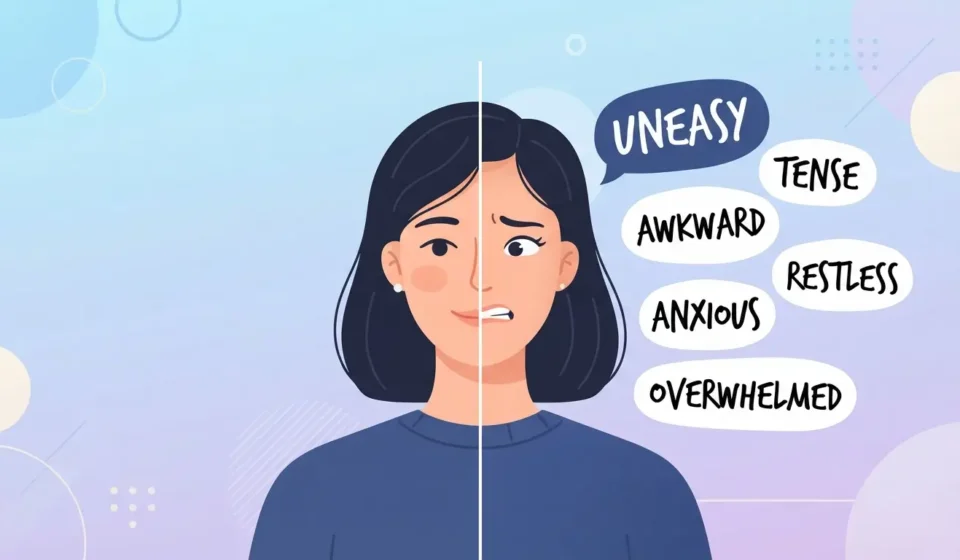
A synonym for uncomfortable is a word that means you feel unhappy, tense, or in pain. Words like uneasy, awkward, tense, and restless all show this feeling. You can feel uncomfortable in your body, like tight shoes, or in your mind, like an awkward silence with a stranger.
Picture this: you walk into a meeting late, and every eye turns your way. Your face gets hot. Your hands feel shaky. That strange, tight feeling in your chest is what we call uncomfortable.
Maybe you once sat through a long bus ride in shoes that pinched your toes the whole way home. That feeling counts too.
“Words are the clothes that thoughts wear.” Samuel Johnson
Finding the right word for this feeling matters more than you think. Students need fresh words so their essays do not sound repetitive. Bloggers need variety to keep readers hooked and reading longer.
Content writers need synonyms to rank well and still sound natural. Daily English users need better words to explain how they truly feel to friends and family.
“The limits of my language mean the limits of my world.” Ludwig Wittgenstein
This guide gives you fifty strong synonyms for uncomfortable, plus real examples, so you never run out of the right word again.
1. Uneasy
- Meaning: You feel a little worried and not calm inside.
- Examples: She felt uneasy walking home alone at night. He grew uneasy before the big exam.
2. Awkward
- Meaning: A moment feels strange, clumsy, and hard to handle.
- Examples: The date turned awkward after a long silence. Meeting my ex was awkward and stiff.
3. Tense
- Meaning: Your body or mood feels tight and stressed.
- Examples: The room felt tense before the announcement. His shoulders were tense during the interview.
4. Nervous
- Meaning: You feel worried and a bit scared about something.
- Examples: She was nervous before her first speech. I get nervous around large crowds.
5. Restless
- Meaning: You cannot sit still or relax at all.
- Examples: The child grew restless during the long flight. He felt restless waiting for results.
6. Troubled
- Meaning: Your mind feels heavy with worry or sadness.
- Examples: She looked troubled after reading the letter. His troubled expression worried his friends.
7. Bothered
- Meaning: Something small keeps annoying or upsetting you.
- Examples: The loud music bothered him all night. She seemed bothered by the criticism.
8. Strained
- Meaning: A relationship or feeling is stretched and tense.
- Examples: Their friendship felt strained after the fight. His smile looked strained and forced.
9. Unsettled
- Meaning: You feel shaky, unsure, and not at peace.
- Examples: The news left her feeling unsettled all day. His stomach felt unsettled before flying.
10. Disturbed
- Meaning: Something upsets your calm and peaceful feeling.
- Examples: The loud noise disturbed her quiet evening. He was disturbed by the sad story.
11. Ill at Ease
- Meaning: You do not feel relaxed in a place.
- Examples: He felt ill at ease at the party. She was ill at ease around strangers.
12. Distressed
- Meaning: You feel deep worry, pain, or sadness inside.
- Examples: The lost puppy looked distressed and scared. She sounded distressed on the phone call.
13. Painful
- Meaning: Something hurts your body or your feelings badly.
- Examples: The tight shoes were painful to wear. That memory is still painful for him.
14. Agonizing
- Meaning: A feeling of pain that is very strong.
- Examples: The wait for results was agonizing for her. His back pain became agonizing overnight.
15. Cramped
- Meaning: A space feels too small and tight.
- Examples: The tiny car felt cramped on our trip. Their cramped office had no windows.
16. Constricted
- Meaning: Something feels too tight and hard to move.
- Examples: The tight collar felt constricted around his neck. Her chest felt constricted with worry.
17. Stiff
- Meaning: Your body feels tight, sore, and hard to move.
- Examples: His legs were stiff after the long hike. She woke up with a stiff neck.
18. Sore
- Meaning: A part of your body hurts a little.
- Examples: My arms were sore after lifting boxes. Her feet felt sore after the walk.
19. Aching
- Meaning: A steady, dull pain that will not stop.
- Examples: His aching back kept him up all night. Her aching feet needed a warm bath.
20. Unpleasant
- Meaning: Something is not nice and hard to enjoy.
- Examples: The smell in the kitchen was unpleasant. That was an unpleasant surprise for everyone.
21. Fidgety
- Meaning: You keep moving because you cannot relax.
- Examples: The kids grew fidgety during the boring class. He felt fidgety waiting for his name.
22. Jittery
- Meaning: You feel shaky and nervous, often from stress.
- Examples: Too much coffee made her feel jittery. He was jittery before walking on stage.
23. Edgy
- Meaning: You feel irritable, tense, and quick to react.
- Examples: He was edgy after the stressful meeting. She grew edgy waiting for the storm.
24. Rattled
- Meaning: A surprise or shock leaves you feeling shaken.
- Examples: The sudden noise rattled the whole family. He seemed rattled after the near accident.
25. Flustered
- Meaning: You feel confused and rushed all at once.
- Examples: She got flustered answering the tricky question. He looked flustered running late for work.
26. Perturbed
- Meaning: You feel annoyed and slightly worried together.
- Examples: The manager seemed perturbed by the delay. She was perturbed by his rude comment.
27. Vexed
- Meaning: You feel annoyed and a little upset.
- Examples: He was vexed by the constant interruptions. She grew vexed over the small mistake.
28. Chafing
- Meaning: Skin or fabric rubs and feels sore.
- Examples: The wet socks were chafing his feet. Her new jeans kept chafing her waist.
29. Irksome
- Meaning: Something small keeps annoying you again and again.
- Examples: The dripping tap was irksome all night. His constant tapping felt irksome to her.
30. Disquieted
- Meaning: You feel worried and slightly afraid inside.
- Examples: The strange sound left her disquieted for hours. He felt disquieted by the silence.
31. Apprehensive
- Meaning: You feel worried about something that may happen.
- Examples: She felt apprehensive about the surgery tomorrow. He was apprehensive before the job interview.
32. Self Conscious
- Meaning: You worry too much about what others think.
- Examples: She felt self conscious in the new dress. He grew self conscious about his accent.
33. Embarrassed
- Meaning: You feel shy and ashamed in front of others.
- Examples: He was embarrassed after tripping on stage. She felt embarrassed for forgetting his name.
34. Squeamish
- Meaning: You feel sick or nervous about certain sights.
- Examples: He felt squeamish watching the medical film. She is squeamish around spiders and bugs.
35. Queasy
- Meaning: Your stomach feels sick and unsettled.
- Examples: The boat ride made her feel queasy. He felt queasy after the spicy meal.
36. Cringing
- Meaning: You pull back because something feels embarrassing.
- Examples: She was cringing at the old photos. He kept cringing during his own speech.
37. Out of Place
- Meaning: You feel like you do not belong there.
- Examples: He felt out of place at the party. She looked out of place in class.
38. Displeased
- Meaning: You feel unhappy and slightly annoyed about something.
- Examples: The boss looked displeased with the report. She was displeased with the slow service.
39. Miserable
- Meaning: You feel very unhappy, tired, or in pain.
- Examples: He felt miserable with a bad cold. The rainy trip left them all miserable.
40. Constrained
- Meaning: You feel limited and unable to relax fully.
- Examples: The strict rules made him feel constrained. She felt constrained by the tight budget.
41. Tight
- Meaning: Clothes or spaces press against your body closely.
- Examples: The new shoes felt tight and stiff. His collar was tight around his neck.
42. Suffocating
- Meaning: You feel like you cannot breathe or move.
- Examples: The crowded room felt suffocating and hot. Her rules made him feel suffocating pressure.
43. Claustrophobic
- Meaning: Small, closed spaces make you feel trapped and scared.
- Examples: He felt claustrophobic in the tiny elevator. She avoids caves because they feel claustrophobic.
44. Grating
- Meaning: A sound or habit annoys you again and again.
- Examples: His grating voice filled the quiet office. The grating noise kept her up late.
45. Awry
- Meaning: Something feels wrong, off, or not right.
- Examples: The plan went awry at the last minute. Something felt awry the moment he entered.
46. Discomfited
- Meaning: You feel confused, embarrassed, and slightly upset.
- Examples: He looked discomfited by the sudden question. She felt discomfited in front of strangers.
47. Ruffled
- Meaning: You feel upset and thrown off balance briefly.
- Examples: The rude comment left her feeling ruffled. He stayed calm even when ruffled slightly.
48. Antsy
- Meaning: You feel impatient and want to move around.
- Examples: The kids grew antsy during the sermon. She felt antsy waiting for the bus.
49. Wound Up
- Meaning: You feel tense, stressed, and hard to calm.
- Examples: He was wound up before the big game. She felt wound up after the argument.
50. On Edge
- Meaning: You feel nervous and ready to react quickly.
- Examples: The whole team was on edge today. She stayed on edge during the storm.
“Language is the road map of a culture.” Rita Mae Brown
Once you know all fifty words, it helps to see them used in real situations. The sections below match common searches people type into Google, so you can pick the exact word you need for your own writing.
Synonyms for Uncomfortable Situation
An uncomfortable situation is any moment that feels awkward, tense, or hard to handle. You might call it a strained encounter, an awkward exchange, or a tense standoff. Writers often reach for uneasy or cringeworthy when describing these moments in stories or emails. Choosing the right word helps readers instantly feel the tension you are describing, whether it is a workplace conflict or a family dinner gone wrong.
Uncomfortable Silence Synonyms

A quiet, tense pause between people is often called an awkward, strained, or heavy silence. Some writers prefer uneasy quiet or tense pause for extra variety. These synonyms work well in dialogue, storytelling, and everyday conversation.
Picking a fresh word each time keeps your writing lively instead of repeating the same phrase over and over in every paragraph.
Synonyms for Uncomfortable Feeling
An uncomfortable feeling can be described as unease, distress, restlessness, or a knot in your stomach. Emotional writers often use disquiet or apprehension for a deeper tone. These words help readers connect with exactly what a character or person is going through, whether it is nervousness before a test or worry before a hard conversation with someone close.
Synonyms for Uncomfortable Clothes
Uncomfortable clothes are often described as tight, scratchy, stiff, or constricting. Shoppers might also say snug, binding, or chafing when describing clothing that pinches or rubs the skin.
These words are useful for product reviews, fashion blogs, and everyday complaints about ill fitting outfits that pinch, dig in, or simply feel wrong after just a few minutes of wear.
Fancy Synonyms for Uncomfortable
For a more advanced tone, try disconcerted, discomfited, perturbed, or ill at ease. These fancy synonyms work well in formal essays, professional emails, or literary writing where simple words like “uncomfortable” may feel too plain.
They add polish and show a wider vocabulary, which is especially useful for students and professional writers aiming for higher level, refined English.
People Also Ask
How do you say “uncomfortable” in a fancy way?
For a fancier tone, try words like discomfited, disconcerted, perturbed, or ill at ease. These sound more formal than plain “uncomfortable” and fit well in essays, business writing, or literature.
For example, “He felt disconcerted by the sudden question” sounds more polished than “He felt uncomfortable.” Save these fancier words for formal writing, not casual daily chats with friends.
What is another word for feeling uncomfortable?
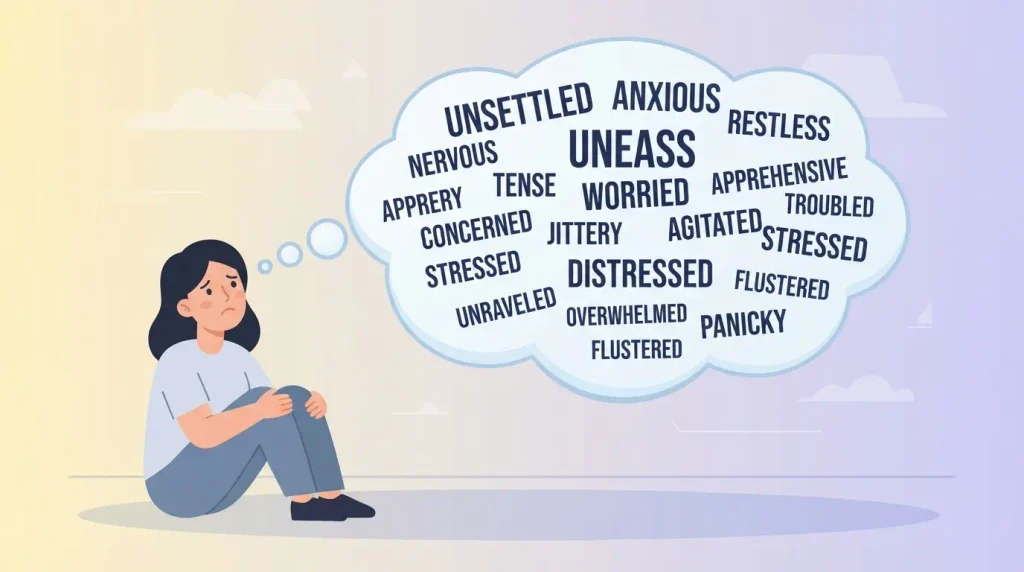
Common words for this feeling include uneasy, restless, tense, and troubled. Each one shows a slightly different shade of discomfort. Uneasy suits worry, restless suits impatience, and tense suits stress.
Choose based on the exact feeling you want to describe. Using varied words also keeps your writing fresh instead of repeating “uncomfortable” again and again.
What is another word for uneasy feeling?
An uneasy feeling can also be called apprehension, disquiet, nervousness, or unrest. These words describe a quiet, nagging worry rather than sharp fear. For example, “A sense of disquiet filled the room” paints a vivid picture.
Writers often pick these words for suspenseful stories, personal essays, or moments describing subtle, growing worry before something happens.
What is the synonym of discomfort?
Synonyms for discomfort include unease, distress, soreness, and irritation. Physical discomfort often uses soreness or aching, while emotional discomfort leans toward unease or distress.
For example, “She felt discomfort in her shoes” versus “She felt discomfort about the news.” Picking the right synonym depends on whether you mean a physical or emotional type of pain.
Conclusion
Learning synonyms for uncomfortable does more than fill space in a sentence. It sharpens your writing, strengthens your speaking, and helps readers feel exactly what you mean. Bloggers keep articles fresh and engaging.
Students avoid repeating the same tired word in every essay. Content writers rank better with natural, varied language. Everyday speakers explain their feelings with more honesty and clarity.
“To learn a language is to have one more window from which to look at the world.” Chinese Proverb
Try using a few of these fifty words this week. Swap “uncomfortable” for uneasy in an email, awkward in a story, or tense in a conversation with a friend. Small changes like these build big habits over time. The more you practice, the more natural these words will feel in your everyday English.
“Practice is the best of all instructors.” Publilius Syrus
Keep this list close by whenever you write. Whether you are drafting a blog post, an email, or a school essay, the right synonym is always just one word away.