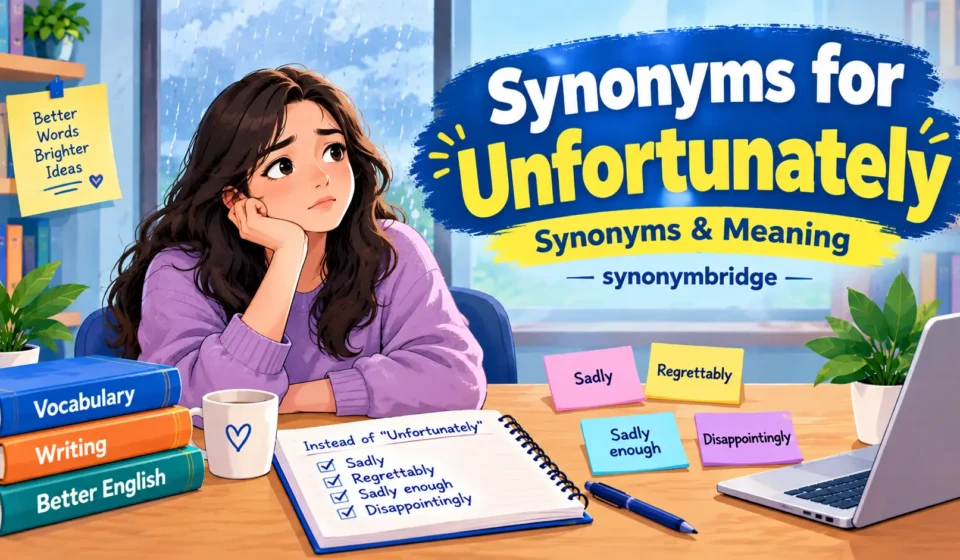
The best synonyms for unfortunately are sadly, regrettably, unluckily, alas, and regretfully. People use these words to say that something did not go as hoped, or to share bad news in a polite, gentle way, without sounding rude or harsh.
Maya typed the same email three times. Every draft began with “Unfortunately, we cannot…” and every draft sounded cold, like a closed door. She wanted to stay kind, but one tired word kept getting in her way. Sound familiar?
“The difference between the almost right word and the right word is really a large matter.” Mark Twain
Here is a simple example. A shopkeeper says, “Sadly, that coat is sold out, but a new one arrives Monday.” The news is the same, yet it feels much softer. One small change turns a flat refusal into a friendly, helpful message.
Knowing more options helps everyone. Students write stronger essays. Bloggers keep readers interested. Content writers match tone to every audience.
Daily English users sound polite at work and at home. Let’s explore the best ones together.
“The limits of my language mean the limits of my world.” Ludwig Wittgenstein
1. Sadly
- Meaning: Shows you feel sorry or sad about something that happened.
- Examples:
- Sadly, the park closed before we could arrive.
- She sadly waved goodbye at the train station.
2. Regrettably
- Meaning: Used in formal writing when you wish things were different.
- Examples:
- Regrettably, the meeting has been moved to Friday.
- Regrettably, we cannot offer you the job.
3. Unluckily
- Meaning: Means bad luck made something go wrong for a person.
- Examples:
- Unluckily, he missed the bus by one minute.
- Unluckily, our picnic day turned into a rainy one.
4. Alas
- Meaning: An old word that shows sadness or regret about something.
- Examples:
- Alas, the last cookie was already gone.
- Alas, the sale ended an hour ago.
5. Regretfully
- Meaning: Shows you feel sorry while sharing bad or unwelcome news.
- Examples:
- Regretfully, I must say no to your invitation.
- Regretfully, the class is full for this term.
6. Unhappily
- Meaning: Describes a sad result that nobody wanted or expected to happen.
- Examples:
- Unhappily, the team lost the final match.
- Unhappily, my phone broke on the first day.
7. Sad to Say
- Meaning: A gentle phrase you use before sharing bad news with someone.
- Examples:
- Sad to say, the store has no more tickets.
- Sad to say, I forgot your birthday this year.
8. I’m Afraid
- Meaning: A polite phrase used to softly deliver news the listener dislikes.
- Examples:
- I’m afraid the doctor is busy right now.
- I’m afraid we ran out of fresh bread.
9. Sorry to Say
- Meaning: Used to tell someone bad news in a kind and honest way.
- Examples:
- Sorry to say, your package has not arrived yet.
- Sorry to say, the movie starts without us.
10. I Regret to Say
- Meaning: A formal phrase used before giving news that may upset someone.
- Examples:
- I regret to say your order was cancelled.
- I regret to say the room is booked.
11. I Regret to Inform You
- Meaning: A very formal line used in letters that share bad news.
- Examples:
- I regret to inform you the job is filled.
- I regret to inform you the flight was delayed.
12. Much to My Regret
- Meaning: Shows that you feel strong sorrow about a choice or result.
- Examples:
- Much to my regret, I missed your wedding.
- Much to my regret, the old house was sold.
13. Much to My Dismay
- Meaning: Shows you feel shocked and upset by something that surprised you.
- Examples:
- Much to my dismay, the cake fell apart.
- Much to my dismay, the printer stopped working again.
14. To My Sorrow
- Meaning: A poetic phrase that shows deep sadness about an event.
- Examples:
- To my sorrow, my best friend moved away.
- To my sorrow, the garden did not survive winter.
15. I Hate to Say
- Meaning: A friendly, casual phrase used when sharing news you dislike.
- Examples:
- I hate to say it, but you lost.
- I hate to say this, but we are late.
16. Sad but True
- Meaning: Used when a fact is painful but you must still accept it.
- Examples:
- Sad but true, good things do not last forever.
- It is sad but true that prices keep rising.
17. With Regret
- Meaning: A calm and polite way to share news that causes sorrow.
- Examples:
- With regret, we must close the shop today.
- With regret, she gave up her dream job.
18. Sorrowfully
- Meaning: Describes something done or said in a deeply sad way.
- Examples:
- He sorrowfully watched the boat sail away.
- She sorrowfully told us the dog had died.
19. Mournfully
- Meaning: Describes something done in a very sad and heavy way.
- Examples:
- The wolf howled mournfully at the pale moon.
- He sighed mournfully when the holiday ended.
20. Tragically
- Meaning: Describes something very sad that caused great loss or pain.
- Examples:
- Tragically, the old bridge fell during the storm.
- Tragically, the young singer never finished her album.
21. Woefully
- Meaning: Describes something that is sadly poor, weak, or not enough.
- Examples:
- Our team was woefully unready for the test.
- The room was woefully small for ten guests.
22. Lamentably
- Meaning: A formal word for something that is sad and disappointing.
- Examples:
- Lamentably, many students skip breakfast before class.
- Lamentably, the library lost its funding this year.
23. Disappointingly
- Meaning: Shows a result was worse than people hoped it would be.
- Examples:
- Disappointingly, the concert lasted only one hour.
- Disappointingly, my cake did not rise at all.
24. Distressingly
- Meaning: Shows something is so bad that it makes people feel upset.
- Examples:
- Distressingly, the river was full of trash.
- The news was distressingly slow to arrive.
25. Heartbreakingly
- Meaning: Shows something is so sad that it hurts your feelings.
- Examples:
- Heartbreakingly, the puppy waited at the door daily.
- The ending was heartbreakingly sad for everyone.
26. Painfully
- Meaning: Describes a truth or event that hurts to face or accept.
- Examples:
- Painfully, I realized I had lost my keys.
- The truth was painfully clear to all of us.
27. Bitterly
- Meaning: Shows deep disappointment mixed with sadness or anger about a result.
- Examples:
- He bitterly regretted leaving school so early.
- She bitterly accepted the loss of her job.
28. Cruelly
- Meaning: Shows something unfair happened in a harsh and painful way.
- Examples:
- Cruelly, the rain started right after the picnic began.
- Fate cruelly took away their only chance.
29. Disastrously
- Meaning: Shows that something went terribly wrong and caused very big problems.
- Examples:
- Disastrously, the plan failed on the very first day.
- The trip ended disastrously after the car broke down.
30. Pitifully
- Meaning: Describes something so weak or sad that people feel sorry.
- Examples:
- The kitten cried pitifully in the cold rain.
- Our small garden produced pitifully few tomatoes this year.
31. Wretchedly
- Meaning: Describes something done in a very poor, unhappy, or miserable way.
- Examples:
- He wretchedly searched for his lost wallet all night.
- The team played wretchedly in the cold rain.
32. Worryingly
- Meaning: Shows something is troubling and may lead to more problems.
- Examples:
- Worryingly, the test scores dropped again this month.
- Worryingly, my phone battery dies within an hour.
33. Inconveniently
- Meaning: Shows something happened at a bad time and caused trouble.
- Examples:
- Inconveniently, the power went out during dinner.
- My alarm inconveniently failed on exam morning.
34. Inopportunely
- Meaning: A formal word for something that happened at the wrong time.
- Examples:
- Inopportunely, the guests arrived before we cooked.
- The phone rang inopportunely during the speech.
35. Adversely
- Meaning: Describes something that causes harm or makes a situation worse.
- Examples:
- The storm adversely affected the whole farm.
- Late nights can adversely affect your daily mood.
36. Unfavorably
- Meaning: Describes something that goes against you or leaves a bad impression.
- Examples:
- The weather unfavorably changed before the big race.
- The judge looked unfavorably on late homework.
37. Inauspiciously
- Meaning: A formal word for a bad start that signals trouble ahead.
- Examples:
- The trip began inauspiciously with a flat tire.
- The year started inauspiciously with a long illness.
38. It’s a Pity
- Meaning: A casual phrase that shows you feel sorry something happened.
- Examples:
- It’s a pity you cannot join us.
- It’s a pity the sun hid today.
39. What a Pity
- Meaning: An excited phrase used when something is sadly not possible.
- Examples:
- What a pity the show got cancelled!
- What a pity we missed the last train.
40. It’s a Shame
- Meaning: A friendly phrase that shows disappointment about a sad event.
- Examples:
- It’s a shame the zoo closes early.
- It’s a shame you could not stay longer.
41. Hard Luck
- Meaning: A casual phrase used to comfort someone after something went wrong.
- Examples:
- Hard luck, you were so close to winning.
- Hard luck, mate, the shop just closed.
42. As Luck Would Have It
- Meaning: A phrase that shows pure chance caused an unwelcome, unlucky surprise.
- Examples:
- As luck would have it, I forgot my umbrella.
- As luck would have it, the bus was late.
43. Sadly Enough
- Meaning: Adds extra feeling when you share a fact that makes you sad.
- Examples:
- Sadly enough, the shop sold out already.
- Sadly enough, no one remembered her birthday.
44. Sorry to Tell You
- Meaning: A kind and direct phrase used before giving someone bad news.
- Examples:
- Sorry to tell you, the seat is taken.
- Sorry to tell you, we lost the game.
45. Sad to Report
- Meaning: A formal phrase often used in news and workplace updates.
- Examples:
- Sad to report, sales fell this past quarter.
- Sad to report, the school trip is cancelled.
46. Sad to Admit
- Meaning: Used when you must honestly confess something that makes you sad.
- Examples:
- Sad to admit, I never learned to swim.
- Sad to admit, I forgot to call you.
47. Sadly for You
- Meaning: A direct phrase used when bad news affects the listener.
- Examples:
- Sadly for you, the tickets are all gone.
- Sadly for you, the deadline passed last night.
48. Unluckily for Us
- Meaning: Used when bad luck affects both the speaker and others.
- Examples:
- Unluckily for us, the road was closed.
- Unluckily for us, the rain never stopped.
49. Devastatingly
- Meaning: Shows something happened in a way that caused huge shock and pain.
- Examples:
- Devastatingly, the fire destroyed their family home.
- The loss was devastatingly hard for the whole town.
50. Dishearteningly
- Meaning: Shows something made people lose hope or feel very discouraged.
- Examples:
- Dishearteningly, the results showed no real progress.
- The line moved dishearteningly slowly all afternoon.
Words carry real power, and the right one can change how bad news lands.
“Words are, of course, the most powerful drug used by people.” Rudyard Kipling
Synonyms for Unfortunately Formal
In formal writing, choose calm and polite words. Regrettably, lamentably, and I regret to inform you work well in reports, letters, and official notices. They sound respectful without feeling cold. Avoid slang like “hard luck” here.
Pair your chosen word with a clear reason, such as “Regrettably, the event was cancelled due to weather.” This keeps your message honest, professional, and easy to understand.
Synonyms for Unfortunately in Email
Emails need a friendly but clear tone. Try I’m afraid, sorry to say, or sadly at the start of a sentence. For customers, we regret to inform you feels respectful. For coworkers, sad to report sounds natural.
Keep sentences short and add a helpful next step, like “I’m afraid the file is late, but I’ll send it tomorrow.” Readers will appreciate your honesty.
Synonyms for Unfortunately in an Essay
Essays reward variety. Repeating one word makes writing feel flat. Use regrettably for serious points, lamentably for strong opinions, and tragically for events with deep loss. Place the word at the start of a sentence, followed by a comma. For example, “Lamentably, many forests have vanished.”
Mix two or three options across paragraphs, so your tone stays smooth, academic, and interesting to your reader.
Positive Synonyms for Unfortunately
Sometimes bad news needs a brighter touch. Try as it happens, for now, or at this time to soften the message. You can also say not yet instead of a hard no. For example, “At this time, the room is full, but a spot may open soon.”
These phrases keep hope alive, protect feelings, and leave the door open for good things later.
FAQ
What can I say instead of “unfortunately”?
You can say sadly, regrettably, unluckily, or I’m afraid. Each word keeps the same meaning but changes the feel. Sadly sounds warm, regrettably sounds formal, and I’m afraid sounds polite and gentle.
Pick the word that matches your listener. For instance, a friend may enjoy “Sadly, I can’t come,” while a manager may prefer “Regrettably, I am unavailable.” Mixing them also makes your writing less repetitive.
How do you say “unfortunately” in a formal way?
In meetings and interviews, spoken formal English should sound calm. Say I’m afraid, regrettably, or I’m sorry to say before the news. Speak slowly and keep the sentence short.
Then offer a next step, such as “I’m afraid that time is taken, but Tuesday is open.” This shows respect, keeps the talk professional, and helps the listener feel heard rather than rejected.
How do you say “unfortunate” in a nice way?
To say unfortunate kindly, try unlucky, a pity, a shame, or not ideal. Add a caring phrase, like “That’s a shame, I’m sorry to hear it.” Soft words show you care about the person, not only the problem.
They work well with friends, family, and teammates when someone faces a setback or a bad day and needs comfort more than facts.
What is another word for “unfortunately”?
The simplest other word is sadly. It is short, clear, and works almost everywhere. If you need a stronger feeling, try tragically or heartbreakingly. If you need a lighter one, try unluckily.
Remember that unfortunately is an adverb, so each replacement should also be an adverb or a short phrase placed at the start of a sentence, followed by a comma.
Conclusion
Learning synonyms is one of the easiest ways to grow as a writer. Instead of repeating unfortunately, you now have 50 fresh choices. Each one adds a different feeling, from soft and kind to strong and serious.
Better word choice makes your writing clearer, your blogging more engaging, your speaking more confident, and your communication more caring.
“Kind words can be short and easy to speak, but their echoes are truly endless.” Mother Teresa
Now it is time to practice. Pick three words from this list and use them this week. Try sadly in a chat with a friend, regrettably in an essay, and I’m afraid in a work email. Small habits build a strong vocabulary, and soon the right word will come to you naturally.
Remember, bad news is never easy to share, but the way you say it matters. Choose words that are honest, respectful, and warm. Keep reading, keep practicing, and keep exploring new words. Your readers, teachers, and friends will notice the difference.
“Be kind, for everyone you meet is fighting a hard battle.” Ian Maclaren