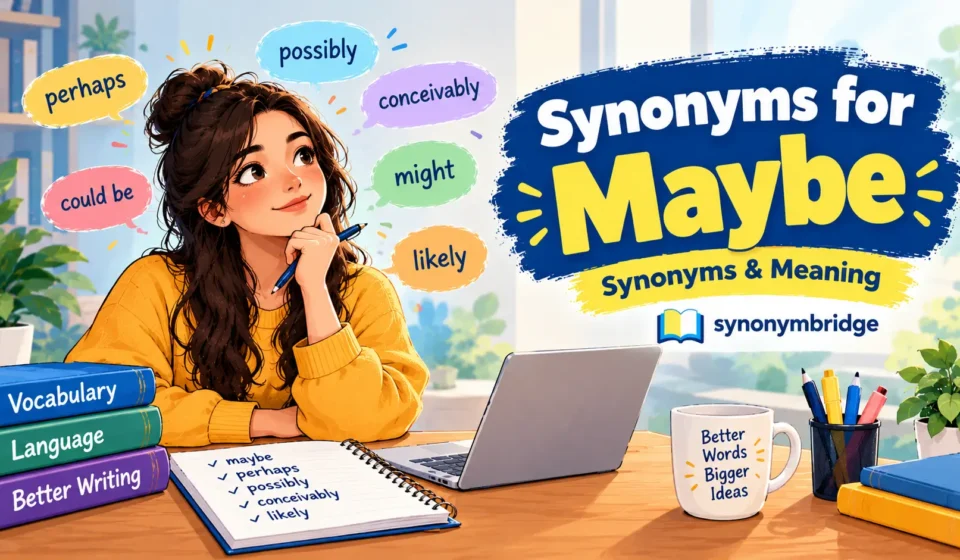
Synonyms for maybe are words that show something could happen but is not certain. The most common ones are perhaps, possibly, probably, and perchance. You can use them in place of maybe when you want to sound clearer, more formal, or more natural in writing and speech.
Maya stared at her phone for a full minute. Her friend had asked, “Are you coming tonight?” She typed “maybe,” deleted it, then typed “maybe” again. One tiny word was doing far too much work.
“The difference between the almost right word and the right word is really a large matter.” Mark Twain
Maya could have written, “Possibly, but I’ll confirm by six.” That reply is clear, kind, and honest. Choosing a better word for maybe changes how people hear you.
Students can use these words to make essays sound sharper. Bloggers can keep readers interested with fresh phrasing. Content writers can avoid repeating the same word. Daily English users can sound more confident in every chat.
“Words are, of course, the most powerful drug used by people.” Rudyard Kipling
1. Perhaps
- Meaning: Shows that something may be true or may happen.
- Examples: Perhaps we should leave before the rain starts. Perhaps she forgot her keys at school.
2. Possibly
- Meaning: Means something can happen, but nobody is fully sure yet.
- Examples: He might possibly join us for dinner. We can possibly finish this by noon.
3. Probably
- Meaning: Shows something is more likely to happen than not.
- Examples: It will probably snow tomorrow morning. I will probably call you after lunch.
4. Perchance
- Meaning: An old, poetic word that means by chance or perhaps.
- Examples: Perchance the stars will shine tonight. If perchance you see him, say hello.
5. Mayhap
- Meaning: An old fashioned word that means perhaps or maybe.
- Examples: Mayhap the king will visit our village. Mayhap we were wrong about the map.
6. Conceivably
- Meaning: Describes something that can be imagined as true or possible.
- Examples: Conceivably, the bus could arrive early today. She could conceivably win the whole contest.
7. Feasibly
- Meaning: Shows that something can be done in a practical way.
- Examples: We could feasibly finish the project by Friday. Feasibly, they can fix the roof today.
8. Potentially
- Meaning: Shows something has the power to happen in the future.
- Examples: This idea could potentially save us money. He is potentially our next team leader.
9. Plausibly
- Meaning: Means in a way that seems reasonable and believable.
- Examples: She plausibly explained why she was late. The story could plausibly be true.
10. Presumably
- Meaning: Means you believe something is true but cannot prove it.
- Examples: Presumably, the store opens at nine o’clock. He is presumably stuck in traffic.
11. Arguably
- Meaning: Shows that people can give good reasons to support an idea.
- Examples: This is arguably the best pizza in town. She is arguably our strongest player.
12. Likely
- Meaning: Describes something that will probably happen or be true.
- Examples: It is likely to rain this evening. She is likely to say yes.
13. Imaginably
- Meaning: Means in any way that a person can picture or think of.
- Examples: Imaginably, the trip could take only an hour. Nobody could imaginably guess the surprise ending.
14. Peradventure
- Meaning: A very old word meaning perhaps or by chance.
- Examples: Peradventure he knows the way home. Peradventure the letter will arrive today.
15. Mebbe
- Meaning: A casual, spoken spelling of maybe that friends often use.
- Examples: Mebbe I’ll see you at the game. Mebbe we can grab pizza later.
16. Might
- Meaning: A small word that shows something is possible but not certain.
- Examples: It might rain during the picnic. I might call her later tonight.
17. Could
- Meaning: A helping word that shows something is possible in the future.
- Examples: We could go to the beach tomorrow. She could win if she tries.
18. Could Be
- Meaning: A short, casual reply that means it is possible.
- Examples: Could be, but I’m not sure yet. That noise could be the wind.
19. Might Be
- Meaning: A phrase that says something may be true right now.
- Examples: She might be waiting outside the door. That might be the right answer.
20. Maybe So
- Meaning: A gentle reply that admits the other person could be right.
- Examples: Maybe so, but let’s ask again. Maybe so, you know him best.
21. Quite Possibly
- Meaning: Shows that something has a fairly strong chance of happening.
- Examples: Quite possibly, we will win the match. He is quite possibly the funniest kid here.
22. Very Possibly
- Meaning: Shows a high chance that something is true or will happen.
- Examples: Very possibly, the shop is already closed. This could very possibly change everything.
23. Most Likely
- Meaning: Points to the best guess among several possible answers.
- Examples: She most likely missed the early train. Most likely, dinner will be ready soon.
24. Chances Are
- Meaning: A friendly phrase used when you guess what will probably happen.
- Examples: Chances are, he is already at home. Chances are you’ll love this movie.
25. More Than Likely
- Meaning: Shows you feel quite sure something will happen or is true.
- Examples: It will more than likely rain tonight. She is more than likely running late.
26. Not Unlikely
- Meaning: A careful phrase that means something could well happen.
- Examples: It’s not unlikely that they will move soon. A delay is not unlikely today.
27. Not Impossible
- Meaning: Says that something is hard, but it can still happen.
- Examples: Finishing today is not impossible. It’s not impossible that she knows the secret.
28. It’s Possible
- Meaning: A simple sentence that says something is able to happen.
- Examples: It’s possible that he forgot the meeting. It’s possible to learn this in a week.
29. There’s a Chance
- Meaning: Tells people that something may happen, even if it’s small.
- Examples: There’s a chance we’ll see snow. There’s a chance she’ll call back today.
30. Odds Are
- Meaning: A casual phrase for what is probably going to happen.
- Examples: Odds are, the team will win again. Odds are he already knows the news.
31. Within Reason
- Meaning: Shows something is possible as long as it stays sensible.
- Examples: You can invite friends, within reason. Within reason, we can change the plan.
32. In All Likelihood
- Meaning: A formal phrase meaning something will very probably happen.
- Examples: In all likelihood, the meeting will start late. In all likelihood, prices will rise soon.
33. For All I Know
- Meaning: Shows you are guessing because you do not have the facts.
- Examples: For all I know, he already left. For all I know, the store moved.
34. Who Knows
- Meaning: A casual way to say the answer is truly uncertain.
- Examples: Who knows, we might find treasure there. Who knows what tomorrow will bring.
35. We’ll See
- Meaning: A calm reply that means you will decide later.
- Examples: We’ll see how the weather looks tomorrow. We’ll see if there is time.
36. It Depends
- Meaning: Shows the answer will change based on other facts.
- Examples: It depends on how much homework I have. It depends on the traffic today.
37. Up in the Air
- Meaning: Describes a plan that is not decided or settled yet.
- Examples: Our trip is still up in the air. The date is up in the air.
38. Possibly So
- Meaning: A polite reply that says an idea may be correct.
- Examples: Possibly so, but let’s double check first. Possibly so, since he lives nearby.
39. Perhaps So
- Meaning: A soft way to agree that something could be true.
- Examples: Perhaps so, but I’m not convinced. Perhaps so, given what we know.
40. Just Maybe
- Meaning: Adds hope to an idea that has only a small chance.
- Examples: Just maybe, we can still catch the bus. Just maybe, she’ll say yes this time.
41. Maybe Even
- Meaning: Adds a stronger, surprising possibility on top of a smaller one.
- Examples: We might win, maybe even by ten points. She could finish early, maybe even today.
42. Might Just
- Meaning: Suggests a surprising result could actually happen.
- Examples: This might just be our lucky day. He might just get the job.
43. In the Cards
- Meaning: Describes something that seems likely to happen in the future.
- Examples: A big change is in the cards. Is a trip in the cards?
44. Within the Realm of Possibility
- Meaning: A formal phrase for something that could really happen.
- Examples: Winning is within the realm of possibility. A lower price is within the realm of possibility.
45. Theoretically
- Meaning: Shows something could work in an idea but maybe not in real life.
- Examples: Theoretically, the bridge can hold ten trucks. Theoretically, we could arrive by noon.
46. Hypothetically
- Meaning: Used when you talk about an imagined situation, not a real one.
- Examples: Hypothetically, what would you do with a million dollars? Hypothetically, she could quit tomorrow.
47. Remotely Possible
- Meaning: Describes something that has only a very small chance.
- Examples: A snowstorm in July is remotely possible. It’s remotely possible he’ll change his mind.
48. Fair Chance
- Meaning: Describes a decent, reasonable chance that something will happen.
- Examples: There’s a fair chance we’ll finish early. She has a fair chance of winning.
49. Seemingly
- Meaning: Shows how something looks, even if it may not be true.
- Examples: The test was seemingly easy for her. Seemingly, nobody noticed the small mistake.
50. Supposedly
- Meaning: Means people say something is true, but you are not sure.
- Examples: Supposedly, this café has the best coffee. He supposedly lives near the old bridge.
51. Tentatively
- Meaning: Shows a plan is set, but it might still change.
- Examples: We tentatively planned lunch for noon. The meeting is tentatively set for Monday.
52. Provisionally
- Meaning: Means something is accepted for now but may change later.
- Examples: She was provisionally approved for the trip. The date is provisionally marked on the calendar.
53. Not Sure
- Meaning: A plain, honest answer when you do not know yet.
- Examples: I’m not sure if I can come. She’s not sure what to wear.
54. Uncertain
- Meaning: Describes a situation where the result is not clear yet.
- Examples: The weather is uncertain this weekend. His plans are still uncertain.
55. On the Fence
- Meaning: Describes a person who has not made up their mind.
- Examples: I’m on the fence about going tonight. She is on the fence about the job.
Synonyms for Maybe Not
When your answer leans toward no, these words fit better than a plain maybe. Try probably not, unlikely, doubtful, I doubt it, or not likely. Each one tells your listener that a yes is possible but far from certain.
For example, “Probably not, but I’ll check my schedule” sounds honest and polite. These softer refusals keep conversations friendly while still protecting your time and energy.
Synonyms for Maybe Even
The phrase “maybe even” adds a bigger possibility on top of a smaller one. Good alternatives include perhaps even, possibly even, and potentially even; if not more, and it might go as far as. For instance, “We could finish early, perhaps even today” shows rising hope.
These phrases work well in blog posts, speeches, and emails, where you want to build excitement without making a firm promise.
Synonyms for Maybe in Spanish
Spanish has several lovely ways to say maybe. The most common are quizás, tal vez, acaso, a lo mejor, and posiblemente. For example, “Tal vez vaya mañana” means “Maybe I will go tomorrow.”
Quizás and tal vez work in almost every situation. A lo mejor is more casual and is very popular in everyday talk, so it suits chats with friends.
Synonyms for Maybe With 5 Letters
Need a short word that fits a tight space? Try might, could, or mebbe. Each has exactly five letters and still shows possibility. “She might come” and “She could come” are both clear and simple. Mebbe is slang, so keep it for casual chats.
Short words like these are handy for headlines, captions, text messages, and word games like crosswords.
“The limits of my language mean the limits of my world.” Ludwig Wittgenstein
FAQ
How do you say “maybe” in a fancy way?
Choose perchance, mayhap, peradventure, or conceivably for a fancy touch. Perchance and mayhap sound poetic and old fashioned, so they suit stories and speeches. Conceivably sounds smart and polished in essays.
For example, “Conceivably, the plan could succeed” feels elegant. Use fancy words carefully, because too many can sound strange in everyday talk.
What words can I use instead of “probably”?
You can use likely, most likely, chances are, odds are, presumably, or in all likelihood. Each shows a strong chance without promising anything. “Chances are she’s already home” sounds warm and casual.
“In all likelihood, sales will rise” sounds formal and professional. Pick the one that matches your audience and your mood.
How do you say “maybe” professionally?
At work, use perhaps, possibly, potentially, tentatively, or it’s possible. These sound calm, careful, and respectful. For example, “The meeting is tentatively set for Monday” keeps your options open.
“Perhaps we can review the budget next week” is polite and clear. Professional phrasing shows that you are thoughtful and still flexible.
What is a slang term for “maybe”?
Popular slang includes mebbe, could be, who knows, we’ll see, and maybe maybe not. Young speakers also say “maybe, idk” in messages. These phrases sound relaxed and friendly, so they fit chats, texts, and social media.
For instance, “Could be, we’ll see” is a quick, easy answer. Avoid slang in formal emails, reports, or school essays.
Conclusion
Learning synonyms is one of the easiest ways to grow as a writer and speaker. When you replace maybe with perhaps, probably, or tentatively, your meaning becomes clearer, and your tone becomes stronger. Your essays feel richer, your blog posts feel fresher, and your conversations feel more confident.
Small word choices also build trust. A careful “possibly” tells people you are honest about what you know. A friendly “chances are” shows you care about being easy to talk to. Every new word you learn gives you one more way to say exactly what you mean.
Now it’s time to practice. Pick three words from this list and use them this week. Try one in an email, one in an essay or post, and one in a daily chat with a friend. Keep a small notebook of your favorites and review it often.
With steady practice, these words will soon feel natural, and your English will shine.
“One day I will find the right words, and they will be simple.” Jack Kerouac
“Language is the road map of a culture.” Rita Mae Brown